




This article will review the Best Inventory Financing Platforms for Multi-Channel Growth. The platforms we review all provide e-commerce businesses the ability to supplement cash flows and access inventory in order to support growth in new online marketplaces.
We will review the most popular platforms, the features and benefits they provide, the options available for financing, and the possible limitations of each to provide you the ability to select the most appropriate financing solution to grow your online business in a sustainable manner.
What is Inventory Financing Platforms?
Inventory financing platforms are specialized for businesses looking for funding for the purchasing and restocking of inventory. These platforms provide funding based on sales data, revenue, inventory, and marketplace evaluations, even helping businesses maintain their inventory without the need to tie up cash.
Inventory financing is valuable for most e-commerce and retail businesses, especially those needing to satisfy consumer demand across different selling platforms (Amazon, Shopify, Walmart, eBay), and all especially for Multi-channel sellers. As these platforms also provide better cash flow for business and more flexible working capital, they also finance business growth and new selling opportunities.
Key Point & Best Inventory Financing Platforms for Multi-Channel Growth
| Platform | Key Points |
|---|---|
| Clearco | Revenue-based financing for e-commerce brands, no equity dilution, funds inventory and marketing, data-driven approvals, designed for online sellers. |
| Wayflyer | Flexible growth funding, inventory and marketing financing, fast approval process, integrates with e-commerce platforms, repayment linked to sales performance. |
| 8fig | Supply chain-focused funding, inventory planning tools included, staged capital deployment, supports scaling across multiple sales channels, cash flow forecasting features. |
| Kickfurther | Inventory crowdfunding model, financing tied to specific inventory orders, no traditional loans, helps preserve cash flow, suitable for growing brands. |
| Uncapped | Revenue-based financing without equity loss, fixed-fee pricing structure, supports e-commerce and SaaS businesses, no personal guarantees, quick funding decisions. |
| Payability | Marketplace seller financing specialist, daily payouts available, working capital advances, supports Amazon and other marketplaces, improves cash flow management. |
| SellerFunding | Inventory and working capital financing, marketplace-focused solutions, supports Amazon, Walmart, and Shopify sellers, flexible repayment options, fast application process. |
| Pipe | Converts recurring revenue into upfront capital, non-dilutive funding, flexible financing model, supports growth initiatives, designed for modern digital businesses. |
| Capchase | Revenue-based financing for recurring-revenue companies, flexible drawdowns, no equity dilution, supports growth investments, streamlined approval process. |
| BlueVine | Business line of credit and banking solutions, fast funding access, flexible borrowing limits, useful for inventory purchases, simple online application process. |
1. Clearco
Clearco is one of the more popular options for inventory financing for e-commerce entrepreneurs who wish to avoid dilution of ownership. Clearco significantly speeds up the approval process for loans because it uses sales data and revenue data to validate loan applications.

With the loan, merchants can purchase inventory, run a marketing campaign, and grow the business to additional online sales channels. As one of the Best Inventory Financing Platforms for Multi-Channel Growth,
Clearco connects to applications such as Shopify and Amazon to validate business performance in real-time. This helps brands grow quickly by providing the needed financing, and also enables the business to maintain ownership and make future growth investments.
Clearco Features, Advantages & Disadvantages
Features
- Capital provided does not require giving up equity.
- Funding based on sales growth.
- Rapid online application process.
- Integrates multiple channels including Shopify.
- Offers funding for marketing and inventory.
Advantages
- No ownership stake is lost.
- Funding is readily available.
- Often no personal guarantee issued.
- Payments are flexible and based on sales.
- Offers capital to growing e-commerce businesses.
Disadvantages
- Clearco requires strong revenue for funding.
- Funding relies on sales data.
- Businesses with inconsistent sales should look elsewhere.
- Costs may be greater than traditional loans.
- Not widely available.
2. Wayflyer
Wayflyer suited online entrepreneurs who wish to scale inventory and marketing financing on a revenue-based model. Wayflyer gathers information on the online seller’s sales, customer data, and revenue analytics to create flexible funded financing options.
Merchants gain financial resources quickly, and Wayflyer captures the loan through future sales to facilitate business cash flow during low sales.
Wayflyer is popular among the Best Inventory Financing Platforms for Multi-Channel Growth, as it supports merchants on sales channels such as Shopify, Amazon, and WooCommerce. Wayflyer’s robust analytics allows sellers equity ownership while reaching sales goals across multiple sales channels.
Wayflyer Features, Advantages & Disadvantages
Features
- Revenue-based funding.
- Quick approval and funding.
- Integrates with all major e-commerce platforms.
- Offers inventory and marketing funding.
- Business analytics.
Advantages
- Easy repayment.
- No equity stake is lost.
- Great for cross-platform sellers.
- Funds working capital quickly.
- Provides insights and reports for growth.
Disadvantages
- Needs established sales.
- Funding is based on platform performance.
- Costs can be higher than banks.
- Not for newer businesses.
- Not available in all countries.
3. 8fig
8fig blends inventory financing and supply chain planning tools to create an ideal option for fast-growing e-commerce brands. Unlike traditional financing that provides a single large payment, 8fig disburses financing in phases based on inventory and business milestones.
This helps companies replenish inventory and maintain a positive cash flow. Named one of the Best Inventory Financing Platforms for Multi-Channel Growth, 8fig has forecasting tools that let merchants plan their inventory purchases on Amazon, Shopify, Walmart, and beyond. Since 8fig prioritizes the long-term optimization of the supply chain, it is a great option for large-scale growing brands.
8fig Features, Advantages & Disadvantages
Features
- Funds primarily for inventory.
- Supply chain management tools.
- Forecasting growth.
- Milestones unlock funds.
- Multi-channel inventory support.
Advantages
- Great for Sales.
- Promotes sustained growth for the business.
- Excellent features for cash flow management.
- Financing supports inventory.
- Helps with systematic scaling of the business.
Disadvantages
- More complicated vs conventional financing.
- Works for businesses with heavy inventory.
- Limited for businesses that don’t sell products.
- Could be hard to get approved for financing.
- Detailed financing plan could be required.
4. Kickfurther
Kickfurther has an innovative inventory financing model that integrates businesses with backers that help fund inventory. Rather than getting a loan, businesses get financing for particular inventory lots and pay back the funders when the inventory sells. This financing model for inventory significantly eases the pressure from monthly payment terms and structuring paybacks based on sales.

Kickfurther is one of the Best Inventory Financing Platforms for Multi-Channel Growth and works well for consumer brands that rely on large inventory lots for selling periods that are around the corner. Using this platform allows companies to buy lots of inventory to prevent shortages and even helps support the company in launching new selling channels.
Kickfurther Features, Advantages & Disadvantages
Features
- Crowdfunding for inventory.
- Financing for inventory purchases.
- Backed by investors.
- Flexible repayment based on sales.
- Works with consumer product companies.
Advantages
- Working capital is preserved.
- No traditional loan requirements.
- Great for large inventory purchases.
- Repayment is based on sales of inventory.
- Reduces risk for running out of inventory.
Disadvantages
- Inventory results dictate repayment.
- Financing approval can take time.
- Less known vs traditional financing.
- Not good for a service business.
- Financing is dependent on inventory purchase.
5. Uncapped
Revenue-financed funding from Uncapped is available to e-commerce and digital companies without demands for equity funding, personal guarantees, or slow approval processes. Capital is available for companies whose sales meet a funding threshold for the purchase of inventory, the funding of a marketing campaign, or the investment for expansion.
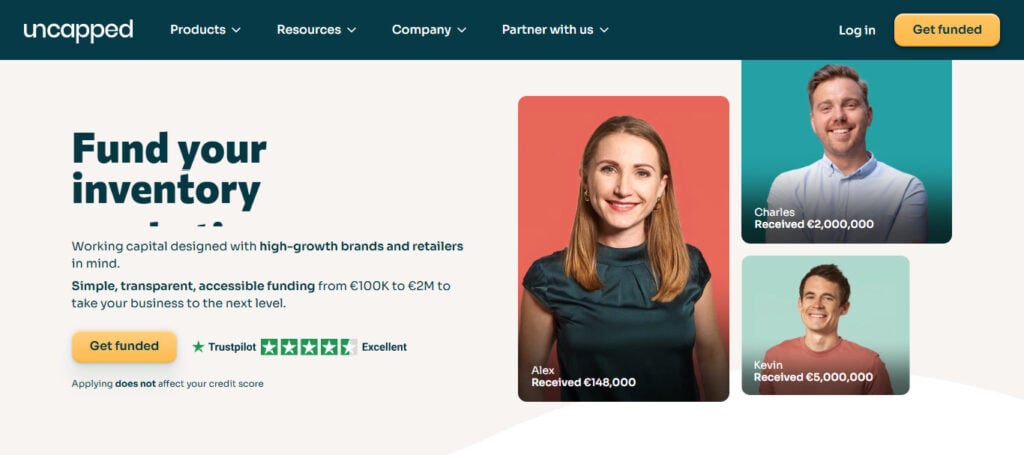
The repayment is easier to predict compared to other lenders with financing costs set to a fixed fee instead of interest. Uncapped is ranked as one of the Best Inventory Financing Platforms for Multi-Channel Growth for the flexible funding offered to businesses that sell on multiple online platforms. Uncapped’s pricing and financing policies appeal to brands that want to grow and scale rapidly.
Uncapped Features, Advantages & Disadvantages
Features
- Revenue based.
- No equity financing.
- No personal guarantees.
- Fixed fees.
- Quick online application.
Advantages
- Easy to predict financing.
- Fast approval.
- Keep full ownership of the business.
- No restrictions on the use of funds.
- Great for online businesses.
Disadvantages
- Strong revenue is required.
- Fixed fees can add up.
- Limited to certain areas.
- Revenue determines financing.
- Not good for a business with a seasonal revenue.
6. Payability
Payability is a financing solution dedicated to marketplace sellers that offers liquidity for inventory purchases by accelerating payment. Most marketplace platforms extend payment, which financially constrains sellers. Payability’s solution offers daily payouts and working capital advances based on sales that haven’t yet occurred.
Of the Best Inventory Financing Platforms for Multi-Channel Growth, Payability is preferred by Amazon, Walmart, and eBay sellers for the liquidity that allows for the immediate purchase of inventory to capture sales and business growth, that is otherwise delayed by the marketplace payment cycle.
Payability Features, Advantages & Disadvantages
Features
- Financing for platforms
- Daily payouts
- Capital advances
- Provides Amazon and other market support.
- Cash flow management technology.
Advantages
- Quickly enhances cash flow.
- Decreases waiting for marketplace payouts.
- Simple application.
- Great for funding inventory.
- Built for marketplace sellers.
Disadvantages
- Little focus outside of marketplaces.
- Likely to be expensive.
- Sales history required.
- Less flexibility than competitors.
- Not meant for other industries.
7. SellerFunding
SellerFunding tackles the unique needs of e-commerce sellers with tailored financing solutions like inventory financing, working capital loans, and growth funding that considers sales and business metrics. Capital can be used to buy inventory, fund marketing, and support expansion to other marketplaces.
SellerFunding has made the list of the Best Inventory Financing Platforms for Multi-Channel Growth by financing sellers operating on Amazon, Shopify, and Walmart. SellerFunding’s niche focus allows businesses the funding needed to support sales growth in their marketplaces by helping sellers finance inventory.
SellerFunding Features, Advantages & Disadvantages
Features
- Inventory financing.
- Working capital loans.
- Specialization in marketplace sellers.
- Financing across many platforms.
- Quick funding.
Advantages
- Great for online sellers.
- Helps grow inventory.
- Flexible financing.
- Quick funding.
- Covers most major marketplaces.
Disadvantages
- Needs strong sales.
- More expensive than standard loans.
- Little use for offline businesses.
- Funding terms rely on seller profile.
- Availability may vary by region.
8. Pipe
Pipe has reimagined financing by allowing businesses to fund growth and operations by buying inventory with the revenue they will collect in the future. Pipe is one of the Best Inventory Financing Platforms for Multi-Channel Growth because it offers non-dilutive financing.
Pipe has a unique approach to funding and financing that is flexible and focused on digitized companies, which makes it a great fit for companies looking to support their growth with financing that will not dilute ownership.
Pipe Features, Advantages & Disadvantages
Features
- Revenue financing.
- Converts recurring revenue to capital.
- Non-dilutive funding.
- Flexible capital.
- Tech-based approvals.
Advantages
- No equity loss.
- Fast funding.
- Flexible terms.
- Growth financing.
- Great for recurring revenue.
Disadvantages
- Best for subscription models.
- Revenue thresholds may be high.
- Not meant for inventory financing.
- Funding depends on quality of revenue.
- Limited use for retail.
9. Capchase
Capchase provides unique funding options with a focus on companies with subscription-based income. By fronting companies’ future income, Capchase helps companies with positive cash flow purchase supplies or expand operations.
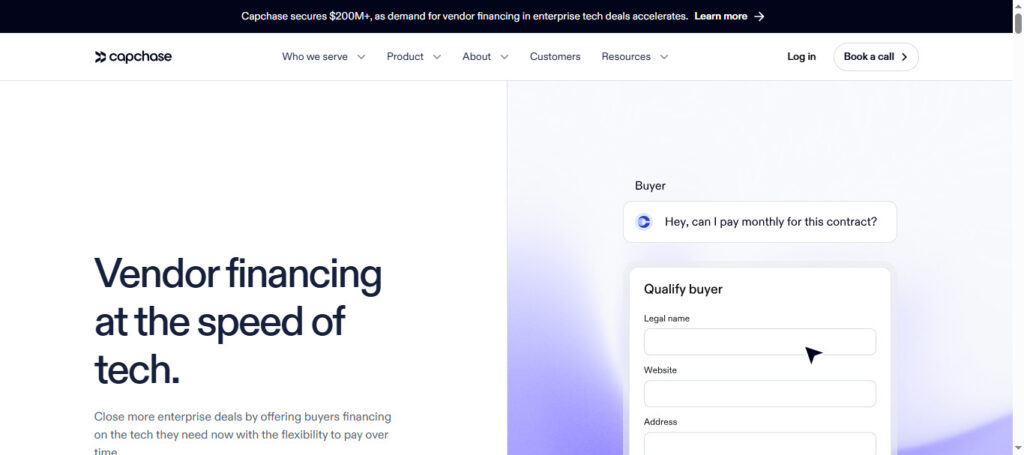
Because funding is based on business income and performance, as opposed to personal credit, approvals are completed faster. Capchase is listed in the Best Inventory Financing Platforms for Multi-Channel Growth for helping companies not only purchase supplies, but also helps fund new customers and business operations.
Capchase funds companies in a way that allows them to grow and expand things like their customer base without having to give up valuable shares or without having to assume costly debt.
Capchase Features, Advantages & Disadvantages
Features
- Advanced access to upcoming earnings.
- Adaptive financing options.
- Rapid endorsement system.
- Capital solutions emphasizing expansion.
Advantages
- Allows retention of business control.
- Helps ambitious growth plans.
- Consistent funding availability.
- Quick application process.
- Designed for businesses with recurring revenues.
Disadvantages
- Geared toward SaaS businesses.
- Heavy revenue restrictions may apply.
- Limited to no value for developing startups.
- Cost of funding is variable.
- Not productively used for inventory financing.
10. BlueVine
Financing products offered by BlueVine include lines of credit and a suite of business banking services. Like Capchase, BlueVine helps fund the purchase of supplies that aid operations, but also combine financing with business banking services. Multiple funding solutions offer the flexibility to draw funds and only pay for the amount drawn and used.
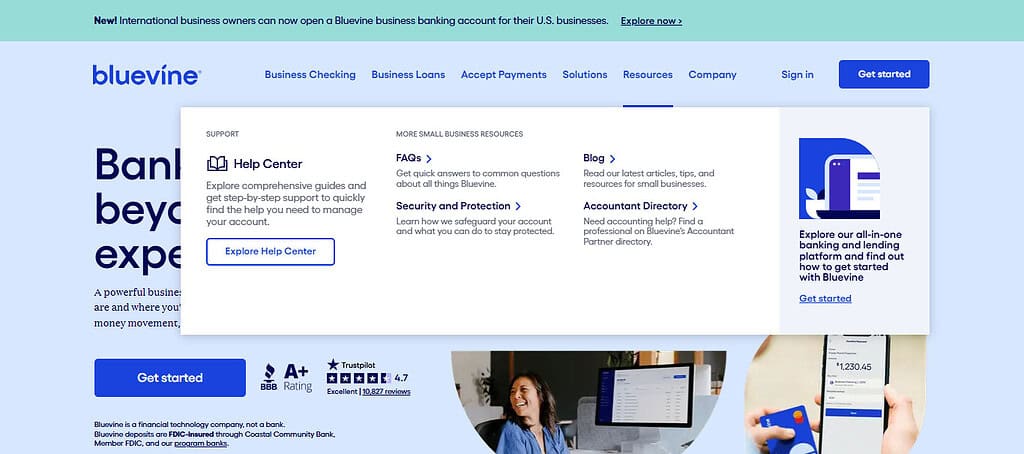
Flexibility of working capital, combined with the rapid access needed to manage multiple sales channels, earns BlueVine a spot in the Best Inventory Financing Platforms for Multi-Channel Growth. The easy application and clear terms of financing make BlueVine a favorite of the rapidly growing e-commerce business.
BlueVine Features, Advantages & Disadvantages
Features
- Business line of credit.
- Online banking.
- Rapid funding.
- Flexible limits.
- Simple digital account management.
Advantages
- Access funds when you need them.
- Great for inventory financing.
- Rapid online approval.
- Flexible repayment.
- All-in-one financial services platform.
Disadvantages
- Credit approval needed.
- Interest adds up.
- Funding limits.
- Not solely for inventory financing.
- Funding based on business.
Conclusion
Choosing the Best Inventory Financing Platforms for Multi-Channel Growth can greatly affect the ability of an e-commerce business to grow efficiently with healthy cash flow. Options like Clearco, Wayflyer, and 8fig are tailored funding options for e-commerce sellers, while BlueVine and SellerFunding provide flexible funding options for inventory and operational growth.
The business’ volume of sales, preferred repayment terms, how fast they need the funding, and which channels they sell on can all be factors in the decision they make. Choosing a financing partner that fits your business model allows you to be growth-ready, well-stocked, and diversified across multiple e-commerce platforms and marketplaces.
FAQ
Why do multi-channel sellers need inventory financing?
Multi-channel sellers often manage inventory across platforms such as Amazon, Shopify, Walmart, eBay, and other marketplaces. Inventory financing helps maintain stock levels, prevent shortages, and support growth during peak sales periods without straining cash flow.
Which inventory financing platform is best for Amazon sellers?
Platforms such as Clearco, Payability, SellerFunding, Wayflyer, and 8fig are popular among Amazon sellers because they offer funding based on marketplace sales data and integrate with major e-commerce platforms.
Do inventory financing platforms require collateral?
Requirements vary by provider. Some platforms use inventory as collateral, while others offer revenue-based financing that relies on business performance rather than physical assets. Many modern e-commerce financing providers do not require traditional collateral.
Can startups qualify for inventory financing?
Yes. Many inventory financing companies evaluate revenue, sales performance, and marketplace data rather than focusing solely on business age or credit history. This makes funding accessible to many growing startups.
How quickly can inventory financing be approved?
Approval times vary by platform. Some providers offer decisions within 24 to 72 hours, while others may take several business days. Digital-first lenders generally provide faster approvals than traditional banks.