



Best AI-Powered SBOM Tools for Modern Cybersecurity Teams that help organizations secure software supply chains, increase visibility into vulnerabilities associated with third-party dependencies and automate compliance management-
As the enemy changes dynamically with every passing day, AI powered SBOM solutions are making it increasingly possible for security teams/DevSecOps team to identify dependencies and risks much early in time while fortifying application security through intelligent automation continuous monitoring.
What is AI-Powered SBOM Tools?
AI-Driven SBOM Tools are advanced cyber security tools powered by machine learning and automation that produce a Software Bill of Materials (SBOM) automatically.
An SBOM is a comprehensive list of all software components, libraries and dependencies used in an application. Traditional SBOM features are augmented by AI that scans code, identifies vulnerabilities continually, risks prioritized with context and intelligent recommendations for remediation.
Tools like CycloneDX and Snyk enable organizations to gain real-time insight into software supply chains, improve compliance, and safeguard applications against the latest cyber threats as well as full-blown supply-chain attacks.
Why AI-Powered SBOM Tools for Modern Cybersecurity Teams
Improved Software Supply-Chain Visibility
AI-powered SBOM tools provide a full inventory of software components to help teams know exactly what’s inside their applications and infrastructure.
Automated Vulnerability Detection
Because artificial intelligence continuously monitors dependencies for security vulnerabilities (remotely), organizations can minimize their exposure to new threats more faster than traditional processes.
Faster Risk Prioritization
For example, Snyk and Sonatype provide AI analytics that focus on exploitable vulnerabilities — rather than bombarding teams with low-risk alerts.
Stronger Compliance Management
By keeping accurate, up-to-date inventories of open source software (OSS) and providing automation for many aspects of Compliance audits with Open Source Licenses-AI generated SBOMs help organizations comply with regulatory frameworks as well Cyber Security & National Guidance documents.
Enhanced DevSecOps Integration
Thus, Microsoft Defender for DevOps amongst other platforms can build security directly into the CI/CD pipelines to facilitate development and tackle security without delaying any releases.
Protection Against Supply-Chain Attacks
It can be used to detect and eliminate malicious packages, compromised libraries and risky updates before reaching production environments with AI identification.
Real-Time Continuous Monitoring
AI-powered SBOM tools go on to perform continuous application monitoring, providing alert/escalation services for newly discovered vulnerabilities instead of funneling the data into static reports.
Key Point & Best AI-Powered SBOM Tools for Modern Cybersecurity Teams
| AI-Powered SBOM Tool | Key Points |
|---|---|
| CycloneDX AI Suite | Open SBOM standard with AI risk analysis, vulnerability tracking, dependency visibility, and strong DevSecOps integration. |
| Snyk AI SBOM Manager | AI-driven dependency scanning, real-time vulnerability alerts, developer-friendly security workflows, and automated remediation suggestions. |
| JFrog Xray SBOM AI | Continuous artifact monitoring, AI threat intelligence, license compliance checks, and deep container security analysis. |
| Sonatype Nexus AI | Advanced open-source governance, AI vulnerability prioritization, policy enforcement, and automated risk scoring. |
| Palo Alto Networks Prisma Cloud SBOM AI | Cloud-native SBOM visibility, AI workload protection, container scanning, and runtime threat detection. |
| Google Assured OSS SBOM AI | Google-verified open-source packages, AI validation checks, supply-chain transparency, and secure dependency sourcing. |
| Microsoft Defender for DevOps SBOM AI | Integrated DevOps security, automated SBOM generation, AI vulnerability insights, and GitHub/Azure security monitoring. |
| Docker Scout AI SBOM | Container image analysis, AI risk detection, dependency updates, and simplified container security visibility. |
| GrammaTech CodeSonar SBOM AI | Deep static code analysis, AI vulnerability discovery, secure coding validation, and compliance-focused SBOM reporting. |
| Checkmarx AI SBOM Security | AI-powered SAST & SCA integration, secure SDLC automation, software risk prioritization, and enterprise AppSec visibility. |
1. CycloneDX AI Suite
CycloneDX AI Suite has been built on the top of an open-source CycloneDX SBOM standard developed by OWASP, explicitly established for software supply-chain security and component transparency. It allows businesses to produce machine-readable SBOMs on dependencies, services, vulnerabilities and operational information.
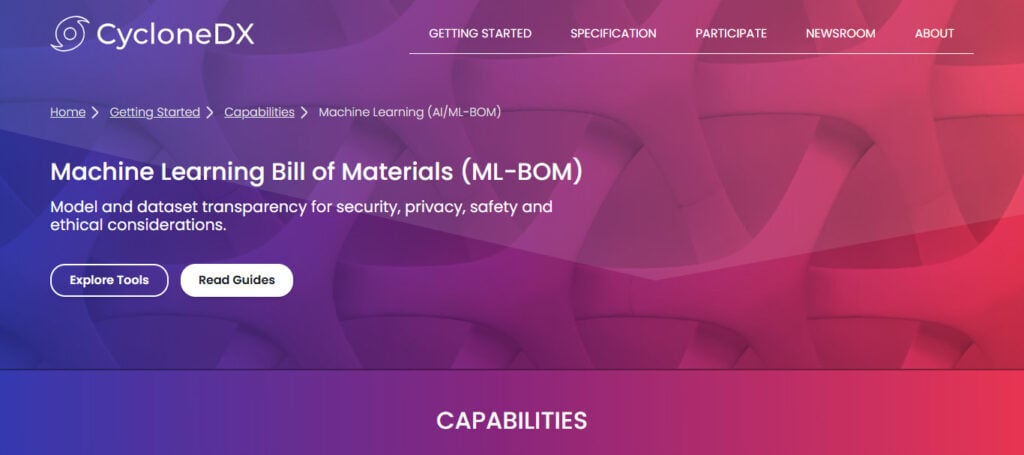
It enables automated vulnerability reporting, component identification and BOM linking across systems, enabling teams to trace risks through complex applications. CycloneDX AI Suite employs AI-powered automation to augment SBOM data with threat intelligence and risk scoring in order to make DevSecOps workflows faster and compliance-ready while bringing the ease of lightweight, standardized software inventory management as outlined in Ludin et.
CycloneDX AI Suite – Features
- Autonomously creates SBOMs for apps, containers and AI models using AI.
- Supports CycloneDX Standard to protect software supply-chain and ensure transparency.
- Automated dependency tracking with up-to-minute vulnerability intelligence
- Seamlessly integrates with CI/CD pipelines and DevSecOps workflows.
- Enhanced regulatory and cybersecurity audit compliance reporting
CycloneDX AI Suite
| Pros | Cons |
|---|---|
| Open standard SBOM format widely adopted | Requires integration setup |
| Strong support for dependency transparency | Limited built-in remediation tools |
| Vendor-neutral ecosystem | Needs external security platforms |
| Supports software supply-chain visibility | Technical learning curve |
| Compatible with DevSecOps pipelines | Less automation compared to commercial tools |
2. Snyk AI SBOM Manager
Snyk AI SBOM Manager provides software composition analysis together with AI-driven risk prioritization for continuous visibility into open-source dependencies. SBOMs are automatically created during dev pipelines and exploits are correlated with insights around the exploitability of vulnerabilities, allowing developers to remediate critical risks at speed.
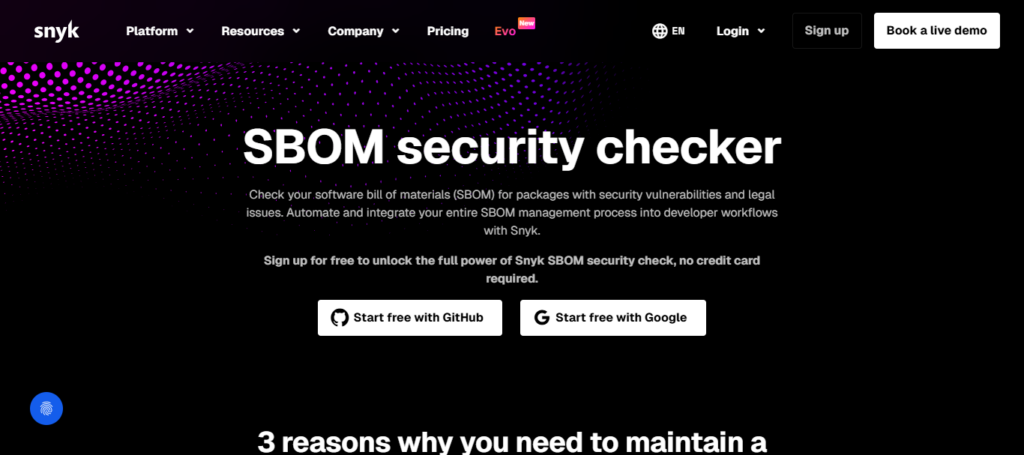
Snyk uses machine learning to analyze package ecosystems, licenses, and transitive dependencies, with the performance directly integrated into CI/CD workflows. Snyk was ranked amongst the Best AI-Powered SBOM Tools for Modern Cybersecurity Teams for its automation that works well and suggestions to remediate in real-time especially useful for developers.
Instead of taking a static snapshot of the SBOM, organizations gain advantages through continuous monitoring as applications evolve at high speed to keep confidence in software supply chains.
Snyk AI SBOM Manager Features
- Automated SCA of open-source risks using AI
- SBOM monitoring throughout both development and production.
- AI risk scoring for automatically prioritizing vulnerabilities
- Simple developer integrations with GitHub, GitLab and IDEs.
- Remediation suggestions in real-time to remedy dependency problems faster
Snyk AI SBOM Manager
| Pros | Cons |
|---|---|
| Developer-friendly interface | Premium pricing tiers |
| AI vulnerability prioritization | Can generate alert fatigue |
| Deep open-source dependency scanning | Requires CI/CD integration |
| Automated fix recommendations | Large projects may scan slower |
| Strong IDE integrations | Limited offline support |
3. JFrog Xray SBOM AI
JFrog Xray SBOM AI combines high-fidelity software artifact analysis with artificial intelligence-based vulnerability detection. It scans binaries, containers and dependencies to automatically createSBOMs from multiple repositories.
The AI engine maps CVE databases, risk signals based on behavior and dependency paths to surface threats that wont be of any value. JFrog Xray, listed among the Best AI-Powered SBOM Tools for Modern Cybersecurity Teams Excellence Awards of integrates tightly with DevOps pipeline and artifact repositories to facilitate policy enforcement and compliance checks.
With supply-chain exposure visible to security teams, developers can still receive feedback on actionable risks during the software lifecycle without disrupting deployment speed and productivity.
JFrog Xray SBOM AI — Features
- Scanning for deep dependencies through binaries, containers and packages.
- Detection of compromising packages and supply-chain threats using AI.
- Ongoing vulnerability analysis during the SDLC life cycle.
- A unified security visualization inside JFrog DevOps ecosystems.
- Compliance and Risk Governance through Policy Enforcement Automation.
JFrog Xray SBOM AI
| Pros | Cons |
|---|---|
| Real-time artifact security monitoring | Setup complexity |
| Deep binary and container analysis | Resource intensive |
| Policy enforcement automation | Requires JFrog ecosystem usage |
| Continuous vulnerability intelligence | Higher enterprise cost |
| Excellent DevOps integration | UI learning curve |
4. Sonatype Nexus AI
Sonatype Nexus AI and SBOM — Intelligent dependency governance as well as automated component lifecycle monitoring It continuously watches open-source libraries to spot risky packages and creates SBOM inventories in compliance with regulation.
By studying past patterns of vulnerabilities and usage behaviour among developers, AIanalytics can anticipate trends in risk. Best AI-Powered SBOM Tools for Modern Cybersecurity TeamsNexus AINexus AI relies on prevention, not detection by blocking malicious or non-compliant components before they hit production.
This semi-intelligent model enhances the DevSecOps practice while providing visibility into modern microservices, cloud-native applications and enterprise software infrastructure.
Sonatype Nexus AI – Features
- Smart SBOM generation doing component tracking automatically
- Global vulnerability database is the foundation of AI risk intelligence.
- Real-time watching of open-source and third-party libraries.
- Automated policy management for secure software releases
- Works seamlessly along with DevOps and enterprise repositories.
Sonatype Nexus AI
| Pros | Cons |
|---|---|
| Advanced open-source risk intelligence | Expensive enterprise licensing |
| Automatic dependency governance | Initial configuration effort |
| Accurate vulnerability database | Limited small-team features |
| Strong policy automation | Requires training for admins |
| Excellent SBOM lifecycle management | Complex dashboard |
5. Palo Alto Prisma Cloud SBOM AI
Palo Alto Prisma Cloud SBOM AI provides a cloud native application protection solution with built-in SBOM generation and run-time risk intelligence. The platform automatically assembles SBOM inventories from containers, serverless workloads and infrastructure-as-code environments.
AI analytics relate a linkage between workload configuration risks, known vulnerabilities and behavior to provide security context. Prisma Cloud has also been recognized as part of the Best AI-Powered SBOM Tools for Modern Cybersecurity Teams, allowing security teams to gain a unified view based on development assets and production environments.
Security teams gain visibility into software components across hybrid and multi-cloud environments, allowing organizations to meet compliance mandates while protecting against supply-chain attacks targeting cloud-hosted applications.
Palo Alto Prisma Cloud SBOM AI Features
- SBOM visibility across multi-cloud environments in a cloud-native way.
- Container, API and Cloud Workload AI threat detection.
- Contextual security analytics for automating risk prioritization
- A mixture of runtime defense and supply-chain security observation.
- Single pane of glass for DevSecOps and cloud security teams.
Palo Alto Networks Prisma Cloud SBOM AI
| Pros | Cons |
|---|---|
| Full cloud-native security platform | High implementation cost |
| AI-driven risk prioritization | Best suited for large enterprises |
| Container & Kubernetes SBOM visibility | Requires cloud expertise |
| Continuous compliance monitoring | Can be overwhelming initially |
| Strong runtime protection | Licensing complexity |
6. Google Assured OSS SBOM AI
Googles Assured OSS SBOM AI: a solution aiming to secure trustless open-source ecosystems powered by verified metadata, provenance validation and automated software dependency SBOM creation. By taking advantage of Google’s secure build infrastructure, the tool minimizes supply-chain risks by ensuring packages are both coming from where they say they are and that they have not been tampered with. Modeling dependencies trustworthiness and pattern of updates to detect suspicious changes.
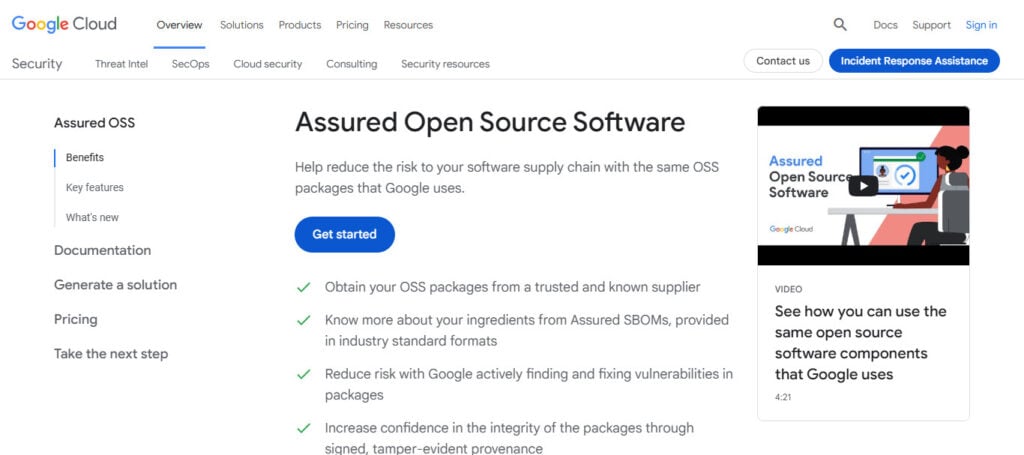
For organizations that want to bring open source into the enterprise safely, it is included as one of the Best AI-Powered SBOM Tools for Modern Cybersecurity Teams due to its characteristics in transparency, authenticity verification and continuous monitoring. This model allows organizations to adopt community software without compromising on security and compliance controls.
Google Assured OSS SBOM AI – Features
- Security Verified open-source packages backed by Google.
- AI-Powered Vulnerability Scanning for Trusted Software Components
- Ensure SBOM transparency in line with enterprise compliance.
- Keep an eye on updates and ensure the integrity of dependencies
- Native integrations with the security and DevOps environments in Google Cloud
Google Assured OSS SBOM AI
| Pros | Cons |
|---|---|
| Secure curated open-source packages | Focused mainly on Google ecosystem |
| Verified dependency provenance | Limited customization |
| Reduced supply-chain risk | Smaller feature scope vs competitors |
| Automatic vulnerability monitoring | Less enterprise governance tooling |
| Easy integration with Google Cloud | Not ideal for multi-cloud users |
7. Microsoft Defender for DevOps SBOM AI
Provides native DevOps security with Microsoft Defender for DevOps SBOM AI to the entire development pipeline flow running in Azure, GitHub and hybrid setups. The platform builds automatic SBOM and uses AI analytics to expose vulnerabilities, misconfigurations, and malicious packages in the dependencies.
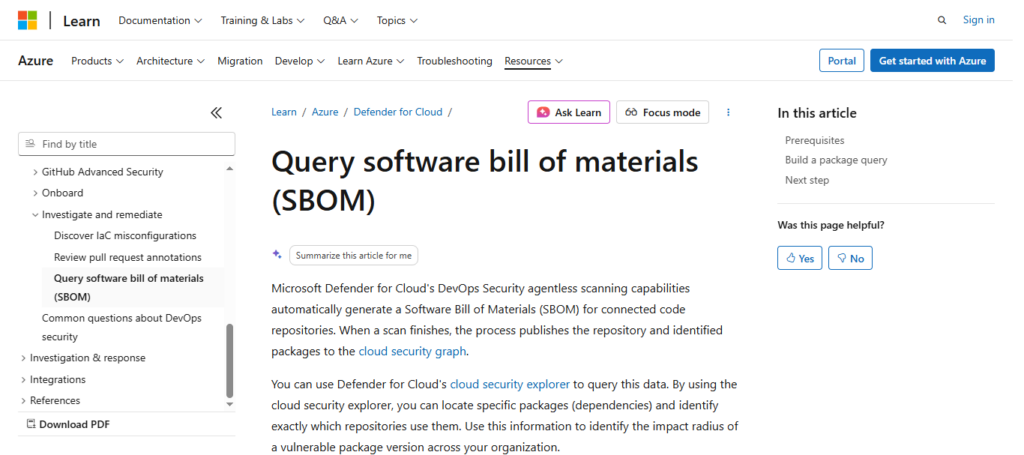
Defender brings together code scanning, infrastructure security, and threat intelligence to provide the unified risk visibility. FossID is recognized as one of the Best AI-Powered SBOM Tools for Modern Cybersecurity Teams that allows organizations to shift security left while still maintaining governance across distributed development teams.
Early risk mitigation Automated remediation recommendations that enable developers to address risks early on without hindering innovation or release cycles.
Microsoft Defender for DevOps SBOM AI Features
- Automated SBOM creation directly in DevOps pipelines
- Chained Vulnerability Detection across Repository and Build with AI-Driven Technology
- Native integration with Azure DevOps and GitHub Security Tools.
- Security posture management for development teams at a central location.
- Deep security intelligence from Microsoft Security Data
Microsoft Defender for DevOps SBOM AI
| Pros | Cons |
|---|---|
| Native DevOps security automation | Works best in Microsoft environments |
| Unified security dashboard | Azure dependency bias |
| Automated SBOM generation | Limited non-Microsoft integrations |
| AI threat correlation | Requires Defender ecosystem |
| Strong compliance reporting | Enterprise licensing cost |
8. Docker Scout AI SBOM
Docker Scout AI SBOM generates bespoke SBOMs by ingesting and continuously analyzing container images, with a view to conducting risk assessments about their overall security posture. Powered by AI vulnerability correlation, it explores base images, libraries and software layers to calculate actual risk exposure.
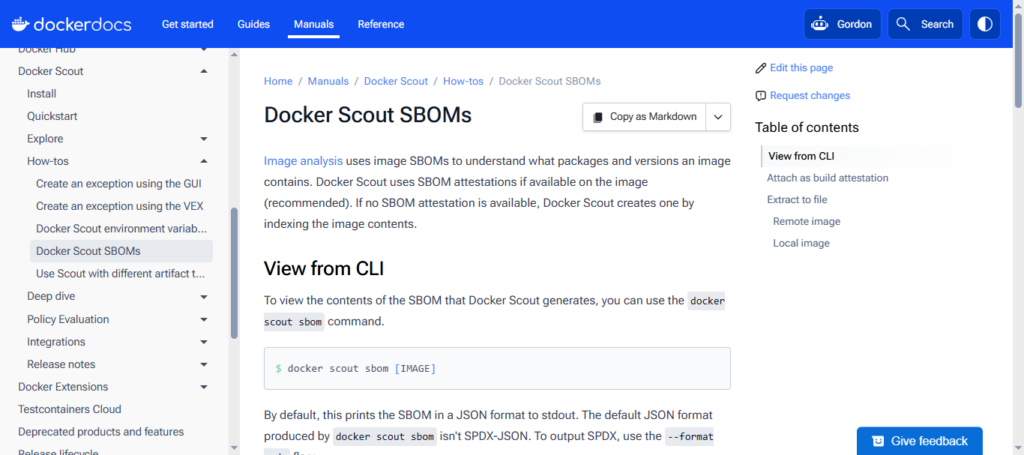
The platform is built so that it can integrate directly into container workflows, allowing developers to get an understanding of image updates and how they impact security posture. Docker Scout stands out among the Best AI-Powered SBOM Tools for Modern Cybersecurity Teams due to its focus on production systems and emphasis on investing properly in actionable insights over a huge list of vulnerabilities.
By using Continuous Monitoring, containers can automatically remain compliant and secure throughout the application lifecycle from development to deployment to runtime operations.
Docker Scout AI SBOM — Features
- SBOM analysis specific to container images and registries:
- Vulnerability insights and risk prioritization powered by artificial intelligence.
- Ongoing image scanning for newly identified security exposure
- Dependency comparison and upgrade recommendations.
- Easy integration with Docker Hub and CI / CD pipelines
Docker Scout AI SBOM
| Pros | Cons |
|---|---|
| Container-focused SBOM visibility | Limited non-container scanning |
| Developer-centric workflow | Fewer governance controls |
| Easy vulnerability remediation insights | Not a full security platform |
| Lightweight deployment | Enterprise analytics limited |
| Works seamlessly with Docker images | Requires container adoption |
9. GrammaTech CodeSonar SBOM AI
By integrating advanced static analysis and SBOM generation into a single tool, GrammaTech CodeSonar SBOM AI is able to provide unique code level insight. Its AI-powered analysis discovers hidden vulnerabilities, insecure coding practices and dependence risks often missed by conventional scanners, generates enriched SBOMs tightly-coupled to source code intelligence for greater traceability and accuracy of remediation.
No surprise, CodeSonar is also on our guide to as the Best About AI-Powered SBOM tooling for modern cyber teams and especially valuable if you work in safety-critical industries such as automotive, aerospace or defense. High-assurance software transparency is offered to organizations in that they can be guaranteed compliance with stringent security standards as well as long-term-commitment to maintainability requirements.
GrammaTech CodeSonar SBOM AI – Features
- Static code analysis at scale but with SBOM intelligence.
- Deep software security flaw detection using AI-assisted technique
- Visibility of supply-chain risk across embedded and enterprise software.
- Compliance support for safety-critical industries.
- Automated Reports On Secure Dev Lifecycle Management.
GrammaTech CodeSonar SBOM AI
| Pros | Cons |
|---|---|
| Deep static code analysis | Complex setup |
| High-accuracy vulnerability detection | Requires expert users |
| Ideal for critical systems & embedded software | Higher licensing cost |
| Advanced compliance validation | Not beginner-friendly |
| Strong secure coding insights | Slower onboarding |
10. Checkmarx AI SBOM Security
By combining application security testing and intelligent SBOM management, Checkmarx AI SBOM Security offers a synergy that has yet to be achieved before. Automatically, the platform creates SBOMs and correlates vulnerabilities, exploit paths, and application context all through an AI analysis.
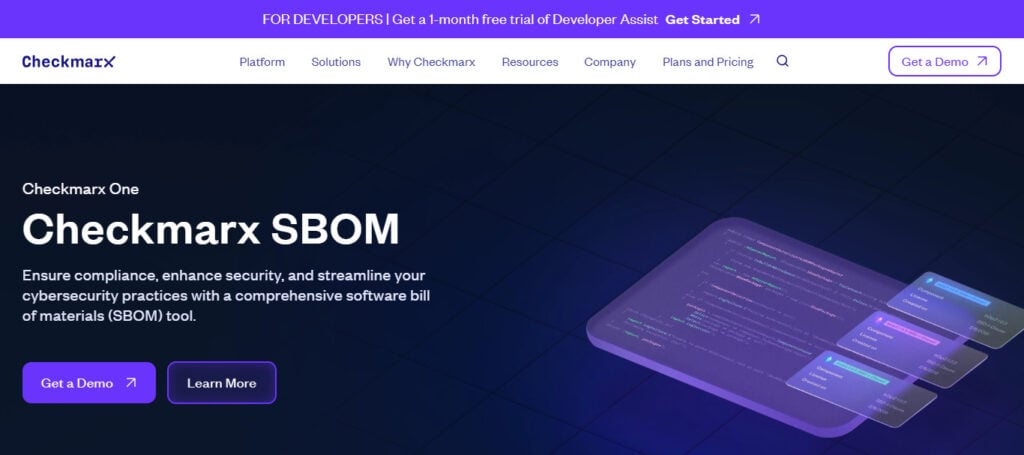
Instead of bombarding teams with alerts, Checkmarx ranks risks by the actual likelihood of an attack and its potential business impact. Turns SBOMs from static documentation into actionable security intelligence and is among the Best AI-Powered SBOM Tools for Modern Cybersecurity Teams The continuous monitoring, developer integrations and automated remediation workflows help organizations achieve enterprise-scale secure application delivery while ensuring a trusted software supply chain.
Checkmarx AI SBOM Security – Features
- SBOM-enabled AI-powered application security testing
- Risk management platform for SAST, SCA and SBOM unified.
- Automated vulnerability prioritization for developers.
- Ongoing tracking of dependencies and open-source libraries.
Checkmarx AI SBOM Security
| Pros | Cons |
|---|---|
| Comprehensive application security testing | Resource heavy scans |
| AI-based vulnerability prioritization | Enterprise pricing |
| DevSecOps pipeline integration | Learning curve for teams |
| Supports SAST + SCA + SBOM | Setup complexity |
| Accurate risk scoring | Requires tuning policies |
Conclusion
With the increasing number of software supply-chain attacks, AI-Powered Software Bill of Materials (SBOM) adoption is an integral part to modern Cyber Security strategies. The Deep Visibility in Software Components, Automating Vulnerabilities Detection and Fortifying Compliance with Modern Cybersecurity Teams With Best AI-Powered SBOM Tools.
So platforms like CycloneDX, Snyk and others; JFrog, Sonatype and other software composition analysis (SCA) solutions such as Palo Alto Networks Behind the Matcher CGI detection technologies again Google Microsoft Docker GrammaTech Checkmarx: All demonstrate how AI8217;s impact on SBOM will turn it from a static document into curated risk intelligence.
These tools help organizations achieve open-source dependency security, cloud workload protection and continuous compliance by integrating automation with real-time monitoring and intelligent threat prioritization.
In conclusion, the cyber threat environment is dynamic and fast-paced allowing for few cybersecurity resources to gain traction that aren’t implemented by an AI-driven SBOM platforms which ultimately help shift a security from reactive to predictive resilient software supply-chain in this modern evolution.
FAQ
What are AI-Powered SBOM tools?
AI-Powered Software Bill of Materials (SBOM) tools automatically generate and analyze inventories of software components using artificial intelligence. These tools identify dependencies, detect vulnerabilities, prioritize risks, and improve supply-chain visibility. Platforms such as CycloneDX and Snyk help organizations maintain secure and transparent software development environments.
Why are SBOM tools important for cybersecurity teams?
SBOM tools allow cybersecurity teams to understand exactly what software components exist within applications. This visibility helps prevent supply-chain attacks, manage open-source risks, and meet compliance regulations. AI enhances these capabilities by automating threat detection and risk prioritization across large and complex development ecosystems.
How do AI-powered SBOM tools improve DevSecOps workflows?
AI-powered SBOM solutions integrate directly into CI/CD pipelines to automatically scan dependencies during development. Tools like JFrog Xray and Sonatype Nexus AI provide continuous monitoring, automated policy enforcement, and real-time vulnerability remediation without slowing software releases.
hich industries benefit most from AI-Powered SBOM tools?
Industries handling sensitive data or critical infrastructure benefit greatly, including finance, healthcare, government, cloud services, SaaS companies, and enterprise software vendors. Organizations using cloud platforms such as Palo Alto Networks Prisma Cloud or Microsoft Defender for DevOps gain strong visibility across hybrid and multi-cloud environments.
Are AI-powered SBOM tools suitable for small businesses?
Yes. Many modern SBOM platforms are scalable and designed for startups and SMBs as well as enterprises. Cloud-based solutions reduce infrastructure costs while providing automated security monitoring, making advanced software supply-chain protection accessible even to smaller development teams.