



Artificial Intelligence Tools to Automate Small Business Books Article is my attempt to bring out the essential point of AI in modern bookkeeping.
From automated expense tracking to smart financial reporting and tax preparation, these AI tools not only save time for small businesses but also eliminate majority of the errors while enhancing financial management allowing entrepreneurs to spend that valuable time on business growth and productivity.
Key Features of Essential AI Tools to Automate Small Business Books
Automated Transaction Categorization
- Automated classification of expense and income by AI
- Learns from historical bookkeeping practices.
- Less manual data entry errors
- Reduces weekly accounting hours by dozens
Smart Invoice & Receipt Processing
- Scanning receipts with OCR + AI recognition.
- Automatically extracts vendor name, amount and tax data.
- Creates invoices instantly.
- Reduces paperwork, and manual uploads.
Bank Reconciliation Automation
- Automatically matches the bank transactions with records.
- Identifies duplicates or missing payments.
- Flags transactions that appear suspicious or are unmatched.
- Maintains real-time accuracy of books.
Real-Time Financial Reporting
- Displays quick profit & loss statements.
- Automatically gives cash-flow insights.
- Updates dashboards continuously.
- Eliminates month-end manual reporting.
AI Expense Tracking & Monitoring
- Tracks recurring expenses automatically.
- Identifies unnecessary spending.
- Suggests cost-saving opportunities.
- Improves budgeting decisions.
Key Point & Essential AI Tools to Automate Small Business Books
| AI Bookkeeping Tool | Key Points |
|---|---|
| QuickBooks Online + AI | Automated expense tracking, smart invoice creation, AI cash-flow forecasting, bank reconciliation automation, tax preparation insights |
| Zoho Books AI | AI assistant automation, GST compliance support, automated workflows, real-time financial reports, smart payment reminders |
| Bench AI Bookkeeping | Human + AI bookkeeping model, automated categorization, monthly financial statements, tax-ready reports, dedicated bookkeeping team |
| FreshBooks AI | Smart invoicing automation, expense auto-capture, time tracking integration, financial analytics, easy client billing system |
| Sage Intacct AI | Advanced financial automation, AI reporting dashboards, multi-entity accounting, revenue recognition automation, enterprise scalability |
| Wave Accounting AI | Free accounting automation, receipt scanning AI, automated transaction tracking, invoicing tools, small business friendly setup |
| Botkeeper AI | Robotic bookkeeping automation, real-time dashboards, automated reconciliations, scalable accounting support, CPA firm integrations |
| Kashoo AI | Smart transaction categorization, automatic reconciliation, simplified accounting workflows, tax reporting support, easy setup |
| ZipBooks AI | Intelligent financial insights, automated invoicing, performance scoring, expense management, simple bookkeeping interface |
| OneUp AI Accounting | AI inventory forecasting, automated accounting entries, CRM integration, real-time profit tracking, predictive financial insights |
| TallyPrime with AI | GST automation, business reporting intelligence, inventory tracking, compliance automation, India-focused accounting features |
| Expensify AI | Smart receipt scanning, automatic expense reports, reimbursement automation, policy compliance tracking, travel expense management |
1. QuickBooks Online + AI
QuickBooks Online + AI the top accounting solution used by many small businesses looking for financial clarity and automation. Its AI features automatically sort expenses, align bank transactions and produce real-time cash-flow forecasts. This enables business ownership to invoice, track payments and handle taxes with minimal manual effort.
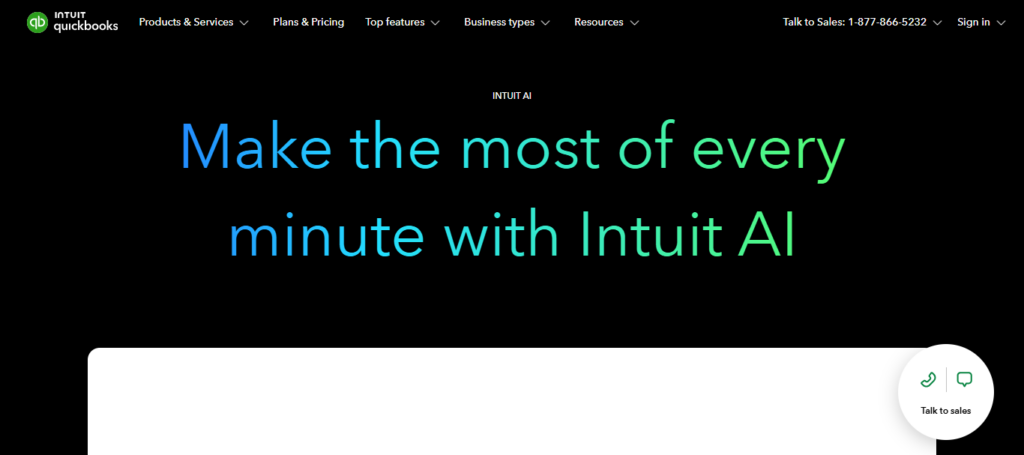
Halfway through adopting Essential AI Tools to Automate Small Business Books, I was so impressed with QuickBooks Online that it began to come into its own for predictive insights and intelligent reporting. It offers integrations with hundreds of apps, payroll automation, and compliance simplification to make bookkeeping fast, accurate and scalable for growing firms.
AI + QuickBooks Online — Features
- AI automatic transaction categorization
- Smart bank reconciliation automation
- Cash-flow forecasting with predictive insights
- Automated invoice reminders and payment tracking
- Financial reports powered by AI and business dashboards in real time
QuickBooks Online + AI
| Pros | Cons |
|---|---|
| Powerful AI automation for bookkeeping tasks | Subscription cost increases with features |
| Automatic expense categorization | Learning curve for beginners |
| Smart financial insights & forecasting | Advanced reports require higher plans |
| Strong integrations with apps & banks | Customer support complaints reported |
| Ideal for growing small businesses | Can feel complex for freelancers |
2. Zoho Books AI
Zoho Books AI A robust cloud accounting platform enabled by intelligent automation through its own AI assistant It automates invoice generation, expense classification, bank reconciliation and tax computations while providing real-time financial analytics. Global and Indian SMEs will find workflow automation and GST compliance features useful for their business logic.
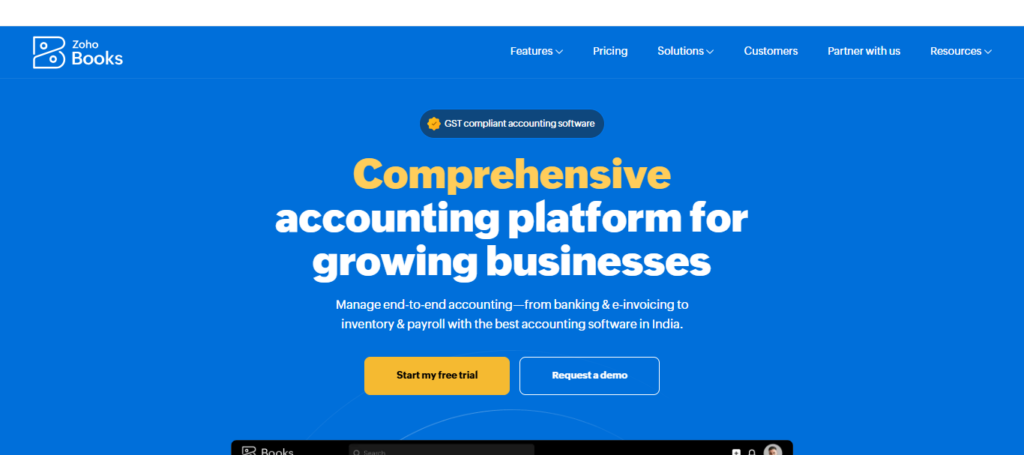
Implementing Essential AI Tools to Automate Small Business Books, Zoho Books AI is streamlining repetitive accounting duties and is keen on working towards better financial visibility. Integrations for ecosystem like CRM, stock management and payment systems make the business managing process easy while assuring precise reports replete with bookkeeping operations.
Zoho Books AI — Features
- Zia AI assistant for financial insights
- Automated expense and receipt scanning
- Generate smart invoices & predict payment dates
- Workflow automation for bookkeeping tasks
- Automate GST solutions and tax compliance
Zoho Books AI
| Pros | Cons |
|---|---|
| AI assistant (Zia) provides insights | Limited outside Zoho ecosystem |
| Affordable pricing plans | Advanced accounting needs setup |
| Excellent automation workflows | Smaller third-party marketplace |
| GST & tax compliance friendly | Some reports need customization |
| Great for startups & SMEs | Payroll features limited regionally |
3. Bench AI Bookkeeping
Bench AI Bookkeeping Algorithms, machine learning and artificial intelligence are combined with human professional bookkeepers in a hybrid bookkeeping solution. It automatically categorizes the transactions, prepares monthly financial statements and creates tax-ready reports. Essential AI Tools to Automate Small Business Books Businesses use AI software Bench makings transactions seamless and accounting simple because it avoids technical complexity.
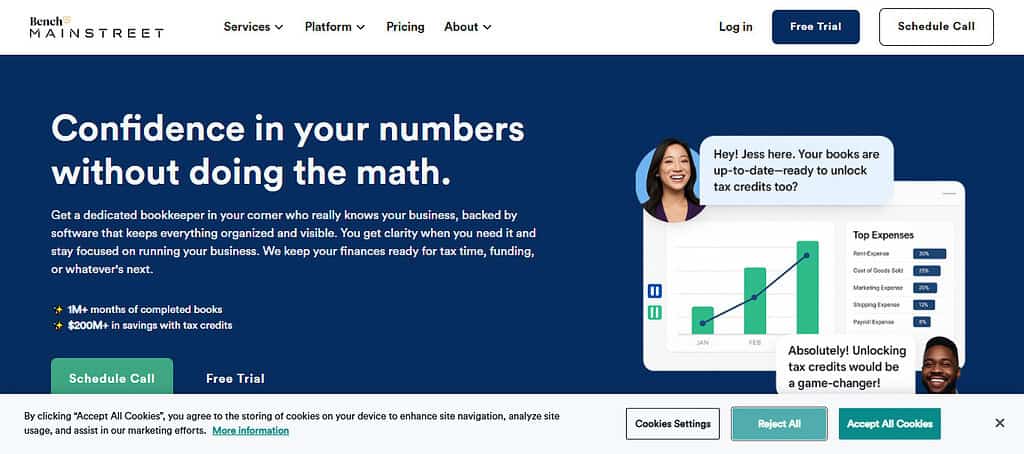
It lets the AI system classify financial data, while expert sets of bookkeepers will review it for accuracy and insights. Having all these capabilities in one place means compliance is easier, financial forecasting is simple, and owners can attend to what matters: running their business instead of weighing spreadsheets against accounting software.
Bench AI Bookkeeping — Features
- AI-supported human bookkeeping service
- Automatic expense categorization
- Monthly financial statement preparation
- Real-time profit & loss tracking
- Dedicated bookkeeping expert support
Bench AI Bookkeeping
| Pros | Cons |
|---|---|
| Combines AI with human bookkeepers | Higher monthly cost |
| Hands-off bookkeeping service | Less DIY control |
| Automatic transaction categorization | Limited integrations |
| Easy financial reporting | Not ideal for large businesses |
| Tax-ready financial statements | Custom accounting features limited |
4. FreshBooks AI
FreshBooks AI is geared towards helping automate and streamline bookkeeping for freelancers and service-centered businesses with intuitive workflows. The software automatically tracks spending, captures receipts, generates reports and professional invoices, and tracks payment status. As part of the strategy called: Essential AI Tools to Automate Small Business Books, FreshBooks AI improves productivity by automating billing cycles and linking time tracking with accounting records.
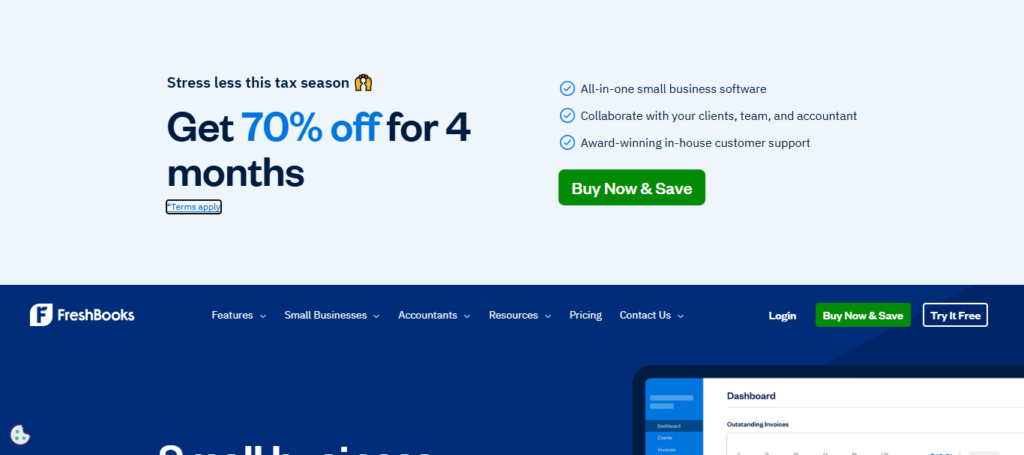
Its user-friendly dashboard presents financial insights without accounting skills. It automates reminders for clients, tracks project profitability, and simplifies reporting into easy to digest formats making it easier for the business owner to manage finances improving cash flow as well as speeding up client payments.
FreshBooks AI — Features
- Automated invoicing and billing reminders
- AI-powered expense tracking with receipt capture
- Time tracking for service businesses
- Smart financial reporting automation
- Client payment prediction insights
FreshBooks AI
| Pros | Cons |
|---|---|
| AI-powered invoicing automation | Limited inventory management |
| Excellent for freelancers | Not suited for large enterprises |
| Time tracking automation | Reporting depth is moderate |
| Smart expense tracking | Extra users cost more |
| Clean and easy interface | Advanced accounting limited |
5. Sage Intacct AI
Sage Intacct AI a leading cloud accounting solution for scaling businesses that require enterprise-level automation. Through deep financial analytics enabling and empowering actions, AI capabilities automate revenue recognition, expense allocation, and multi-entity consolidation. Organizations using Essential AI Tools to Automate Small Business Books typically outgrow entry-level accounting packages and move onto Sage Intacct as they gain momentum.
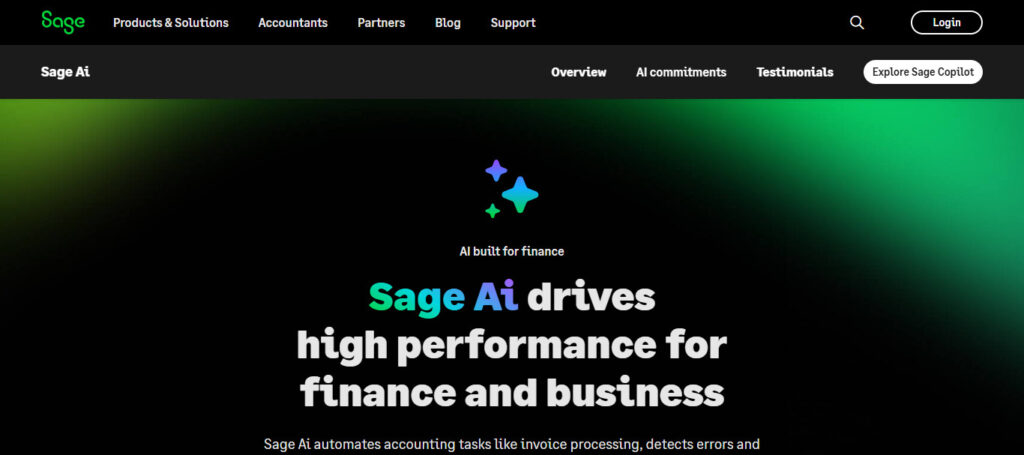
Its smart dashboards provide predictive insights to empower leaders with strategic decisions. Automation minimizes manual entries, increases audit readiness and ensures adherence to accounting standards. Ideal for businesses looking for high-end financial automation and future scalability, Sage Intacct AI.
Sage Intacct AI — Features
- AI-driven financial planning & analytics
- Automated revenue recognition
- Multi-entity accounting automation
- Intelligent anomaly detection
- Advanced real-time financial dashboards
Sage Intacct AI
| Pros | Cons |
|---|---|
| Enterprise-grade AI financial automation | Expensive for small businesses |
| Advanced forecasting & analytics | Implementation requires training |
| Multi-entity accounting support | Complex initial setup |
| Strong compliance features | Needs accounting knowledge |
| Highly scalable platform | Overkill for startups |
6. Wave Accounting AI
Wave Accounting AI is a free yet powerful accounting platform with automation tools for small and micro-businesses. Automated bank feeds, smart categorization of expenses, and invoice generation with income and cash flow tracking are all AI features. Wave Accounting AI is one of the Essential AI Tools to Automate Small Business Books that enable entrepreneurs to wave goodbye to manual bookkeeping without breaking the bank with expensive software.
Receipt scanning and automated reporting ease financial tracking, while user-friendly dashboards democratically make accounting available to all. Small businesses can rely on the platform for maintaining accurate records, having payments processed swiftly and approaching tax season without worrying.
Wave Accounting AI Features
- Automatic bank transaction imports
- AI expense categorization
- Smart invoicing and payment tracking
- Real-time income & expense monitoring
- Automated accounting reports generation
Wave Accounting AI
| Pros | Cons |
|---|---|
| Free core accounting software | Limited advanced automation |
| Automated bank feeds | Fewer integrations |
| Easy invoicing tools | Payroll not global |
| Beginner-friendly interface | Basic reporting features |
| Ideal for micro businesses | Limited scalability |
7. Botkeeper AI
Botkeeper AI offers robotic bookkeeping automation for accounting firms and scaling businesses. The platform employs machine learning and robotic process automation to reconcile accounts, categorize transactions, and build real-time financial dashboards.
Top AI Tools to Automate Small Business Books 07: Companies implementing them often choose Botkeeper AI for its scalability and accuracy. It constantly explores financial data, finds aberrations, and lowers human load by a fair margin.
Integration with accounting platforms and CPA workflows helps enterprises to be operationally efficient whilst ensuring professional-level bookkeeping and consistency in financial reporting outputs without significant manual intervention.
Botkeeper AI — Features
- Robotic process automation for bookkeeping
- AI transaction coding and reconciliation
- Automated month-end closing workflows
- Cloud-based accounting dashboard
- Continuous financial monitoring alerts
Botkeeper AI
| Pros | Cons |
|---|---|
| AI + human verification model | Premium pricing |
| Real-time bookkeeping automation | Requires onboarding setup |
| Automated reconciliations | Mostly accountant-focused |
| Continuous financial monitoring | Less DIY flexibility |
| Accurate reporting dashboards | Small teams may find costly |
8. Kashoo AI
Kashoo AI all about simplicity but provides intelligent automation to manage small business accounting. Its AI engine auto-categorizes transactions, bank feeds are reconciled, and financial records organized automatically — no complex setup processes required. Businesses considering Best AI Tools For Automating Small Business Books love Kashoo AI for its simple interface and automation-first philosophy.

It enhances the correctness and decreases repeated data input as it gets know more about user behavior over time. This app automatically generates financial reports, tax summaries and helps you track your expenses keeping their books organized and gives a clear view of financial matters while saving a lot of administrative time.
Kashoo AI — Features
- Auto bank feed synchronization
- Smart transaction categorization
- One-click financial reporting
- Simplified bookkeeping automation
- AI data accuracy validation tools
Kashoo AI
| Pros | Cons |
|---|---|
| Automatic transaction categorization | Limited advanced features |
| Simple bookkeeping workflow | Few integrations |
| Easy setup for beginners | Reporting options basic |
| AI-based data entry automation | Not enterprise-ready |
| Affordable pricing | Limited scalability |
9. ZipBooks AI
ZipBooks AI is built on classic accounting but has the intelligent financial insights and automated workflows that perfectly match small teams.
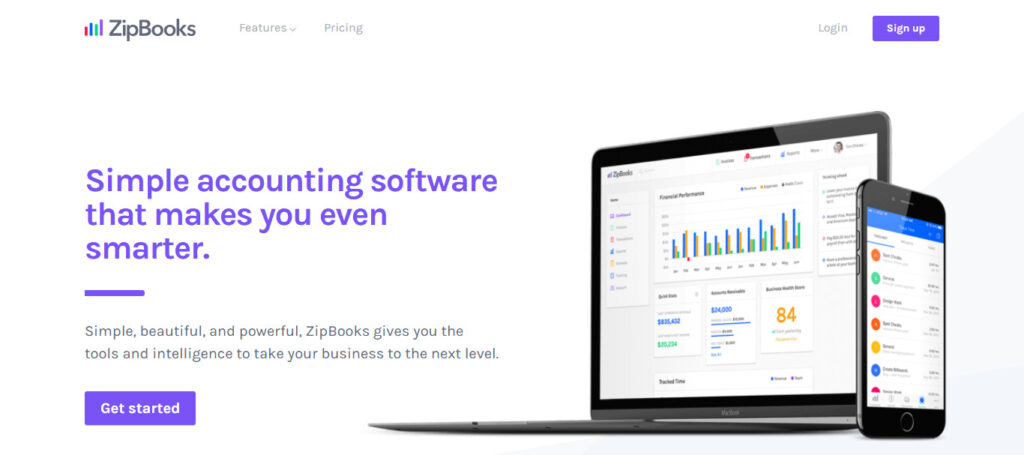
It automates invoicing, expense tracking and performance analysis; generating smart business health scores from financial data. With Essential AI Tools to Automate Small Business Books, ZipBooks AI helps owners identify profitable trends and analyze business performance in simple, non-analytical words. Its automation decreases bookkeeping errors and enhances billing efficiency.
Accounting is not just becoming easier for businesses, it is also forming a better strategy that lays a clear financial path ahead facilitated by data-driven recommendations used to make the discipline work for businesses looking toward sustainable growth.
ZipBooks AI — Features
- Intelligent invoice automation
- AI business health scoring system
- Automated expense management
- Smart customer billing insights
- Financial performance analytics dashboard
ZipBooks AI
| Pros | Cons |
|---|---|
| Smart financial health scoring | Smaller ecosystem |
| Automated invoicing features | Limited inventory support |
| Free plan available | Advanced analytics limited |
| User-friendly interface | Not ideal for complex accounting |
| Good for startups | Fewer automation workflows |
10. OneUp AI Accounting
OneUp AI Accounting is accounting automation integrated with AI brink of knowledge as CRM and inventory management. It automatically pulls accounting entries from sales and inventory, saving time on duplicate data entry. Companies act on the Essential AI Tools to automate small business books Benefit from OneUp’s predictive forecasting and real-time profit tracking.
Artificial intelligence examines business trends to predict stock requirements and financial results By combining operations and finance, business owners can run their customers, inventory, and accounting on a single automated platform that also increases operators’ efficiency (that is to say time saved), and allows for higher decision-making accuracy.
OneUp AI Accounting — Key Features
- AI inventory and accounting integration
- Automated sales and bookkeeping sync
- Predictive cash-flow management
- CRM and accounting automation combined
- Real-time profit tracking analytics
OneUp AI Accounting
| Pros | Cons |
|---|---|
| AI-driven inventory & accounting sync | Less brand recognition |
| Real-time financial automation | Learning curve initially |
| CRM + accounting integration | Smaller support community |
| Automated bookkeeping updates | Limited enterprise features |
| Excellent inventory forecasting | Pricing grows with users |
11. TallyPrime with AI
TallyPrime with AI: replaces conventional accounting practices with automated functionalities suited for Indian companies. The AI improvements make GST filing, inventory management payroll tracking and compliance reporting simple.
Small businesses using Essential AI Tools to Automate Small Business Books often leverage TallyPrime, which is a great choice for its strong localization and tax compliance features. They allow real-time insights into business performance with fewer manual calculations.
Optimum’s hello familiar interface and with AI intelligence addresses the human bottlenecks, taking organizations away from manual bookkeeping to organized accounting without losing regulatory accuracy along with improved financial control.
TallyPrime with AI Features
- Automated GST compliance and tax return filing
- Smart voucher entry automation
- AI financial analysis reports
- Inventory and accounting synchronization
- Business performance monitoring dashboard
TallyPrime with AI
| Pros | Cons |
|---|---|
| Strong GST & compliance automation | Desktop-first experience |
| Powerful reporting capabilities | Cloud access requires setup |
| Popular in India business ecosystem | Interface feels traditional |
| AI-supported data insights | Needs accounting knowledge |
| Reliable offline accounting | Limited modern integrations |
12. Expensify AI
Expensify AI automates expense management from recognizing receipts to automating reporting. Platform scans your receipts, pulls data automatically and creates expense reports in seconds.
Within Essential AI Tools to Automate Small Business Books, Expensify AI streamlines reimbursement workflows while automatically enforcing company policies on expenses. Companies get real-time visibility into spending while reducing administrative overhead.
The app is integrated with accounting platforms to keep financial records in sync. Expensify AI eliminates the need for manual expense entry and delays in approval, increasing accuracy, saving time, and improving financial visibility for small- to medium-sized businesses.
Expensify AI — Features
- Intelligent receipt scanning and data extraction
- Automatic expense report generation
- AI approval workflow automation
- Corporate card expense reconciliation
- Real-time expense tracking dashboard
Expensify AI
| Pros | Cons |
|---|---|
| AI receipt scanning & expense tracking | Not a full accounting system |
| Automatic reimbursement workflows | Requires integration with accounting tools |
| Smart approval automation | Subscription costs for teams |
| Real-time expense visibility | Limited bookkeeping features |
| Excellent mobile experience | Best used as complementary software |
Conclusion
Essential AI Tools Automating Small Business Books AI-backed bookkeeping solutions decrease manual data input, lessen accounting mistakes, and offer real-time financial insights that assist organizations in making more intelligent choices. Replacing laborious processes like automated invoicing and expense tracking to predictive cash-flow analysis, and tax compliance — AI tools streamline complex accounting tasks.
For small businesses, automation translates into saving time, reducing the cost of operations and improving financial precision without requiring deep knowledge about accounts. As AI technology evolves, businesses that adopt automated bookkeeping solutions will have better financial control, efficiency and a competitive edge in the fast-paced digital economy.
FAQ
What are Essential AI Tools to Automate Small Business Books?
Essential AI tools are accounting and bookkeeping platforms powered by artificial intelligence that automate financial tasks such as expense tracking, invoicing, bank reconciliation, reporting, and tax preparation. These tools reduce manual accounting work and improve financial accuracy.
How do AI bookkeeping tools help small businesses?
AI bookkeeping tools automatically categorize transactions, generate financial reports, monitor cash flow, and detect errors. This saves time, lowers operational costs, and allows business owners to focus more on growth instead of manual accounting tasks.
Are AI accounting tools safe for financial data?
Yes. Most modern AI accounting platforms use bank-level encryption, secure cloud storage, multi-factor authentication, and compliance standards to protect sensitive financial data and business transactions.
Do small businesses still need accountants if they use AI tools?
AI tools automate routine bookkeeping, but accountants remain valuable for tax planning, financial strategy, audits, and complex compliance decisions. Many businesses combine AI automation with professional accounting support.
Can AI tools handle tax preparation automatically?
Many AI bookkeeping platforms prepare tax-ready reports, track deductible expenses, and calculate taxes automatically. However, final tax filing requirements may still depend on local regulations and professional review.