




In this article on the Best Platform Engineering Tools for Dev Portals, we will cover tools that allow organizations to create efficient internal developer platforms and automate workflows while improving developer experience.
They facilitate self-service infrastructure, standardized deployments and improved collaboration between platform and DevOps teams,” enabling businesses to deliver software faster with governance, scalability, reliability and operational efficiency.
What are Platform Engineering Tools for Dev Portals?
Platform engineering tools are software solutions designed to create internal developer platforms that expose services, infrastructure, documentation or deployment pipelines and operational tools in a single self-service interface.
These tools abstract the complexity of infrastructure, standardize workflows and automate DevOps operations so that developers can focus on building applications instead of managing environments.
Platform engineering tools integrate service catalogs, automation capabilities, governance policies and integrations to deliver better developer productivity by skilfully managing cloud-native organizations’ software delivery pipeline from initial code commitment through automated builds that test for security compliance all the way until production deployment.
Why are Internal Developer Portals important?
Improves Developer Productivity
You spend less time on manual setup and ops as developers access tools, services, and environments from one place.
Enables Self-Service Infrastructure
It allows independent provisioning of environments, application deployment and resource management without waiting for DevOps or platform teams.
Standardizes Engineering Workflows
Internal developer portals provide teams with uniform deployment processes, templates and best practices over a specific project.
Reduces Developer Cognitive Load
Complex infrastructure and cloud configurations are abstracted away so, team dedicates time majorly to coding and innovations.
Enhances Collaboration Across Teams
By using service catalogs to track ownership and shared documentation, communication between developers and ops/platform teams is improved.
Strengthens Governance and Security
Whether automatically detecting software vulnerabilities or enforcing compliance policies, built-in technologies and access controls help increase the security and regulatory assurance of a secure DevSecOps pipeline.
Accelerates Software Delivery
Automated provisioning and templated workflows eliminate bottlenecks, resulting in rapid releases at all levels of continuous deployment.
Improves System Visibility and Reliability
This visibility helps teams become more aware of services, dependencies and operational health thereby reducing incidents.
Key Point & Best Platform Engineering Tools for Dev Portals
| Platform Engineering Tool | Key Point |
|---|---|
| Humanitec Platform Orchestrator | Enables golden paths and workload orchestration for standardized developer environments. |
| Port.io | No-code internal developer portal with service catalog, scorecards, and workflow automation. |
| Cortex.io | Improves developer productivity using service ownership tracking and engineering scorecards. |
| Roadie Backstage SaaS | Managed Backstage platform that simplifies developer portal deployment and maintenance. |
| Harness IDP | AI-assisted Internal Developer Portal focused on DevOps automation and self-service workflows. |
| Score.dev (by Score) | Workload specification framework that standardizes application definitions across platforms. |
| OpsLevel | Service catalog platform designed to improve reliability, governance, and engineering standards. |
| Env0 | Self-service infrastructure automation platform supporting Terraform and IaC governance. |
| Kubecost + Backstage Integration | Combines cost visibility with developer portals for cloud cost awareness and optimization. |
| Getport (Open Source) | Open-source developer portal enabling customizable workflows, catalog management, and automation. |
1. Humanitec Platform Orchestrator
The Humanitec Platform Orchestrator is a comprehensive platform engineering offering used to standardize application delivery at any scale by orchestrating workloads and automating developer self-service. It allows platform teams to define reusable “golden paths” and decouples application configuration from infrastructure complexity.
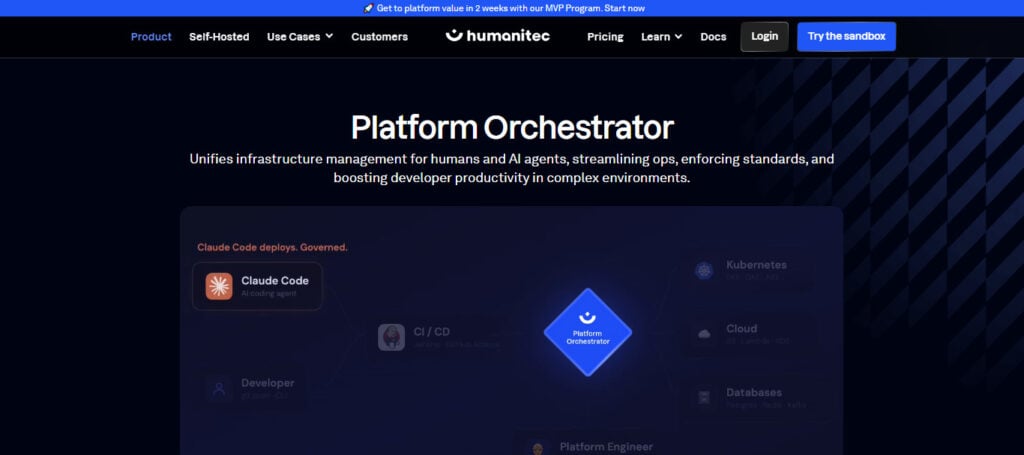
It enables developers to deploy their application without any concern around Kubernetes, cloud resources and/or environment provisioning. Humanitec is on the list of Best Platform Engineering Tools for Dev Portals thanks to its role in enhancing developer experience while preserving governance placed precisely down the middle of modern platform engineering strategies.
The score-based deployment model provides consistency, scalability and secure environment management across multi-cloud or hybrid infrastructure ecosystems.
Humanitec Platform Orchestrator Features
- Environment orchestration and workload automation
- Dynamic configuration management across environments
- Deployment templates for Golden path by developers
- Kubernetes and multi-cloud infrastructure abstraction
- Developer workflows at self-service with governance controls
Humanitec Platform Orchestrator — Pros & Cons
| Pros | Cons |
|---|---|
| Powerful environment orchestration automation | Requires platform engineering maturity |
| Strong Kubernetes & IaC integration | Initial setup complexity |
| Enables true self-service deployments | Learning curve for new teams |
| Reduces developer cognitive load | Enterprise pricing model |
| Standardizes golden paths | Needs DevOps expertise |
2. Port.io
Port. io offers a customizable internal developer portal around how we touch visibility, automation and operational excellence. It provides a no code interface to build service catalogues, engineering scorecards and workflow automation pipelines. CI/CD, monitoring, incident management and infrastructure tools can be brought into one platform interface.
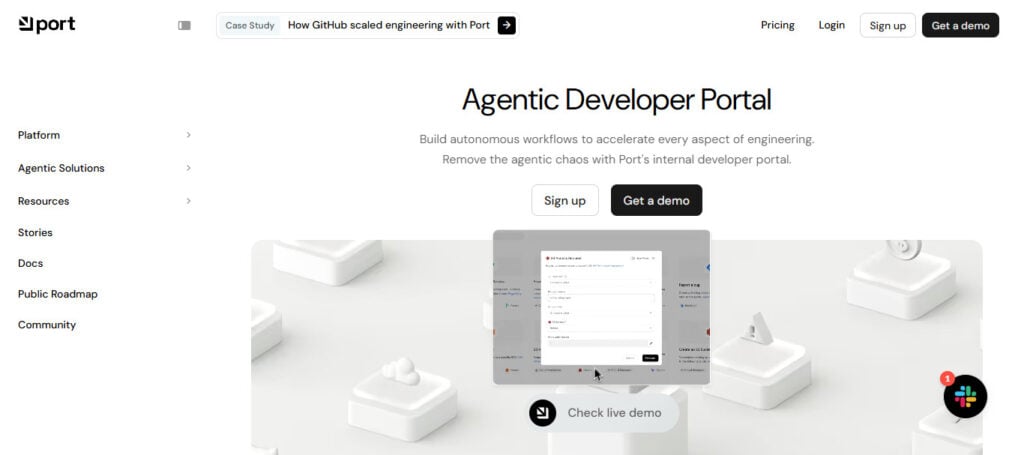
The following are positioned as one of the Best Platform Engineering Tools for Dev Portals:Port. io helps reduce developer friction by centralizing the ownership, documentation and operational data. With its extensible plugin system and API-first architecture, it’s great for enterprises requiring scalable developer portals without the hassle of continuous infrastructure upkeep or heavy open source maintenance.
Port.io Features
- Software catalogue and tracking of service ownership
- Very customisable dashboards for internal developer portals
- Workflow automation and self-service actions
- Connections to CI/CD, Git and cloud platforms
- Developer metrics and engineering insights in real-time
Port.io — Pros & Cons
| Pros | Cons |
|---|---|
| Highly customizable developer portal | Requires configuration effort |
| Strong service catalog visibility | Can become complex at scale |
| Excellent workflow automation | UI customization takes time |
| Integrates with many DevOps tools | Advanced features need planning |
| Great developer experience focus | Pricing may grow with usage |
3. Cortex.io
Cortex. io helps engineering organizations combat microservices sprawl with a centralized service catalog and governance framework. This is used to produce engineering scorecards identifying reliability, security, documentation quality and operational maturity. Developers have insight into ownership, dependencies and service health across massive distributed systems. Cortex also featured as one of the Best Platform Engineering Tools for Dev Portals.
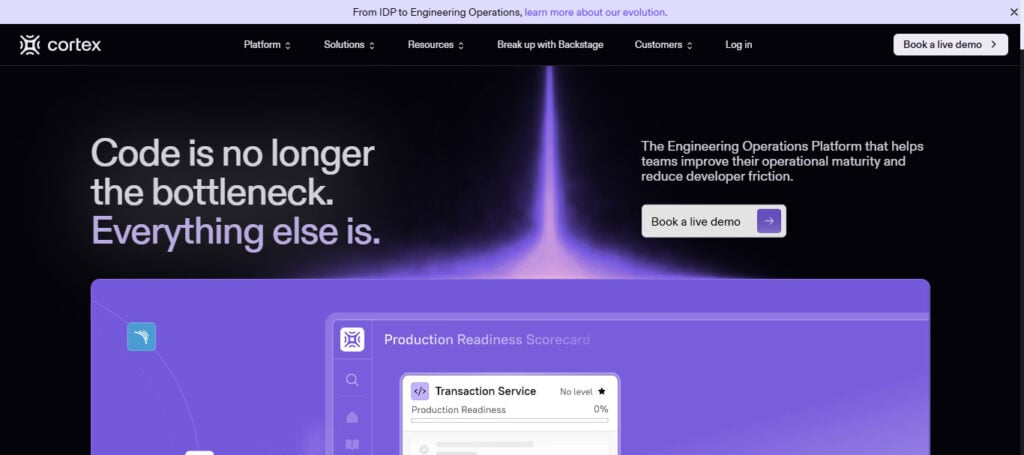
Platform Engineering Making Developers Accountable By Popularize.io Automated insights help teams spot gaps in best practices, but also improve internal collaboration—between DevOps and platform or developers working within cloud-native architectures at an increasing speed with the ground-breaking expansion of engineering environments.
Cortex.io Features
- Service catalog enforcing engineering standards
- Assessing Reliability, Security, and Operational Maturity with Scorecards
- Automated ownership and dependency mapping
- Developer workflow visibility across microservices
- Intrgration with observability and DevOps tools
Cortex.io — Pros & Cons
| Pros | Cons |
|---|---|
| Excellent engineering scorecards | Heavy governance focus |
| Improves service ownership clarity | Setup needs structured metadata |
| Strong operational insights | Smaller teams may not need full power |
| Reliability & maturity tracking | Requires organizational alignment |
| Good incident visibility | Less deployment orchestration |
4. Roadie Backstage SaaS
Roadie Backstage SaaS provides a fully managed version of Backstage, removing the operational overhead typically associated with hosting and maintaining an open-source developer portal. Developers can instantly deploy internal developer platforms that include everything from service catalogs to documentation hubs, software templates and workflow integrations.
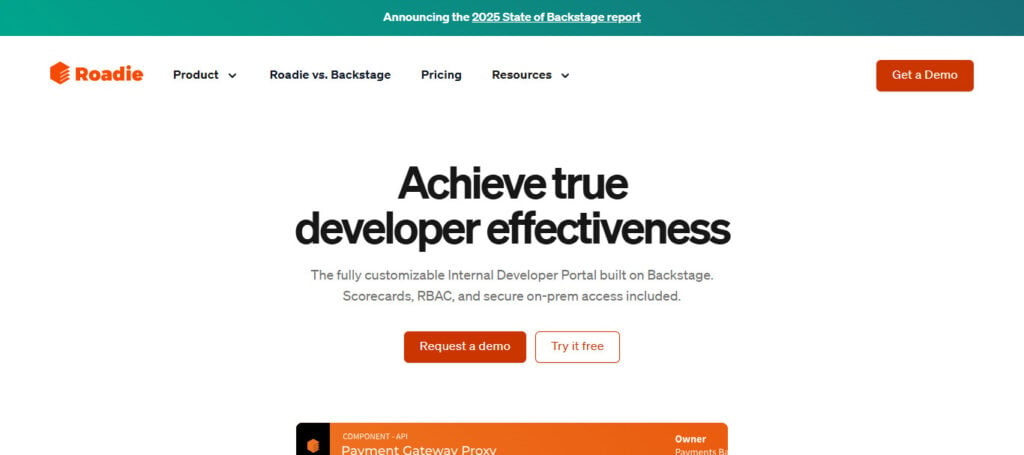
This frees teams to eliminate infrastructure overhead, and simply improves developer productivity and experience. Roadie is one of the Best Platform Engineering Tools for Dev Portals making it easier to adopt platform engineering principles without sacrificing Backstage flexibility.
One of the best parts is that you can get enterprise-grade portals without spending your teams’ time maintaining and upgrading your platform; its built-in plugins, secure hosting, high-updates frequency all contribute to making it from companies who want this level service.
Roadie Backstage SaaS Features
- Managed Backstage developer portal (zero maintenance)
- A plugin ecosystem for CI/CD, monitoring and documentation
- Softwares Catalog and service discovery features
- Template Templates: Scaffolding new services
- Secure authentication and access management
Roadie Backstage SaaS — Pros & Cons
| Pros | Cons |
|---|---|
| Managed Backstage platform | Vendor dependency |
| Quick setup without infra management | Limited deep customization vs self-hosted |
| Rich plugin ecosystem | Subscription cost |
| Ideal for fast portal adoption | Requires Backstage knowledge |
| Developer-friendly UX | Plugin maintenance needed |
5. Harness IDP
Harmonizing DevOps Automation with AI-Driven Insights & Developer Self-Service Capabilities Under One Unified Platform Experience Harness Internal Developer Portal (IDP) CI/CD pipelines, feature flags, infra automation and reliability workflows are now native to the developer portal. They can provision the environments, deploy applications and monitor performance from one place. Harness IDP: a leader in Best Platform Engineering Tools for Dev Portals,
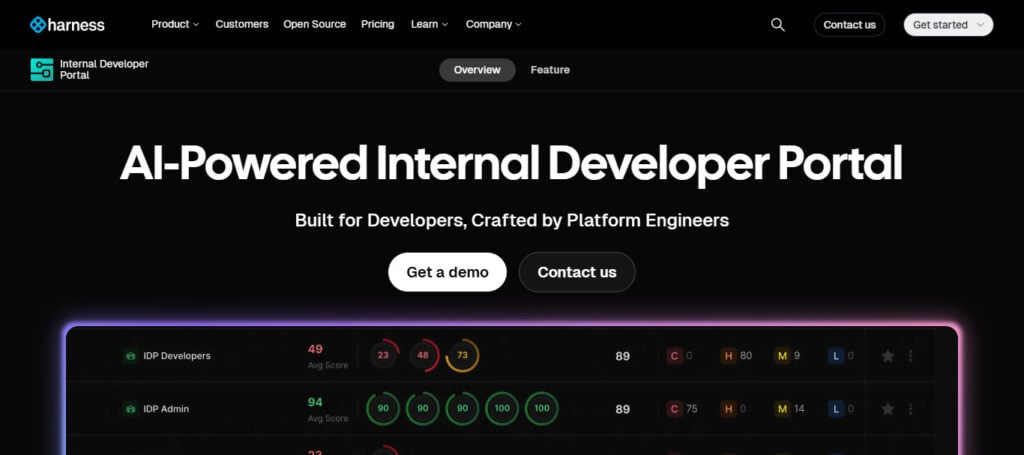
Harness IDP eliminates and abstracts the complexising of these tools that contribute to elevating cognitive load on devs thereby cementing repeatability standards at an org level. With its intelligent automation, it improves deployment efficiency, lowers operating costs and minimizes operational risks while shortening software delivery cycles across the modern cloud-native development environment.
Harness IDP Features
- CI/CD pipelines in the Integrated Internal Developer portal
- Developer self-service provisioning workflows
- Golden paths and boilerplate deployment templates
- DevOps metrics and performance analytics built-in
- Policy enforcement and governance automation
Harness IDP — Pros & Cons
| Pros | Cons |
|---|---|
| Integrated CI/CD + IDP platform | Enterprise-oriented pricing |
| Built-in developer workflows | Can feel heavy for startups |
| Strong governance & compliance | Learning curve |
| Excellent automation pipelines | Platform lock-in risk |
| Scalable enterprise solution | Requires adoption planning |
6. Score.dev (by Score)
Score. dev is a workload specification framework that standardizes the way developers define applications, independent of all infrastructure platforms. Developers define application needs using Score specifications which are passed on to platform teams for deployment into cloud infrastructure instead of having developers learn Kubernetes or other vendor configurations. Ranked in the Best platform engineering tools for dev portals category, Score.
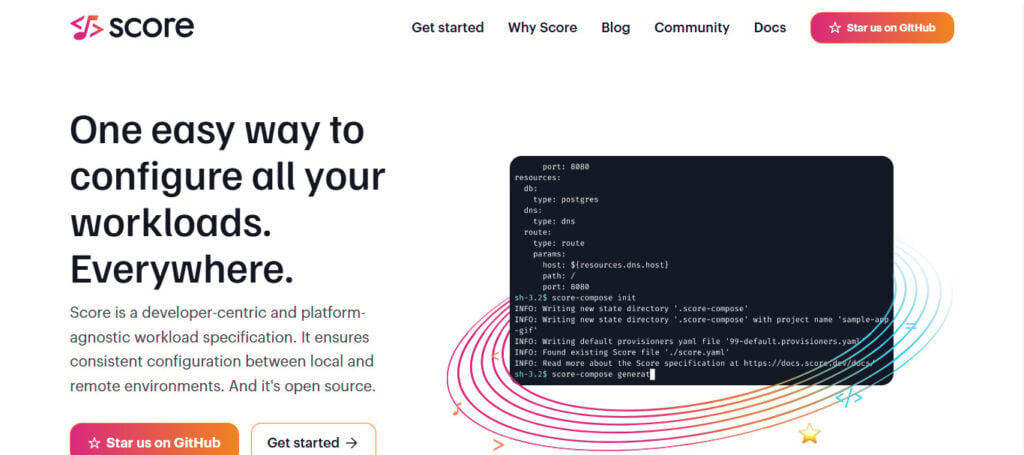
To build consistent deployment workflows and reusable templates that can be utilized by platform engineers, using dev as shown. It provides an abstraction that increases portability, enables configuration drift reduction and simplifies onboarding. With this offering, organizations can have clearer collaboration between developers and the platform teams with flexibility across multiple runtime environments as well as cloud providers.
Score. dev (by Score) Features
- Specification of Open Workload for platform engineering
- Application configuration abstraction layer
- Consistent deployment definitions across environments
- Developer-friendly YAML workload templates
- Interoperability standard with Kubernetes and other frameworks
Score.dev (by Score) — Pros & Cons
| Pros | Cons |
|---|---|
| Developer-first workload specification | Still growing ecosystem |
| Platform-agnostic design | Needs platform engineering setup |
| Simplifies deployment definitions | Limited UI compared to portals |
| Works across environments | Requires YAML familiarity |
| Promotes platform standardization | Documentation learning needed |
7. OpsLevel
OpsLevel is a service ownership and governance platform designed to enable reliability engineering and operational maturity. Creates an organized service catalog with ownership, dependencies, documentation and operational standards tracked by teams Engineering scorecards assess services against reliability and compliance standards without any manual work. General:
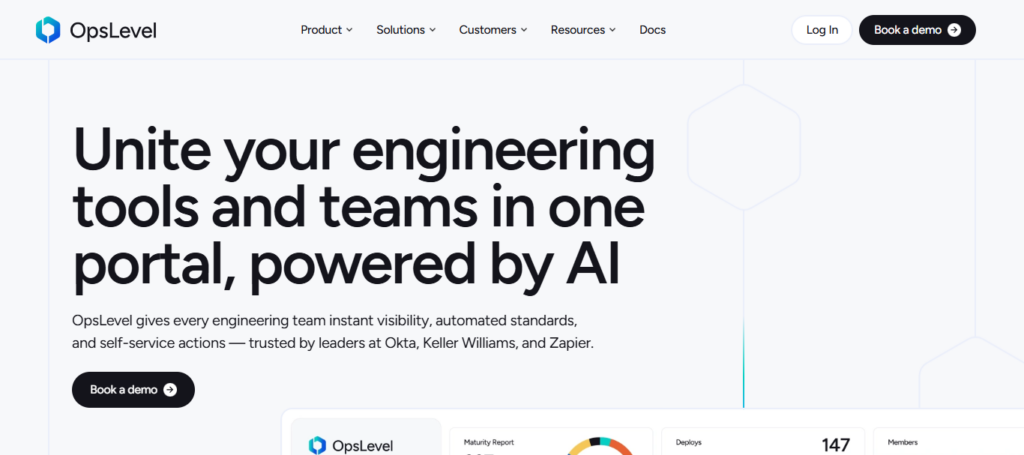
Best Platform Engineering Tools for Dev Portals — OpsLevel helps teams scale their microservices environments without sacrificing visibility or accountability. With a platform team, you can have solid telemetry on service health while developers understand what it takes to operate services and know expectations with regard to the operating load they create; all this leads up for better incident response, reliability culture as well as cross-team collaboration in large engineering organizations.
OpsLevel Features
- Tracking of service ownership and managing a catalog
- Automated operational maturity scorecards
- Incident management and reliability insights
- API integrations with DevOps ecosystems
- Governance and compliance monitoring tools
OpsLevel — Pros & Cons
| Pros | Cons |
|---|---|
| Excellent service catalog management | Less deployment automation |
| Strong developer scorecards | Requires metadata discipline |
| Improves engineering visibility | Setup effort for large orgs |
| Reliability governance tools | Smaller teams may underuse |
| Easy integrations | Limited infra orchestration |
8. Env0
Env0 is an infrastructure automation solution that allows teams to self-serve environment provisioning with Infrastructure as Code (IaC) tools like Terraform or OpenTofu. It allows developers to spin up environments on demand while platform teams govern with policies, cost controls and security guardrails.
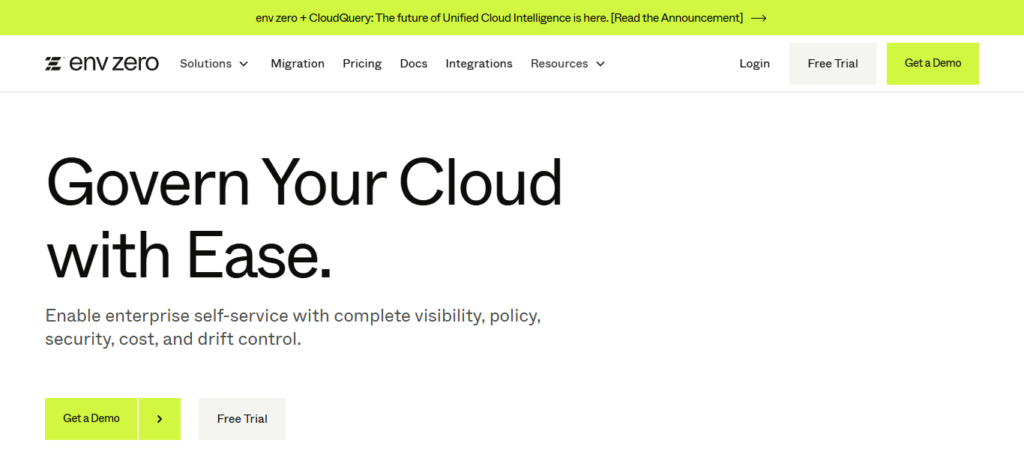
Here Env0 serves to break the gap between infrastructure governance and dev autonomy as highlighted in The Best Platform Engineering Tools for Dev Portals] It automates environment lifecycle management, approvals and resource tracking into workflows. This timeliness leads to faster deployments and reduced manual operations allowing for improved cloud resource efficiency all while maintain centralized control over the provisioning practices used across an organizations infrastructure.
Env0 Features
- Self-service infrastructure provisioning platform
- Terraform automation and workflow orchestration
- Controls for enforcing policy and cost visibility
- Environment lifecycle management automation
- Collaboration workflows for DevOps teams
Env0 — Pros & Cons
| Pros | Cons |
|---|---|
| Terraform automation powerhouse | Focused mainly on IaC workflows |
| Policy & approval automation | Not a full developer portal alone |
| Environment lifecycle management | Needs integration with portals |
| Cost control & governance | Advanced features require setup |
| Great for platform teams | Dev-focused UI less rich |
9. Kubecost + Backstage Integration
The integrated Kubecost and Backstage solution brings together developer portals with the context of Kubernetes costs in realtime, which gives engineers visibility into their cloud spend. The portal experience enables developers to track resource utilization, optimize their deployments and align engineering strategic endeavors with FinOps goals.
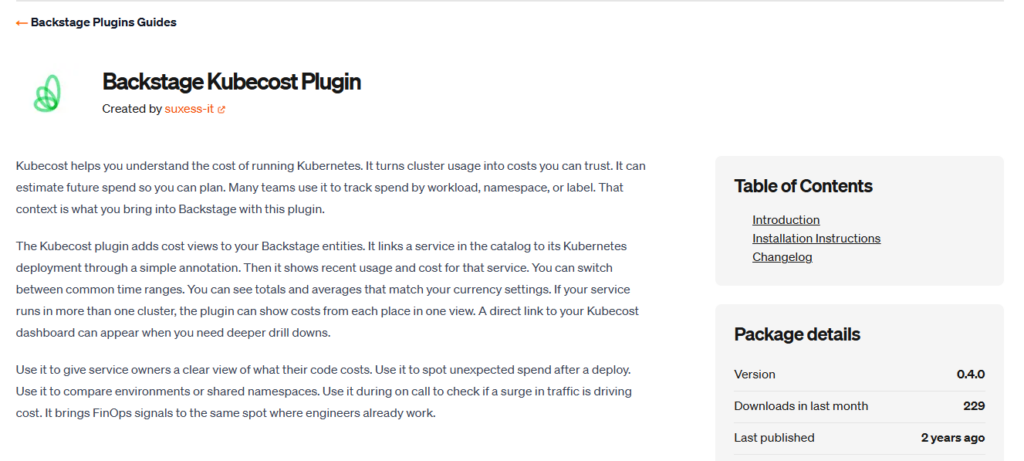
This add-on is featured in the Best Platform Engineering Tools for Dev Portals which cultivates a cost-making engineering culture not interrupting developer workflow. It allows platform teams to gain insight into infrastructure expenditure while enabling developers to drive optimization of performance and efficiency, with the goal of reducing cloud waste at scale for containerized environments.
Kubecost + Backstage Integration Features
- Kubernetes Cost Monitoring & Optimization Insights
- Cost visibility within developer portals
- Resource utilization tracking per service/team
- FinOps integration for engineering teams
- Cloud spend optimization analytics and budget alerts
Kubecost + Backstage Integration — Pros & Cons
| Pros | Cons |
|---|---|
| Deep Kubernetes cost visibility | Requires Backstage deployment |
| FinOps + Developer Portal combo | Setup integration effort |
| Helps optimize cloud spending | Needs Kubernetes expertise |
| Improves cost accountability | Monitoring configuration required |
| Real-time cost insights | Not standalone IDP |
10. Getport (Open Source)
Getport is an open-source internal developer portal that focuses on flexibility, extensibility and automation-driven workflows. It enables teams to create bespoke developer experiences using service catalogs, automation pipelines and workflow integrations that caters specifically to their organization’s needs.
This gives teams complete control over customization, hosting and data ownership as it is being open source. Getport — For Developers Portals Getport is one of the Best Platform Engineering Tools for Dev Portals on Black Friday where platform teams build developer platforms that match with internal process.
An open and modular architecture allows for integrations with an ever-growing ecosystem of modern delivery tools, providing greater visibility, reducing friction of operations and increasing developer productivity across the enterprise.
Getport (Open Source) Features
- Open-source internal developer portal framework
- Create custom entity modeling and service catalog
- Self-service developer workflows automation
- Integration with DevOps & Cloud Tools (Easier Integration)
- Dashboards and developer experience can be fully customized
Getport (Open Source) — Pros & Cons
| Pros | Cons |
|---|---|
| Open-source flexibility | Requires self-hosting management |
| Highly extensible portal framework | Setup complexity |
| Strong workflow automation | Community support evolving |
| Developer self-service focus | Requires customization effort |
| Vendor lock-in free | Needs platform engineering skills |
Conclusion
Internal developer portals are at the core of this transformation and fit right in as platform engineering becomes more the backbone to modern software delivery.
Best Platform Engineering Tools for Dev Portals help organizations to mitigate developer friction and promotes standardization of workflows while getting the collaboration rate between platform teams and developers better. Solutions like Humanitec, Port. io, Cortex.
These include Service management, which simplifies service selection and delivery via unified forms like open-source service catalog netskope. My builder (io), Roadie respectively O11y/service level indicators and roadiesContinue reading → Tools such as Harness IDP Env0 Score The DEv enable automation and abstraction of infrastructure.
With the correct platform engineering tools, organizations can speed up deployments, improve governance and developer experience and enable cloud-native operations at scale. In the end, a competent Developer Portals provides teams self-service capabilities, operational visibility and delivery practices consistency — fueling innovation at speed in modern DevOps infrastructure.
FAQ
What are Platform Engineering Tools for Dev Portals?
Platform engineering tools for developer portals are software solutions that help organizations build internal platforms where developers can access services, infrastructure, documentation, and deployment workflows through self-service interfaces. These tools simplify DevOps processes, reduce operational complexity, and improve developer productivity by centralizing engineering resources in one portal.
Why are Internal Developer Portals important?
Internal developer portals improve developer experience by removing bottlenecks caused by manual infrastructure requests and scattered tooling. They provide standardized workflows, service catalogs, automation, and governance, enabling teams to ship software faster while maintaining security and operational consistency.
How do Platform Engineering Tools improve developer productivity?
Developer portals reduce context switching by consolidating tools, infrastructure access, and deployment workflows into one interface. Developers spend less time managing environments and more time building features, leading to faster delivery cycles and improved innovation.
Are Platform Engineering Tools suitable for small teams or startups?
Yes. While large enterprises benefit greatly, startups can also use lightweight or open-source solutions to establish scalable engineering foundations early. Developer portals help growing teams avoid operational chaos as infrastructure and services expand.