


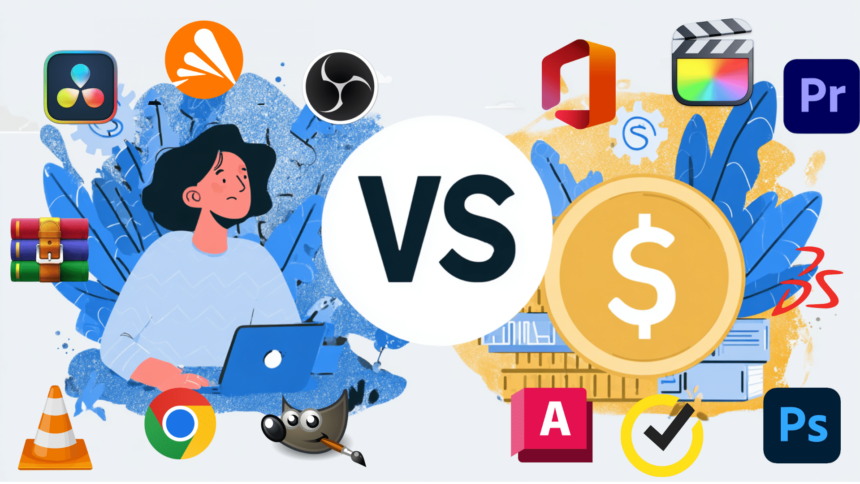
The main distinctions between Open-Source and Paid AI software will be covered in this post, along with how each choice affects scalability, security, cost, and flexibility for developers and organizations.
You’ll discover which solutions work best for startups, businesses, and research projects, as well as how hybrid models and emerging trends are influencing how businesses select the best AI tools both now and in the future.
What is Open-Source AI?
Open-source AI is artificial intelligence software, frameworks, models, or tools for which the source code, model weights, and documentation are publicly available for anyone to use, modify, and redistribute, subject to an open-source license.
Such an environment is beneficial for collaboration and developing cutting-edge AI software, as the community can study the inner workings of the AI, adjust it to their needs, and make it available for others to use.
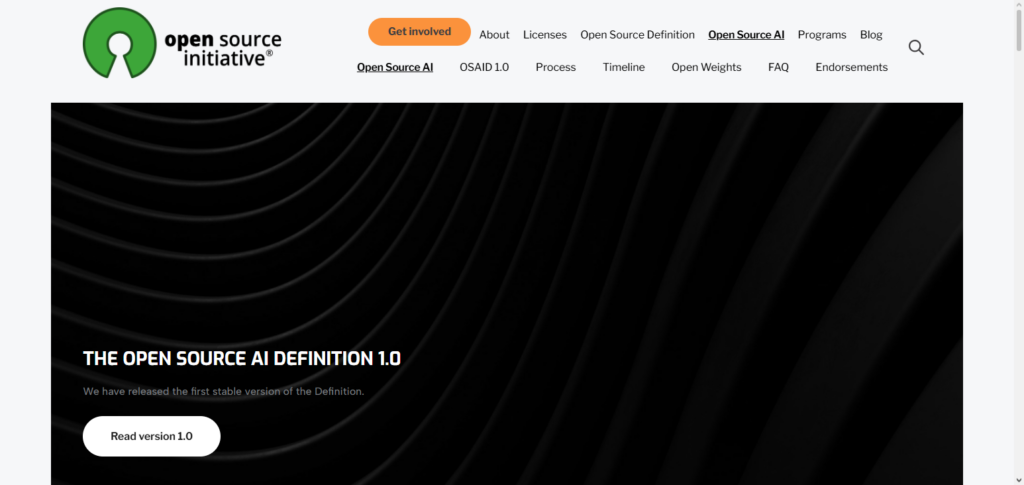
Open-source AI includes machine learning libraries (like TensorFlow and PyTorch), pre-trained models (like those available on Hugging Face), and fully-fledged AI systems that can be deployed on on-premise or cloud servers.
On the bright side, open-source AI usually reduces costs associated with software licensing and prevents the user from being locked into a vendor.
On the downside, open-source AI often requires a company to have in-house staff with the right expertise to implement, secure, and maintain the open-source AI platform, and it tends to be poorly supported compared to commercial products.
What is Paid AI Software ?
Paid AI software is artificial intelligence services and solutions available for purchase by businesses/organizations under licensing models that limit access to the software.
With these services and solutions, businesses gain access to tools that can be used out of the box for natural language processing and understanding, image and video recognition and analytics, chatbot generation, and RaDA (robotic process automation) to the cloud and software.
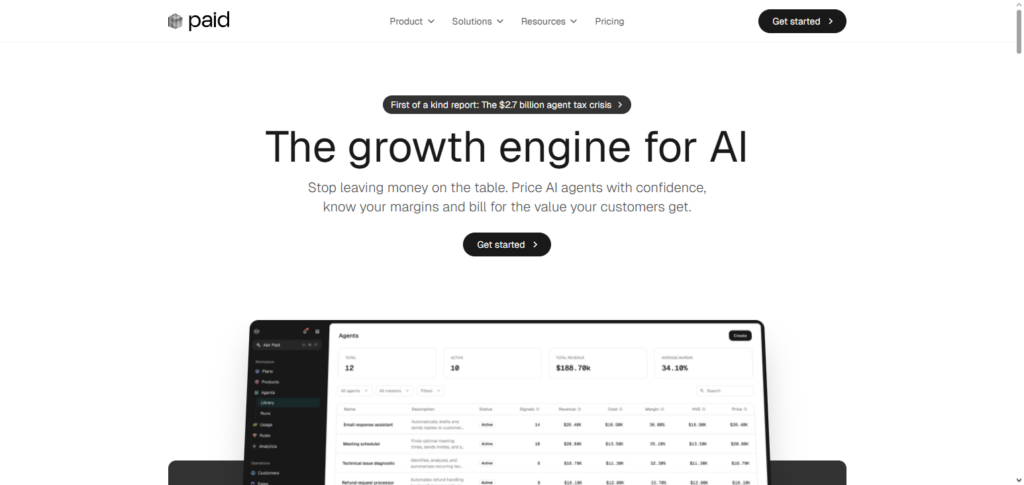
Businesses may also get access to prompt engineering services, professional services, technical support, service Level agreements (SLAs), updates and patches, compliance and security assurance, and user interfaces that are designed to be business professional friendly and non-technical user friendly.
Compared to in-house solutions, the services/systems/solutions are pre-built, even though the costs may be ongoing, there may be limits to usage, the business may become dependent on the services for infrastructure, the services may be proprietary, and there may be a vendor lock on the features and pricing associated with the services.
Key Comparison Open-Source AI vs Paid AI Software
| Comparison Factor | Open-Source AI | Paid AI Software |
|---|---|---|
| Cost | Free to use; no licensing fees, but hosting and maintenance costs may apply | Subscription, licensing, or usage-based fees |
| Accessibility | Code and models are publicly available | Access provided through accounts, licenses, or cloud platforms |
| Customization | Highly customizable; full control over code and models | Limited customization based on vendor features and APIs |
| Ease of Use | Requires technical skills and setup | User-friendly dashboards and tools for quick deployment |
| Support | Community forums, documentation, and contributors | Professional customer support and SLAs |
| Security & Compliance | User-managed security and compliance | Built-in enterprise-grade security and compliance features |
| Scalability | Depends on your infrastructure and engineering capabilities | Designed for easy scaling on vendor-managed cloud platforms |
| Updates & Maintenance | Community-driven updates and self-maintenance required | Automatic updates and maintenance by the provider |
| Vendor Lock-In | No vendor lock-in; full ownership and portability | Possible vendor dependency and platform lock-in risks |
| Best For | Developers, researchers, startups, and custom AI projects | Enterprises, businesses, and non-technical teams needing fast, reliable solutions |
Benefits of Open-Source AI vs Paid AI Software
Benefits of Open-Source AI
Cost-effective: Because there are no licensing fees, it makes it especially beneficial to students, startups, and those working with limited funding.
Full Transparency: The source code and models are completely open to anyone, and therefore anyone can see how the AI functions, and how it comes to its conclusions.
Customization: Since it is open-sourced, developers can change and adapt the AI to their liking and needs.
Community Support: Since it is open-sourced, there are global collaborators who share community updates and provide guidance on how to modify the AI and increase its performance.
Proprietory Freedom: Because open-source AI is unlicensed, it means the user will have full control over their data, their infrastructure, and their source code.
Rapid Discovery and Development: Since the program is free to anyone, it means many developers will be collaborating on the project.
Hand-on Learning: Open-source AI is great for learning due to its flexibility.
Various Options for Implementation: Open-source AI can used on local servers, private clouds, or public clouds.
Benefits of Paid AI Software
SLAs & Professional Support – With service-level agreements, you will have access to support and technical help when needed, and guaranteed uptime.
Simple Deployment – Your initial setup is simplified because of the ready tools and dashboards at your disposal.
Enterprise-Level Security – Your service will be in compliance with security, data protection, and industry standards and regulations.
Scalability Whenever Needed – Your service will scale with your business thanks to the cloud-based architecture.
Up-to-Date and Maintained – Your service provider will handle feature updates, bug repairs, and performance enhancements.
High Dependability – Your system will be dependable thanks to the meticulous testing, guaranteeing steady performance in production environments.
Integration Support – Your business will have the tools needed to integrate with leading business solutions, APIs, and enterprise systems.
Time-Efficient – Your service will eliminate the need to develop and maintain in-house AI, allowing your staff to concentrate on your primary business objectives.
Challenges of Open-Source AI vs Paid AI Software
Challenges of Open Source AI
- Technical Knowledge Required – Developers with advanced knowledge need to be hired to be able to install, configure, and maintain the models and the infrastructure.
- Support – The only available support are a few community forums and documentation rather than having guaranteed support of a company.
- Security – The users need to be responsible for the security of their data, patch vulnerabilities, and maintain compliance.
- Growth – In the absence of good DevOps and cloud, growing the systems can be very challenging.
- Inconsistent Improvements – The level of quality and timing of future updates of the systems are determined by the level of commitment and interest of the community to develop it.
- Integration – Applying source open tools to the previous working business systems can be a prolonged process that requires a lot of development effort.
Challenges of Paid AI Software
- Increasing Expenses – The licenses, subscriptions, and pay-as-you-go systems can lead to unanticipated high costs.
- Vendor Lock-In – Once a system has been implemented, it is time consuming to change to another system.
- Reduced Flexibility – The functioning of features and models is only determined by vendor.
- Data Security – Questions arise as to the where and how the data is being stored with the use of cloud-based systems.
- Usage Restrictions – Performance and scalability may be impacted by API limits, quotas, or tiered plans.
- Less Transparency – With proprietary models, there may be no opportunity to know how they arrive at their decisions.
Use Cases
Use cases of Open Source AI
Startups & MVP development – cost efficiency in building and testing early-stage products.
Education & Academic Research – perfect to utilize at colleges and have students test out and work on different AI models and algorithms.
Custom AI Solutions – great for companies that need a highly custom model and workflow.
On-premise Deployment – great for companies that are concerned with data privacy or need to work in an offline environment.
Community Projects – ideal for open development and community innovation.
AI Skill Development – helps developers in a hands on way to work on and improve different AI systems.
Use Cases for Paid AI Software
Data Analytics & Forecasting – optimized analytical AI insights to aid a business in decision-making.
Marketing & Sales Automation – tools for personalized content creation, lead scoring and, automated systems for sales and marketing.
Customer Support Chatbots – quick implementation of AI chat and voice assistants for customer support.
Compliance & Regulated Industries – Solutions in the legal, finance, and healthcare fields that need to be secure and compliant.
Enterprise Applications – automation of business processes, customer interaction and analytics, and large scale business automation.
Rapid Scaling Projects – ideal for tools and applications that will experience high traffic and rapid growth.
Security, Compliance, and Data Privacy
Open-Source AI
User Managed Security – The organization is responsible for securing the servers, models, and their data.
Data Control – Data retention can be done in private clouds or on-premises servers.
Custom Compliance Setup – The user must modify the system so that it is compliant to regulations including ISO, GDPR, and HIPAA.
Transparency – Since the code is open, users can run an audit for vulnerabilities, and backdoors.
Patch Responsibility – The user is responsible for monitoring, and applying updates and security.
Access Control – Custom implementation of authentication and access control is required.
Paid AI Software
Enterprise-Grade Security – Protection measures like encryption, secure APIs, and monitoring tools are built in.
Compliance Certifications – Regulations like GDPR, SOC 2, ISO 27001, and standards for the industry are often supported.
Vendor Managed Updates – Users don’t have to worry about maintenance and updates because the system does it automatically.
Cloud Data Policies – The vendor is responsible for the data storage and processing.
Audit Logs and Monitoring – Users are provided dashboards that help track the activity and access of the system.
Data Processing Agreements – The contracts detail how data is used, retained, and the policies surrounding it.
Future Trends
An open source and paid AI software future will be hybrid focused. Businesses will harness open source flexibility and close sourced services with support, security, and scalability.
The proliferation of AI-as-a-Service (AIaaS) will make advanced artificial intelligence tools more available to people who are not technical. Simultaneously, open source communities will continue leading the way for innovation focused on model development and transparency.
Increased regulatory compliance and AI ethics will be a driving factor for improved governance and accountability in both approaches.
Additionally, edge AI and on-device processing innovations will enable faster performance and better data control locally. That will reshape the ways open and closed sourced paid AI software is deployed across industries.
Pros & Cons
Open-Source AI Pros & Cons
Pros
- Free – Avoid the costs of licensing and save money on the project.
- Customizable – Modify to your own solution with access to the code and model.
- Transparency – The code is open, allowing audits and understanding of the AI.
- No Vendor Lock-In – The flexibility to deploy and change your mind about platforms.
- Community Support – Global support and constant contributions from developers.
Cons
- Requires skilled Technicians and IT – Complex, with no ready-made solutions to any of the problems.
- No Guaranteed Support – Feedback is as good as a response to the problem, expect to rely on the community.
- Users perform maintenance – On their own to allow their system to be operational.
- Difficult to Scale – Their infrastructure is not built to allow it.
- Users perform Security – They take full responsibility for data protection and, compliance, and so on.
Paid AI Software Pros & Cons
Pros
- Customer Support is Guaranteed – They do have a dedicated representative and support for the service.
- No Technicians are Required Here – With the tools it is very easy to have it deployed, and operate it.
- Super Security – The protection of the data and compliance is builtin.
- Stability is Guaranteed – It is operational and optimized for pro use.
- Complex integrations are easy – It integrates with tools and the cloud with no problems.
Cons
- Ongoing Costs – Subscription and usage fees can pile up.
- Vendor Lock-In – Lack of choice in a single provider’s platform and ecosystem.
- Limited Customization – Little control over the underlying models and features.
- Data Privacy Concerns – Privacy compliance issues with cloud processing.
- Usage Limits – Scalability can be affected by API quotas or plan restrictions.
Conclusion
In conclusion, both paid and open-source AI software have significant benefits, but which option is best for you will depend on your objectives, financial situation, and level of technical proficiency.
For developers, researchers, and businesses that require complete control and customization, open-source AI is the best option because to its cost-effectiveness, flexibility, and openness.
On the other hand, paid AI software excels in security, scalability, expert support, and ease of use, making it a great choice for teams and businesses that value dependability and quick implementation. The option that best fits your project objectives and long-term plan will ultimately be the “winner,” not one over the other.
FAQ
Is open-source AI really free to use?
Yes, most open-source AI tools and frameworks are free under open licenses, but you may still incur costs for cloud hosting, infrastructure, development, and maintenance.
Which is better for beginners, open-source AI or paid AI software?
Paid AI software is usually better for beginners because it offers user-friendly interfaces, tutorials, and professional support, while open-source AI often requires technical skills.
Can businesses use open-source AI in production environments?
Yes, many companies use open-source AI in production, but they must manage security, scalability, and compliance internally or through third-party services.
Is paid AI software more secure than open-source AI?
Not necessarily. Paid AI often includes built-in security and compliance features, while open-source AI offers transparency and control, but both require proper configuration to stay secure.
What are the long-term costs of paid AI software?
Long-term costs can include subscriptions, usage-based fees, and potential price increases as your usage scales.