


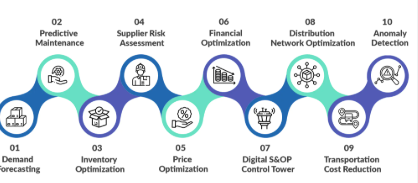
I’ll go over the top AI tools for supply chain optimization in this post, which are revolutionizing how companies run their businesses.
These AI-powered technologies, which range from demand forecasting and logistics to inventory management and predictive analytics, help businesses increase productivity, cut expenses, and improve decision-making. Find the best tools to improve the intelligence and agility of your supply chain.
How to Choose the Right AI Tool for Your Supply Chain
Identify Your Supply Chain Needs: To begin with, do an analysis of your supply chain processes. Consider the most critical areas of your business, such as, demand forecasting, inventory optimization, logistics management and operational visibility. The AI tool needs to fit your particular business problem to provide actionable outcomes.
Evaluate Integration Capabilities: The AI tool should have the capability of integrating with your current ERP, CRM and SCM systems. Having integration enables unobstructed workflow, omitting data duplication and providing updated information in all supply chain functions.
Assess Scalability and Flexibility: Go for a tool with a greater potential to accommodate your business changes. It should be able to handle heavy data loads, fit with supply chain process changes, and serve new areas or products without a major system changes.
Consider User-Friendliness and Adoption: It should be simple for your team to learn and utilize. Features such as easy to navigate interfaces, clear dashboards, and automated reports lead to shorter training cycles, increase usage and ensures that your team is making good use of the AI system.
Assess Analytic and AI Functionalities: For what the tool can do with the data and what its AI functions can do, consider the integration of predictive analytics, prospective scenario modelling, and prescriptive analytics. To aid quicker and better-informed decisions AI-enabled tools should act as consultants and provide recommendations and not only basic data.
Assess Vendor Support and Training: Designated vendor support is a must for implementation, addressing issues, and making continual improvements. To optimize the tool, assess the vendor’s system for stakeholder integration, onboarding, and responsive support.
Cost-Benefit Considerations: The potential and positive impacts of the tool over time and the overall initial costs along with the time it takes to implement it, should be considered. A tool to positively improve decision making on all levels of the supply chain should be able to provide a positive ROI through savings, efficiency, and reduction of stockouts.
Benefits of Using AI Tools in Supply Chain
Enhanced Demand Prediction
AI makes forecasting more refined and precise by analyzing historical sales data and cross-referencing it with market trends and external variables. Demand surges and downturns, overstocking, and stockouts are all reduced.
Superior Inventory Allocation
AI tools improve and streamline the service and fulfillment of customer orders, thus increasing customer satisfaction.
Improved Transportation and Route Optimization
AI systems improve and optimize transportation systems by analyzing and selecting the fastest and cheapest delivery methods while also reducing delivery time and increasing efficiency.
Increased Speed of Deploying Strategic Actions
AI tools enable the managers and leaders in each supply chain system respond more quickly to disruptions and changes in the market due to moves in the market by providing real-time insights and predictive analysis.
Reduction in Overall Supply Chain Costs
Waste is reduced, logistics are improved, and AI helps in the overall operational cost of a supply chain. This, in turn, leads to more efficient use of the available resources and improves profitability.
Risk Management and Supply Chain Resilience
Businesses can prevent disruptions and de-risk their supply chain to keep running under adverse conditions with the help of advanced AI tools to identify potential supply chain disruptions, supplier risks, and demand variability early on.
Improved Customer Satisfaction
With the help of AI , better demand forecasting and timely deliveries become automated. This eliminates the risk of under performance , and keeps the customer service expectation at elevated levels.
Key Point & Best AI Tools for Supply Chain Optimization List
| AI Tool | Key Point (AI‑Driven / Optimization Focus) |
|---|---|
| Blue Yonder Luminate AI | AI‑powered end‑to‑end supply chain planning and execution with advanced demand forecasting, inventory optimization, and real‑time response capabilities. |
| o9 Solutions AI | Cloud‑native “Digital Brain” platform combining AI, scenario planning, and real‑time data for integrated demand, supply, finance, and risk planning. |
| SAP IBP (Integrated Business Planning) | Unified cloud planning with AI‑assisted forecasting, scenario simulation, and real‑time inventory & supply optimization. |
| Oracle SCM Cloud AI | AI‑enabled end‑to‑end supply chain suite with predictive analytics for procurement, logistics, and fulfillment automation. ( |
| Kinaxis RapidResponse AI | Concurrent planning platform that uses AI and real‑time data for “what‑if” scenario modeling and agile supply chain decision‑making. |
| Infor Nexus AI | Multi‑enterprise supply chain network offering AI/ML‑enhanced real‑time visibility and collaboration across partners, inventory, and shipments. |
| IBM Sterling Supply Chain AI | AI‑driven solutions (including Watson) for predictive insights, risk management, and intelligent automation across procurement and fulfillment. |
| Microsoft Dynamics 365 SCM AI | Integrated AI, ML, and IoT‑enhanced capabilities for demand forecasting, inventory management, predictive maintenance, and real‑time visibility. |
| Coupa Supply Chain AI | AI‑augmented spend and supply chain design platform with community‑powered insights, scenario simulation, and autonomous planning support. |
| E2open AI Supply Chain | Cloud‑native platform connecting extensive partner networks with real‑time visibility, prescriptive analytics, and automated workflow to optimize complex supply chains. |
1. Blue Yonder Luminate AI
Blue Yonder Luminate AI specializes in Best AI Tools for Supply Chain Optimization with strong and cutting-edge technology. Their use of machine learning and real-time data to transform processes is evident.
Predictive analytics improves demand forecasting, reduces stockouts and excess inventory, and hinders the level of inventory that businesses have to monitor. Beyond inventory control, AI algorithms customer actions, and market behaviors to proactively address forecasting needs.
Operational plans can be adjusted on the fly. The tool also meets the analytics needs of global supply chain management by processing entire networks in real-time. Great for large businesses and the retail sector.
Blue Yonder Luminate AI Features
- Forecasting for future demand utilizing machine learning algorithms.
- Improving stock levels and automatically buying additional stock.
- Insight and visibility for supply chains in real-time.
- Refining transport and logistics.
- Using AI for planning in scenarios for managing risks.
Blue Yonder Luminate AI Pros & Cons
| Pros | Cons |
|---|---|
| Excellent predictive forecasting with advanced machine learning. | Can be expensive for small to mid‑sized businesses. |
| Strong inventory optimization and autonomous replenishment. | Implementation may require time and expert support. |
| Real‑time visibility into supply chain operations. | Complexity may overwhelm teams without AI experience. |
| Improves logistics decisions and responsiveness to disruptions. | Customization may add to setup cost and time. |
2. o9 Solutions AI
Supply chain optimization and integrated business planning is centered around the “Digital Brain” which is an AI platform created by o9 that is also cloud native.
In predictive analysis, real-time data involves demand-supply balancing scenario and itinerary planning. In the system, digital twins of the supply chain are created and multiple scenarios can be simulated to evaluate and recommend actions without disruption.
This capability enhances visibility, agility, and alignment among planning, sales, finance, and operations. o9’s advantage is supporting better choices in times of uncertainty and fostering collaboration among teams, which is particularly important in complex and global supply chains.
o9 Solutions AI Features
- Digital duplicate of the supply chain for scenario analysis.
- Using analytics to predict and balance the demand and supply in real-time.
- Integrated planning and Co-ordination of finance and sales operation along with supply chain.
- Visibility in supply chains of multiple levels.
- Tools for Collaboration with staff and other participants.
o9 Solutions AI Pros & Cons
| Pros | Cons |
|---|---|
| Powerful digital twin and scenario simulation capabilities. | Steeper learning curve for users new to advanced analytics. |
| Real‑time demand‑supply balancing improves accuracy. | Higher upfront investment and integration effort. |
| Unifies planning across functions (finance, operations). | Requires clean, structured data for best results. |
| Great for complex, global supply chains. | Might be over‑engineered for simple supply networks. |
3. SAP IBP (Integrated Business Planning)
With integrated business planning, SAP IBP is a cloud-based, AI-enabled solution for Best AI Tools for Supply Chain Optimization planning that focuses on demand, supply, inventory, and sales and operations planning (S&OP) as a unit.
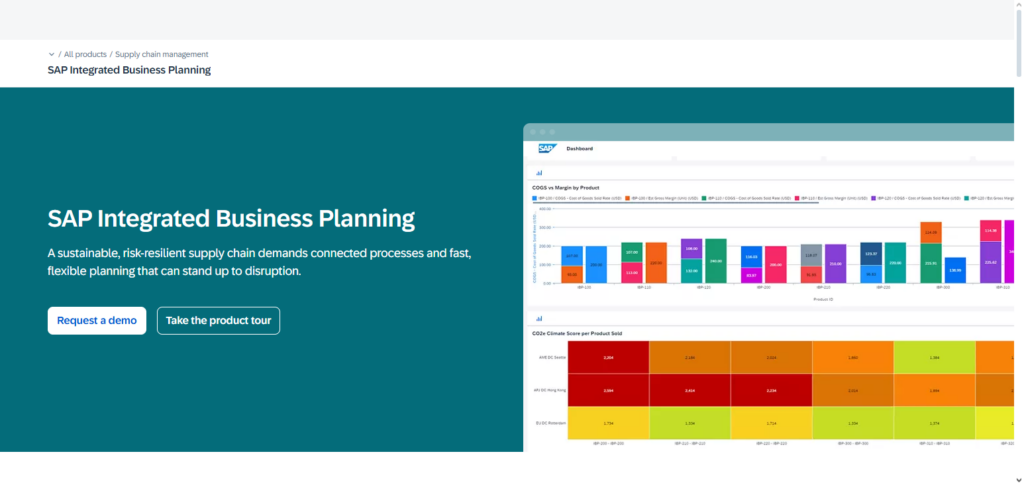
It uses machine learning to improve forecasting, automate planning, and simulate scenarios in real time. SAP IBP assists planners in constructing multilevel supply networks for demand and supply balancing, and prompt disruption responses.
The AI-enabled analytics also improve collaboration to reduce departmental silos and enhance streamlined decision-making across operations. Within SAP’s ecosystem, this is effective for large enterprises, as it allows for extensive enterprise-level planning and supply chain agility.
SAP IBP (Integrated Business Planning) Features
- Integrated planning of demand, supply and stock.
- AI driven analytic for forecasting.
- Real-time decision making by simulating various scenarios.
- Integration of sales and operation planning.
- Collaboration with other departments using shared overview dashboards.
SAP IBP (Integrated Business Planning) Pros & Cons
| Pros | Cons |
|---|---|
| Unified planning across demand, supply, and inventory. | Can be costly for smaller companies. |
| Strong integration with SAP ERP ecosystem. | Complex configuration and implementation. |
| AI‑enhanced forecasting and S&OP support. | Requires skilled planners to maximize value. |
| Supports real‑time scenario simulations. | May require additional SAP modules to unlock full value. |
4. Oracle SCM Cloud AI
Oracle SCM Cloud AI is a complete, integrated suite of applications for Best AI Tools for Supply Chain Optimization management (SCM) that uses AI technologies for planning, procurement, logistics, and fulfillment.
It applies machine learning in demand forecasting, multi-level inventory optimization, and real-time visibility into operations. Predictive decision-making is evidenced by AI as autonomous SCM challenges, and plan changes can be made in anticipation of issues.
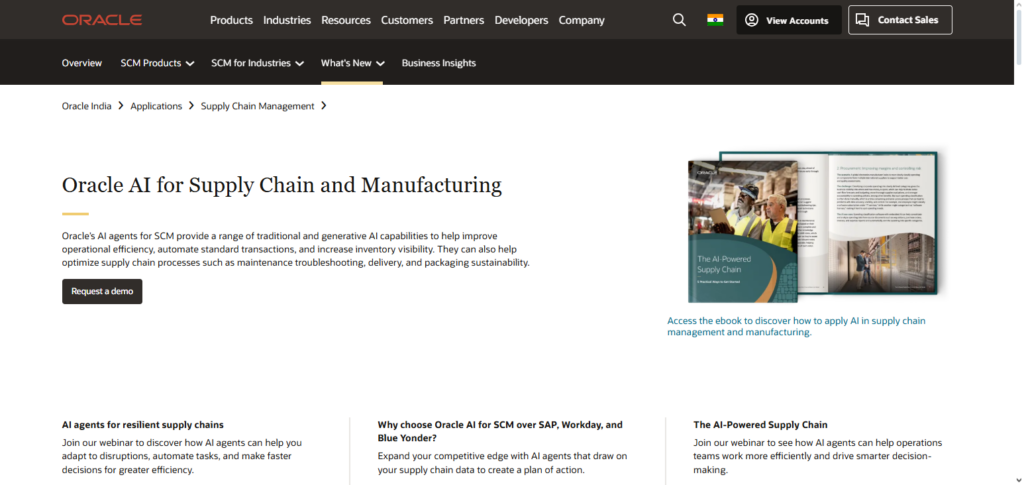
Performing tasks like negotiating purchase orders and working with suppliers become automated so there is less work to do manually and there is greater efficiency. Oracle’s cloud-native technology is integrated and scalable.
The greatest strength is in creating AIs that work with complex operational workflows to enhance supply chain agility and operational resilience and responsiveness throughout the entire supply chain lifecycle.
Oracle SCM Cloud AI Features
- Visibility in the entire supply chain, from end to end.
- Demand forecasting and stock optimization in a predictive manner.
- Automation of managing risks with suppliers and procurement.
- Insight generation in real-time.
- Optimization of transport and logistics.
Oracle SCM Cloud AI Pros & Cons
| Pros | Cons |
|---|---|
| Comprehensive, end‑to‑end supply chain suite. | Licensing and subscription costs can be high. |
| Predictive analytics for demand and inventory. | Implementation complexity depends on existing systems. |
| Cloud‑native with real‑time data access. | Customization may require technical expertise. |
| Automates procurement and logistics workflows. | Integration with legacy systems can be challenging. |
5. Kinaxis RapidResponse AI
Kinaxis RapidResponse is an integrated advanced technology Best AI Tools for Supply Chain Optimization offering that enables simultaneously active supply chains to be planned and managed.
Unlike other supply chain functionality applications that use many demand-and-supply driven models, Rapid Response synchronously integrates demand, supply, and inventory (with supply chain capacities) through planning in a continuous process.
Planners can work on multiple demand and supply scenarios, and make quicker and superior decisions. Machine learning, simulation and analytics, and other advanced technologies support innovation in automated demand forecasting, risk management, and disruption anticipation.
The technology enables testing of risk mitigant strategies in a simulated environment. The planning technology provides continuous access to the latest data, thereby improving efficiency and productivity. This feature makes Kinaxis a perfect fit for maintaining large and rapidly scalable supply chains.
Kinaxis RapidResponse AI Features
- Planning for demand, supply and stock levels of inventory all at the same time.
- Real-time analysis of various scenarios and conducting “what-if” analyses
- Predictive risk identification and response.
- Cooperative solution for stakeholder engagement.
- Decision-support systems.
Kinaxis RapidResponse AI Pros & Cons
| Pros | Cons |
|---|---|
| Concurrent planning with real‑time updates. | May require extensive training for users. |
| Excellent “what‑if” scenario analysis. | Price tends to be high for smaller operations. |
| Strong risk detection and mitigation tools. | Less suitable for very simple supply chains. |
| Facilitates collaboration across teams. | Data quality is critical for accurate results. |
6. Infor Nexus AI
Infor Nexus AI is a cloud-based platform that improves visibility and the ability to work together across supply networks that integrates with multiple enterprises Best AI Tools for Supply Chain Optimization. Its AI and predictive intelligence tools provide active cargo tracking, inventory level management, and supplier performance analysis, and predictive intelligence to enhance performance.
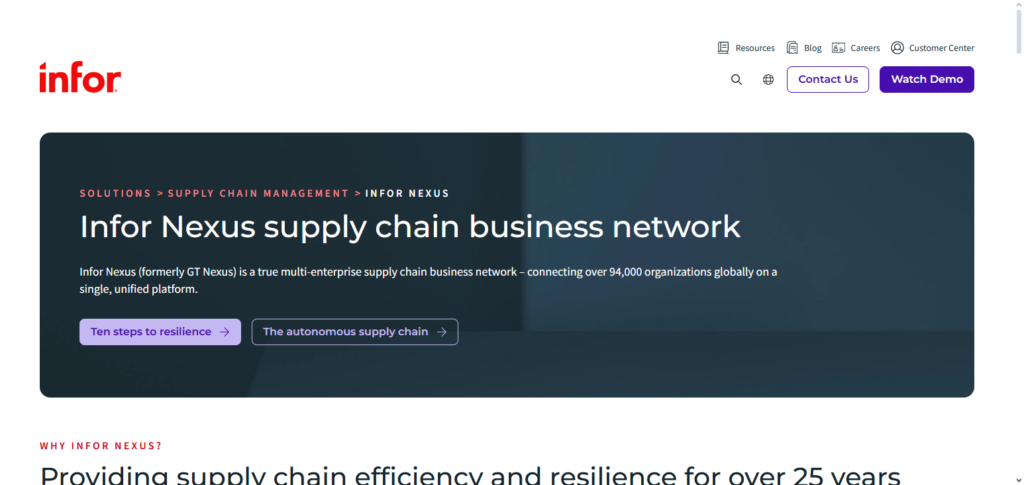
Aid in synchronizing the planning and execution of the Supply Chains’ tiers got easier when the Supply Chains’ brands, manufacturers, and logistics partners started linking up with Infor Nexus. Streamlining automated workflows and utilizing intelligent insights mitigate inefficiencies and delays.
In fulfillment, the platform is particularly strong in the logistics of global operations. Users are able to sustain and retain visibility of elaborate international logistics and of the global logistics unit. Users are able to react efficiently to sudden changes in demand or disruptions in the global logistics unit.
Infor Nexus AI Features
- Visibility in multi-enterprise supply chain networks.
- Live tracking and notifications for shipments.
- Balancing and sustaining recommendations for inventories.
- Performance analysis for suppliers.
- Automation of workflows for efficacy in operations.
Infor Nexus AI Pros & Cons
| Pros | Cons |
|---|---|
| Excellent visibility across multi‑enterprise networks. | May need significant onboarding and partner alignment. |
| Real‑time shipment tracking and alerts. | Costs can scale with network size. |
| Predictive inventory balancing. | Best performance requires partner data accuracy. |
| Improves supplier collaboration. | Not widely adopted in smaller markets. |
7. IBM Sterling Supply Chain AI
IBM Sterling Supply Chain AI enhances supply chain processes integration with advanced analytics and AI for effective risk Best AI Tools for Supply Chain Optimization, visibility, and decision‑making. Using Watson and other technologies to predict demand, suppliers, fulfillment issues, and risks helps organizations manage issues proactively.

Anomalies are detected and suppliers onboarded automatically by AI agents, significantly lowering workloads and errors. Sterling improves planning efficiency and operational accuracy through cognitive capabilities and integrates real‑time data for seamless market agility, making Sterling valuable for risk management and reliable intelligent automation across supply chains.
IBM Sterling Supply Chain AI Features
- Anticipatory insights for demand and supply challenges.
- Automated purchasing and order processing using AI.
- Active analysis and supervision of supply chain.
- Anomaly detection using Watson/ cognitive tools.
- Tools for operational efficiency and risk management.
IBM Sterling Supply Chain AI Pros & Cons
| Pros | Cons |
|---|---|
| Strong predictive analytics with Watson AI. | Can be complex to configure initially. |
| Risk detection and operational insights. | May require technical expertise to optimize. |
| Real‑time visibility into supply chain events. | Can be expensive compared with simpler tools. |
| AI‑driven automation of routine tasks. | Integration may need custom connectors for legacy systems. |
8. Microsoft Dynamics 365 SCM AI
Microsoft Dynamics 365 Supply Chain Management (SCM) AI builds on core SCM functionality with AI forecasting, predictive maintenance, and real-time visibility.
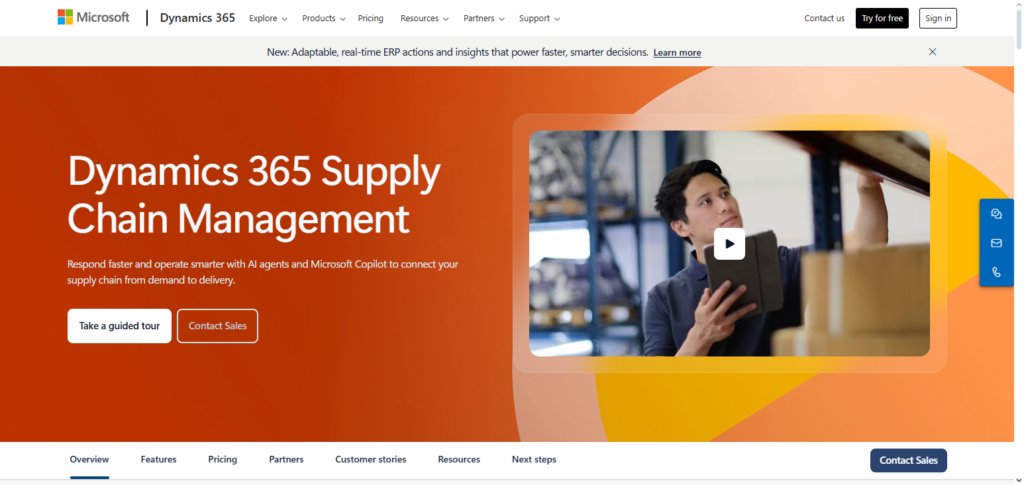
It incorporates machine learning, IoT data, and demand forecasting, integrated with the greater Dynamics 365 ecosystem, to enhance demand forecasting, streamline inventory, and minimize equipment downtime. Route risk identification, optimization, and inventory strategy embedding are some of the AI features, like Copilot.
The platform improves workflows and communications in and between warehouses and suppliers. Dynamic 365 SCM AI also provides a uninterrupted data stream as a result of being part of a single ERP suite, and therefore retains significant value to companies that have already adopted a Microsoft ecosystem.
Microsoft Dynamics 365 SCM AI Features
- Forecasting demand and optimizing inventory.
- Predictive maintenance of assets using AI.
- Smart routing and logistics.
- Seamless workflows for purchasing, selling, and operations.
- Embedded Copilot for insights and recommendations.
Microsoft Dynamics 365 SCM AI Pros & Cons
| Pros | Cons |
|---|---|
| Tight integration with Microsoft ecosystem. | Limited standalone SCM depth compared to specialized tools. |
| Predictive maintenance and analytics. | Requires Dynamics expertise for advanced features. |
| Real‑time inventory and logistics optimization. | May need add‑ons to unlock full AI capabilities. |
| AI assistants (Copilot) improve accessibility. | Performance depends on quality of input data. |
9. Coupa Supply Chain AI
Combining AI-powered Best AI Tools for Supply Chain Optimization design and optimization with spend management, Coupa Supply Chain AI (along with features from the Llamasoft acquisition) utilizes extensive community-contributed data to enhance intelligent recommendations for network design, cost- to-serve optimization, and many other scenario planning features.
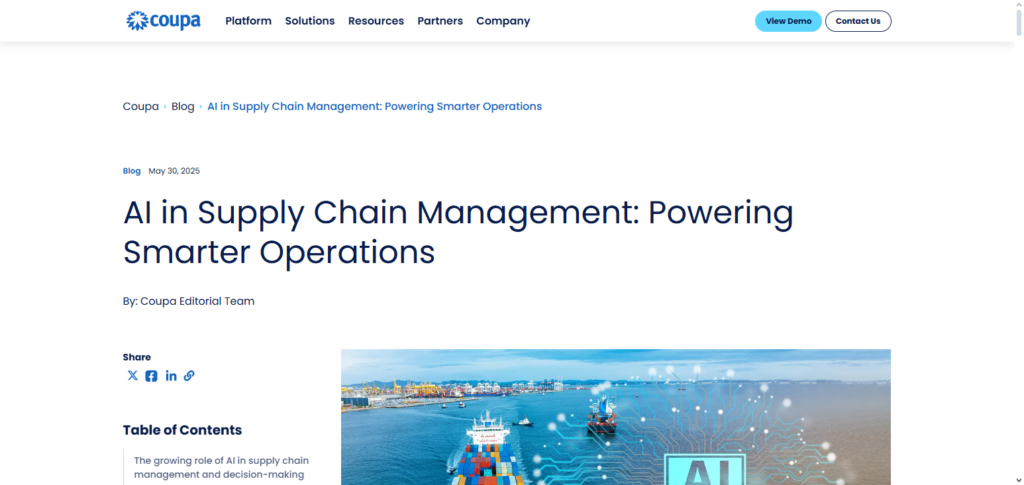
AI-assisted decision models for costs and service level balance supply chain management through the analysis of composition, tariffs, transportation, inventory, and risk levels of the network.
Coupa integrates spend and procurement decision levels into finance and operations for enhanced cloud procurement. Coupa offers cost efficiency and aligned supply chain strategy for organizations through features that enable real-time collaboration and prescriptive recommendations.
Coupa Supply Chain AI Features
- AI-based architecture of the supply chain.
- Recommendations for cost-to-serve and inventory.
- Risk and management of suppliers.
- Planning for future supply chain strategies.
- Coupling with spend management and procurement workflows.
Coupa Supply Chain AI Pros & Cons
| Pros | Cons |
|---|---|
| Combines spend and supply chain intelligence. | Best for companies with substantial procurement data. |
| Prescriptive recommendations for network design. | Standardization needs may require customization. |
| Supplier risk analysis and scenario planning. | Can be complex for first‑time AI adopters. |
| Helps align financial and operational decisions. | Cost may be high for small enterprises. |
10. E2open AI Supply Chain
Integrated planning, execution, global trade, and logistics with AI for decision-support and augmented visibility are features of a differentiated cloud-native architecture that is connected and in real-time Best AI Tools for Supply Chain Optimization.
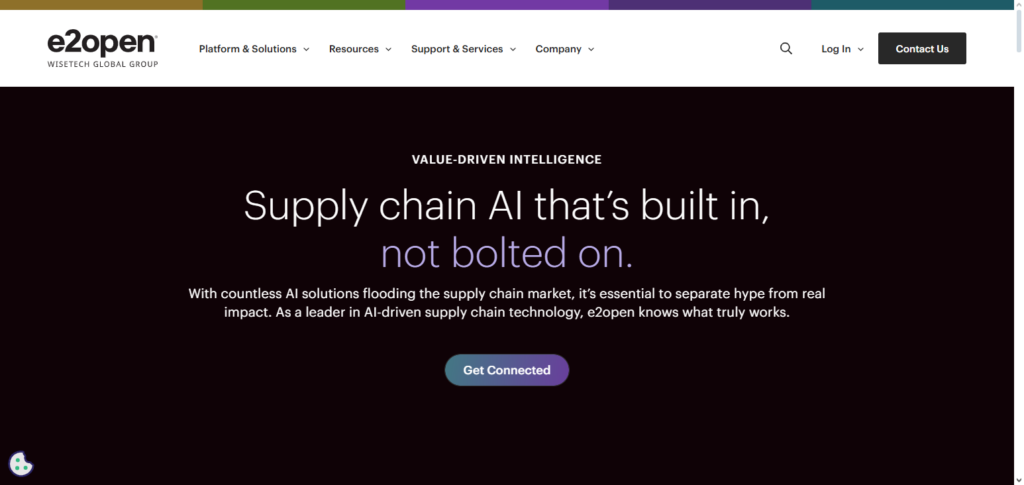
Intelligent design means the ability to analyze data from multiple sources and provide actionable insights at every stage of the supply chain. The platform helps to make better decisions by finding value in the data and providing insights to predict demand, optimize inventory, and manage risk.
The collaborative network of e2open helps partners and supply chain participants to improve their forecasts. This solution is also well suited for large enterprises with diverse supplier networks.
E2open AI Supply Chain Features
- A fully integrated supply chain platform, delivered on the cloud.
- Predictive analytics for anticipating related demand and inventory risk.
- Visibility in supply chain across multiple tiers.
- Automated workload and suggested tasks.
- Cooperative workspaces for vendors, resellers, and associates.
E2open AI Supply Chain Pros & Cons
| Pros | Cons |
|---|---|
| Cloud‑native with strong partner connectivity. | Integration complexity across multi‑tier partners. |
| Predictive analytics across demand and inventory. | Requires consistent data from external partners. |
| Real‑time visibility and automated workflows. | May need training to unlock advanced features. |
| Collaborative network for global operations. | Costs grow with partner and data volume. |
Challenges and Considerations
Data Quality and Availability: AI cannot function without data, but low and poor quality data and incomplete datasets will yield bad data, bad results and bad decisions. Companies need adequate data collection and cleansing protocols.
High Implementation Costs: There is a high cost of investment in implementing AI tools in every relevant area of the business in terms of software, hardware, and even human capital. Businesses need to calculate ROI deeterminations to justify the investment in AI tools.
Integration with Existing Systems: Within supply chains, using legacy ERP and SCM systems is not uncommon. These establishments will face challenges attempting to pair old systems with new technology, as such, they will probably need some custom middleware to make it work.
Change Management and Employee Adoption: AI tends to make employees workflows more complex and change responsibilities in unexpected ways. Resistance to new technology is common, thus proper training and protocols designed to factor in the expected changes will greatly support success.
Dependence on Technology: There is a risk of overdependence on new technologies should a major malfunction occur or the systems provide wrong information. Humans should always have the final decision in contrast to the suggestions generated by the AI.
Cybersecurity and Data Privacy: AI technologies handle considerable amounts of sensitive supplier, customer, and inventory data. Implementing robust cyber security and data privacy regulations is paramount.
Key Features to Look for in AI Supply Chain Tools
Predictive Analytics and Demand Forecasting: The ability to analyze past and current data in order to accurately predict future demand and facilitate the prevention of stockouts and surplus inventory.
Visibility and Supply Chain Monitoring in Real Time: The ability to use dashboards and tracking systems to provide updates in real time at various levels of the supply chain in order to respond to problems quickly.
Automated Inventory Management: The ability of automated systems to suggest appropriate levels of inventory based on demand, lead times, and risk in order to improve product availability.
Scenario Planning and What-If Analysis: tools to allow you to simulate various supply chain scenarios without real-world consequences (i.e. disruptions, demand surges, changes in suppliers) and analyze the results to predict the fallout of potential actions.
Route and Transportation Optimization: The ability of a single transportation unit to plan its route and delivery schedule to minimize delivery time and fuel costs while removing friction from the supply chain.
Seamless Integration With Existing Software: The ability to connect easily and without friction to existing systems.
Prescriptive Analytics and Recommendations: Predicting results and offering advice on how to enhance outcomes to focus on constructive steps to take.
Conclusion
AI is now a revolutionary force in supply chain management, allowing companies to increase productivity, accuracy, and agility.
Advanced features like predictive analytics, real-time visibility, inventory optimization, and scenario-based planning are provided by the top AI tools, including Blue Yonder Luminate AI, o9 Solutions, SAP IBP, Oracle SCM Cloud, Kinaxis RapidResponse, Infor Nexus, IBM Sterling, Microsoft Dynamics 365 SCM, Coupa, and E2open.
Businesses can lower expenses, minimize risks, increase customer happiness, and react quickly to changes in the market by utilizing these tools. Selecting the best AI solution for your company’s requirements guarantees a supply chain that is resilient, competitive, and prepared for the future.
FAQ
What is AI in supply chain optimization?
AI in supply chain optimization uses machine learning, predictive analytics, and real-time data to improve forecasting, inventory management, logistics, and decision-making, helping businesses reduce costs and improve efficiency.
Why are AI tools important for supply chains?
AI tools help businesses anticipate demand, optimize inventory, automate workflows, manage risks, and enhance visibility across suppliers and logistics, making supply chains more agile and resilient.
Which are the top AI tools for supply chain optimization?
Some of the leading AI supply chain tools include Blue Yonder Luminate AI, o9 Solutions, SAP IBP, Oracle SCM Cloud, Kinaxis RapidResponse, Infor Nexus, IBM Sterling, Microsoft Dynamics 365 SCM, Coupa, and E2open.
How do I choose the right AI supply chain tool?
Consider your supply chain needs, system integration capabilities, scalability, AI features (forecasting, optimization, risk management), cost, and vendor support. Piloting tools before full deployment is recommended.
Can small businesses benefit from AI supply chain tools?
Yes. While many tools target large enterprises, several cloud-based AI solutions are scalable and cost-effective for small and medium-sized businesses, helping them improve planning, visibility, and efficiency.