


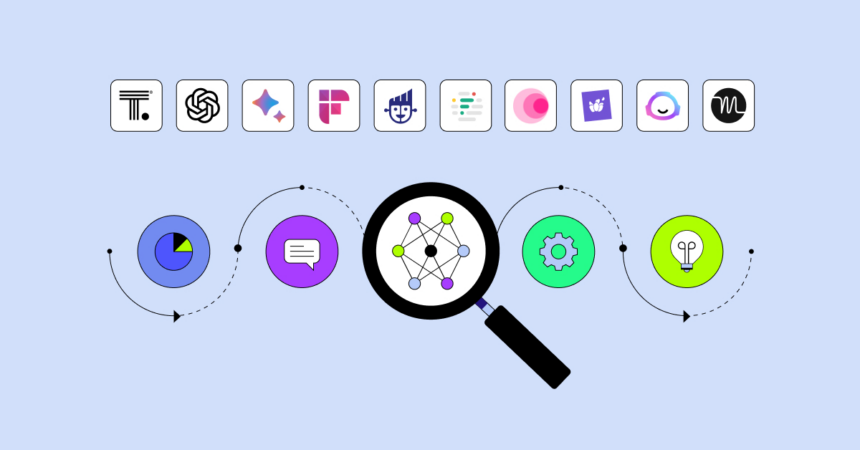
I’ll go over the top AI tools for business decision intelligence in this post, which assist companies in making data-driven, quicker, and more intelligent judgments.
These AI-powered solutions transform complex data into plans that can be put into action by combining intelligent dashboards, automated insights, and predictive analytics.
These solutions, which range from machine learning platforms to visualization tools, are revolutionizing how companies plan for the future and optimize operations.
Why It Is AI Tools for Business Decision Intelligence Matter
Rapid Decision-Making: Actionable insights that AI tools develop from data help businesses make fast decisions and take action to beat competitors.
Insights Based on Data: Businesses avoid miscalculation by relying on facts, data, and analytics instead of intuition using these tools that uncover patterns, trends, and anomalies.
Capturing Predictive Data: These analytics-based tools, to help businesses operate efficiently, cut costs, and increase customer satisfaction, help in predicting trends, demands, and risks.
Automating Tedious Activities: Reporting and data analysis can take up valuable time. AI tools make data analysis, visualization, and reporting, and in so doing, unencumber employees to do more high-level thinking.
Staying Ahead of the Competition: Companies experience heightened levels of growth when they embrace AI for Decision Intelligence to find and capitalize on new opportunities, stay better ahead of the competition, and optimize processes to operate with improved efficiency.
Key Point & Best AI Tools for Business Decision Intelligence List
| Platform | Key Points / Features |
|---|---|
| Microsoft Power BI + Copilot AI | Integrates AI-driven insights directly into dashboards; natural language querying; predictive analytics with Copilot; automated report generation; seamless integration with Microsoft 365 ecosystem. |
| TIBCO Spotfire | Advanced data visualization and analytics; AI-powered recommendations for charts and insights; real-time streaming data support; predictive modeling and anomaly detection; strong integration with TIBCO ecosystem. |
| Qlik Sense AI | Cognitive engine provides AI-driven suggestions; associative analytics for exploring relationships; natural language processing (NLP) queries; augmented intelligence insights; self-service visual analytics. |
| IBM Watson Studio | Supports machine learning, AI model building, and deployment; collaboration tools for data scientists; AutoAI for automated model building; integration with IBM Cloud and third-party tools; visual model explanations. |
| SAS Decision Intelligence | Combines analytics, AI, and decision-making frameworks; predictive modeling; scenario simulation; decision optimization; integrates structured and unstructured data sources for enterprise intelligence. |
| Oracle Analytics Cloud | Cloud-native analytics with embedded AI; machine learning models for predictive analytics; natural language query support; self-service data visualization; automated insights generation. |
| Google Cloud Vertex AI | Unified platform for building, deploying, and managing ML models; AutoML and custom model support; seamless integration with BigQuery and other Google Cloud services; explainable AI features; predictive insights at scale. |
| AWS QuickSight + Forecast | QuickSight provides AI-powered visualizations and insights; Forecast adds predictive analytics and time-series forecasting; scalable cloud solution; integrates with AWS ecosystem; anomaly detection and trend prediction. |
| DataRobot AI Cloud | End-to-end automated machine learning platform; predictive analytics and forecasting; model explainability and deployment; collaboration features for enterprise teams; supports structured and unstructured data. |
| H2O.ai Driverless AI | Automated machine learning platform; feature engineering, model selection, and deployment automated; interpretable AI models; supports tabular, text, and image data; scalable for enterprise analytics. |
1. Microsoft Power BI + Copilot AI
Microsoft Power BI + Copilot AI represents the next step in intelligent business decision making. Besides the usual business analytics, users can now automate insight generation, create interactive predictive analytics, and query dashboards using natural language.
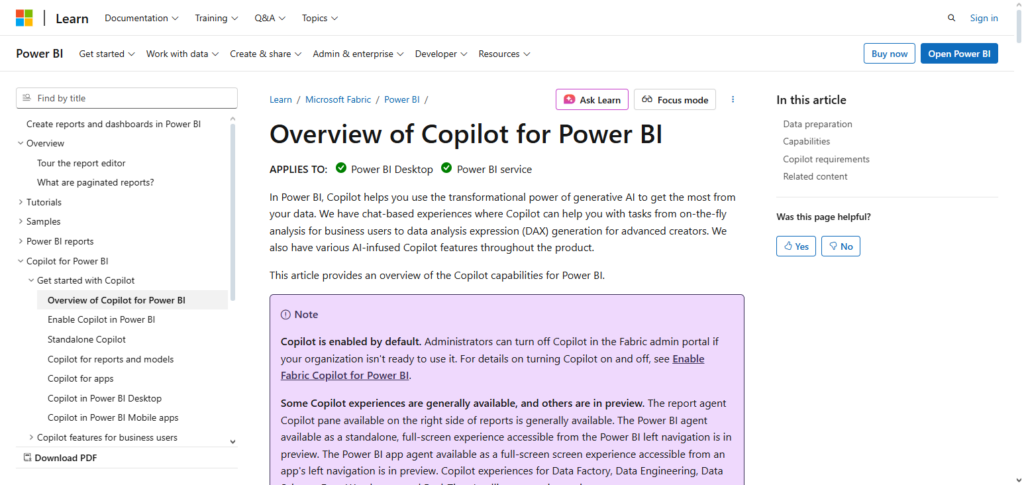
Copilot AI, in Microsoft Power BI + Copilot AI, can descibe and analyze trends, suggest chart and graph types, and business users can generate full business summary reports from a single request. Power BI + Copilot AI will help business users make decisions faster and far more accurately.
As part of the Microsoft 365, Teams, and Azure ecosystems, collaboration will happen more efficiently and more informed with AI powered analytics. It is accessible and highly automated making it an excellent AI powered business decision tool.
Microsoft Power BI with Copilot AI Features, Pros & Cons
Features
- AI-Powered suggestions with Microsoft Co-Pilot
- Dashboards with complete interaction and visual analysis
- Reporting in Real Time and Model Analytics
- Microsoft 365 seamless integration
- Queries in Natural Languages
Pros
- User Friendly with the Microsoft Perspective
- Enhanced Decision Making through AI Suggestions
- Adaptable from Small Business to a Large Enterprise
- Significant Support for the Community
- Collaboration in Real Time
Cons
- Premium Licensing Required for Advanced AI
- Can be a Bit Overwhelming for the New User
- Offline Support is Very Limited
- Can be Slow with a Heavy Data Load
- Advanced Code Needed for Custom Visualization
2. TIBCO Spotfire
TIBCO Spotfire is an analytics system that combines data visualization analytics plus artificial intelligence (AI) analytics. Spotfire’s AI engine provides recommendations for data visualization, highlights anomalies, and offers predictive analytics to support best business decisions. Spotfire provides support for real streaming data and business outcomes.
Spotfire also contains additional machine learning (ML) models to support forecasting and improved decisions. Spotfire’s interface is useful for analysts and data driven decision makers, since it allows exploration of data and provides AI driven insights. Spotfire is one of the leading AI business decision support systems available today.
Tibco Spotfire Features, Pros & Cons
Features
- Real time analytics streaming
- Analytics predictive powered by AI
- Data Visualization and Data Wrangling
- AI Assistant Automated Insights
- Integration of multiple Data Sources
Pros
- Predictive Analytics is Strong
- Efficiently Manages Complex and Large Data Sets
- Dashboards that are Customizable and Flexible
- Advanced Statistical Modeling Supported
- Strategic and Operational Decision Making
Cons
- Beginners Have a Difficult Time2. Competitors may offer more competitive licensing pricing.
- AI insights are adjustable for integration.
- Fewer ready-made design templates.
- Performance tends to lag on larger datasets.
3. Qlik Sense AI
Qlik Sense AI provides self-service analytics with augmented intelligence and cognitive decision support. The Qlik Sense self-service analytics engine provides the user with the ability to traverse and analyze the data freely. Descriptive analytics provides recommendations to identify and explain why an outcome has occurred.
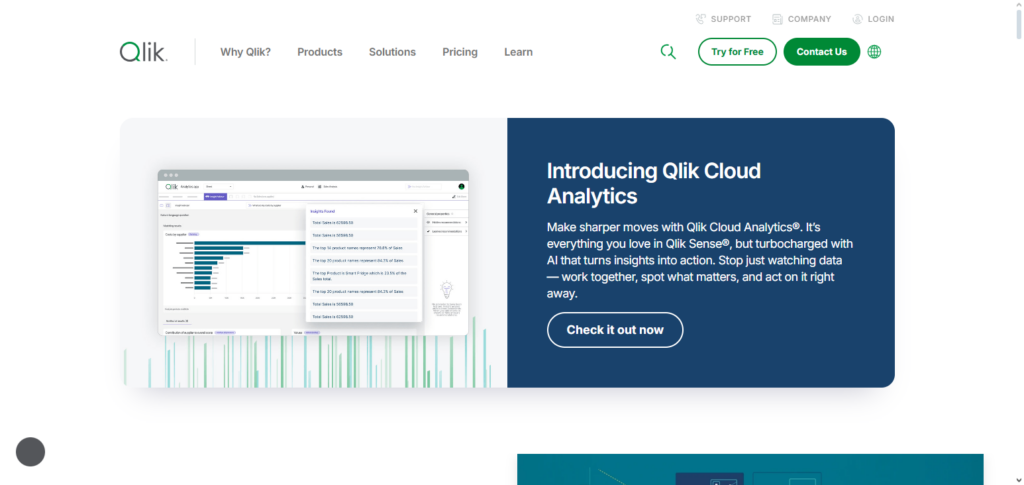
The Qlik Sense AI system provides an analytics outcome driven strategy to support tactical predictive forecasting and provides support for outcome driven strategy in decision support systems. Qlik Sense AI provides analytics outcome driven strategy to support tactical predictive forecasting and provides support for outcome driven strategy in decision support systems.
Qlik Sense AI Features, Pros & Cons
Features
- Associative data engine for flexible analytics.
- AI-driven recommendations and insights.
- Self-service data visualization.
- Natural language processing for queries.
- Cloud and on-premise deployment options.
Pros
- Fast interactive analytics experience.
- AI suggestions improve decision speed.
- User friendly drag and drop interface.
- Excellent for cross-department collaboration.
- Advanced support for complex data relationships.
Cons
- Advanced analytics have a considerable learning curve.
- Requires meticulous data preparation.
- Potentially very costly for smaller companies.
- Some AI features are only available on premium subscriptions.
- Somewhat limited experience on mobile devices.
4. IBM Watson Studio
IBM Watson is one of the top tools for AI, Machine Learning, and advanced analytics. Its cloud-based solution offers an enterprise grade service and is one of the fastest platforms for building, training, and deploying predictive models.
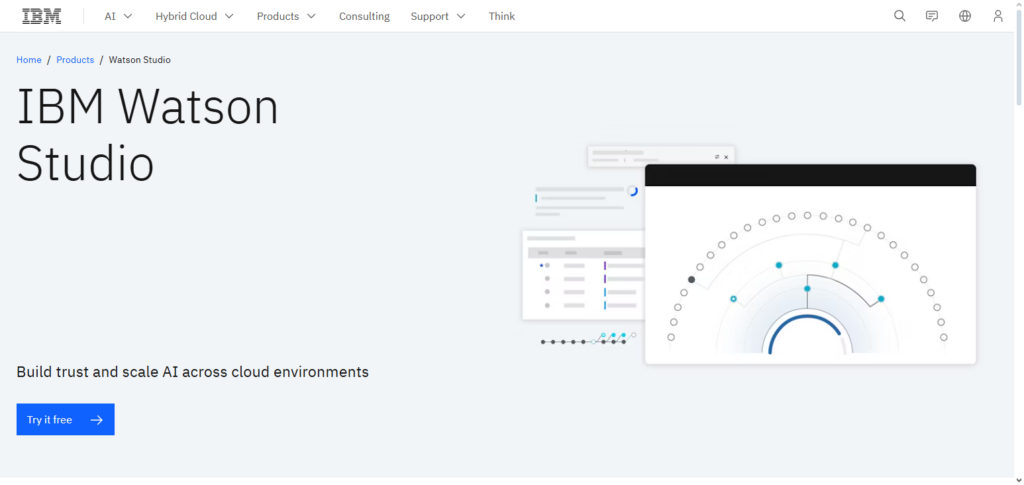
Watson Studio’s AutoAI feature streamlines model selection and tuning, enabling data science, analytics, and business users to facilitate cross-functional decisions.
With strong analytics models, Watson Studio excels at increasing trust in data-driven decisions with its explainable AI technologies. Watson Studio is one of the top cloud-based predictive analytics solutions for business decisions.
IBM Watson Studio Features, Pros & Cons
Features
- Prep, engineering, and design of AI.
- Environments for collaboration.
- Prebuilt AI models and AutoAI features.
- Cloud and on-premise integration.
Pros
- AutoAI rapid model creation.
- Sophisticated AI and machine learning capabilities.
- Large and complex datasets.
- Collaborated workflows for teams.
- Enterprise-grade security and compliance.
Cons
- Technical expertise for optimal usage.
- Large expense for small organizations.
- Could be daunting for newbies.
- Setup and integration could take a while.
- Some functionalities restricted to IBM Cloud.
5. SAS Decision Intelligence
SAS has created an intelligent business solution by merging analytics, machine learning, and decision-making frameworks. The solution provides predictive analytics, scenario planning, and decision optimization in an effort to help organizations anticipate business challenges and seize opportunities.
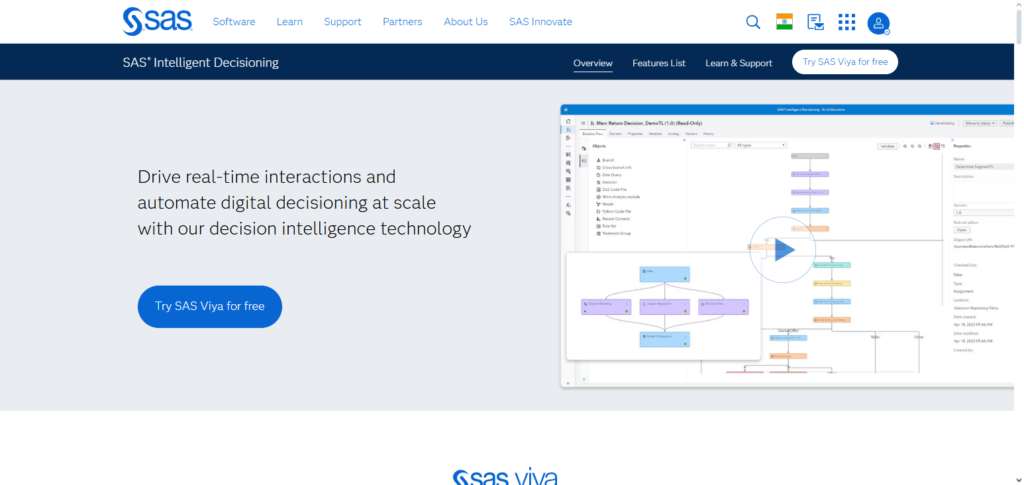
Because SAS integrates structured and unstructured data, organizations receive data analytics insights for strategy and operational planning. For data, SAS intelligent analytics suggests the most appropriate decision to take from a list of possible alternatives based on prior data and the forecast of the outcome.
SAS Decision Intelligence is among the most sophisticated AI tools for businesses due to its ability to assist in complex organizational processes and transform raw data into actionable strategies, providing organizations with complete decision-making frameworks and supporting sophisticated organizational workflows.
SAS Decision Intelligence Features, Pros & Cons
Features
- Analytics using AI and machine learning.
- Evaluation and optimization of decisions.
- Automated recommendations for business actions.
- Insights from data in real time.
- Seamless integration with enterprise systems.
Pros
- Predictive and prescriptive analytics are of great quality.
- Suitable for large enterprise operations.
- Reliable, with a proven history in industry.
- Complex business situations are supported.
- Governance and compliance tools are robust.
Cons
- Costly licenses for entire features.
- Beginners will experience steep learning.
- Competitors are more visually intuitive.
- Could take a while to implement.
- Advanced use must have trained analysts.
6. Oracle Analytics Cloud
Analytics and decision-making powered by AI is now available on a fully cloud-native platform with Oracle Analytics Cloud. Predictive analytics, sophisticated data visualization automation, and natural language queries are combined in Oracle Analytics Cloud in order to drive insights and enable users to navigate and analyze data with greater ease.
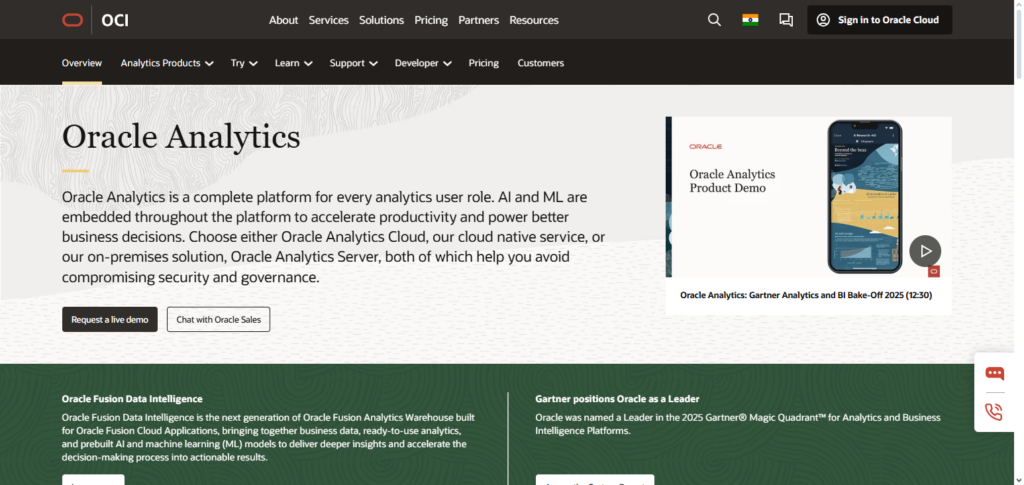
Without the need for significant manual effort, Oracle provides trend and outcome forecasting, along with actionable recommendations. Oracle’s business intelligence solution integrates with all other Oracle Cloud apps and enterprise data sources for a truly unified solution.
Oracle Analytics Cloud has become a leader in business intelligence, AI analytics, and automated insights in order to simplify and expedite the decision-making processes at organizations, thereby enhancing the quality of corporate strategies.
Oracle Analytics Cloud Features, Pros & Cons
Features
- Analytics driven by AI and cloud technology.
- Insights and automated analytics with natural language queries.
- Dashboards and data visualization.
- Integration with Oracle cloud.
- Modeling and forecasting with prediction.
Pros
- Platform offered through cloud scalable.
- Analytics and reporting with prediction are top tier.
- Seamless integration with Oracle applications.
- AI suggestions streamline and expedite actions.
- Ready for enterprise with a high level of security.
Cons
- High cost when considering smaller companies.
- Required additional licensing for advanced features of AI.
- Learning curve is high at the beginning.
- Customization for the visuals is limited.
- Needs online/in-cloud processing
7. Google Cloud Vertex AI
Google Cloud Vertex AI offers tools for constructing, deploying, and scaling ML models, and is also integrated with BigQuery and other Google Cloud services. These services allow business units to make data-driven decisions. Vertex AI provides automated prediction generation with its AutoML and custom model training features.
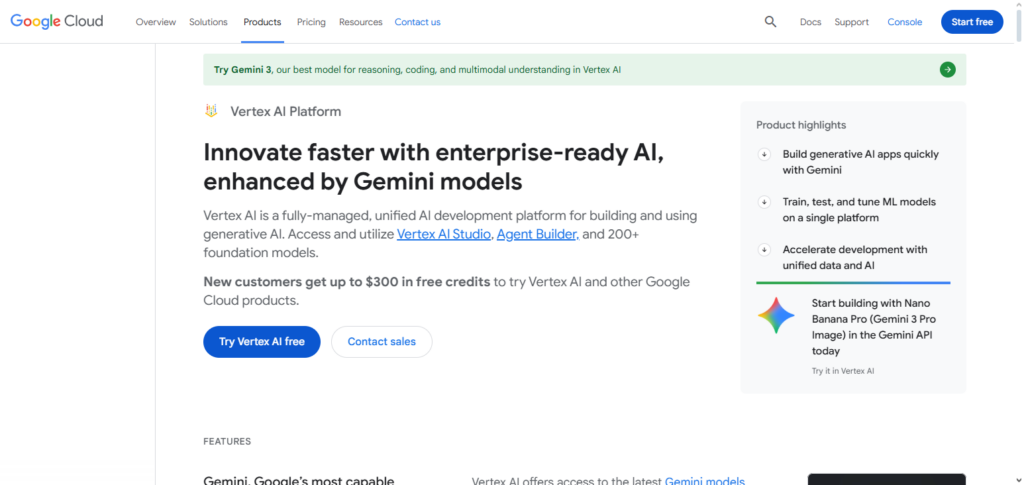
Users can access explainable AI tools to make automated recommendations and predict analyses with more confidence. Additionally, Vertex AI streamlines the model development and deployment process to allow businesses to make more predictive decisions. With the reliability and scalability for advanced AI business decision intelligence, Google Cloud Vertex AI is one of the most trusted solutions.
Google Cloud Vertex AI Features, Pros & Cons
Features
- Provides a platform to build models for AI and ML
- Allows model building to be automated through AutoML
- Tools for model preparation and data labeling
- Monitoring and model deployment
- Google Cloud ecosystem integration
Pros
- Simple to scale and deploy models
- Model building is simplified with AutoML
- It works well with substantial data
- Excellent integration with other Google applications
- It offers advanced ML functionalities to large enterprises
Cons
- You must possess understanding of ML
- Pricing can be problematic if you’re a heavy user
- Restricted use of Cloud might be a limitation
- Offline capabilities are restricted
- The configuration and setup can be challenging
8. AWS QuickSight + Forecast
AWS QuickSight provides scalable, AI-based business and predictive analytic capabilities, while QuickSight Forecast provides business intelligence and prediction analytics.
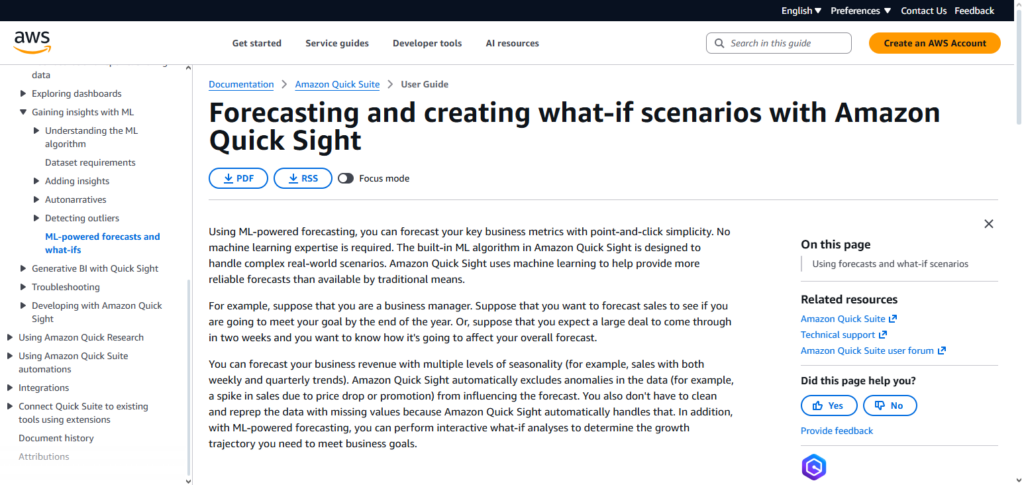
QuickSight provides real-time business decision support via automated data visualization, natural language queries, and anomaly detection. Forecast adds business intelligence and prediction analytics by providing time-series forecasting, trend analytics, and demand forecasting.
The native AWS platform provides seamless integration, scaling, and data accessibility, ensuring organizations can predict business needs. With AI insights and predictive modeling analytics, QuickSight + Forecast provides organizations with optimized strategic analytics and improved operational predictive decision analytics.
AWS QuickSight + Forecast Features, Pros & Cons
Features
- Cloud-based dashboards and BI analytics
- Predictions and analytics using machine learning
- Models are designed using interactive visualizations
- Global scalability
- Integrated with the AWS ecosystem
Pros
- Quick deployment of the cloud system
- Planning is enhanced with AI-driven predictions
- Great for users on AWS
- Handles large sets of data wonderfully
- Simple integration with AWS
Cons
- Visualization for customization is very limited
- Advanced use is not very intuitive for a beginner
- AI capabilities are largely limited and at a cost
- For a beginner there is a not very user friendly experience
- Very limited in and offline use
9. DataRobot AI Cloud
DataRobot AI Cloud provides end-to-end fully automated machine learning platforms to assist in the swift development of predictive analytics. Organizations can build, assess, and implement machine learning models with little to no coding.
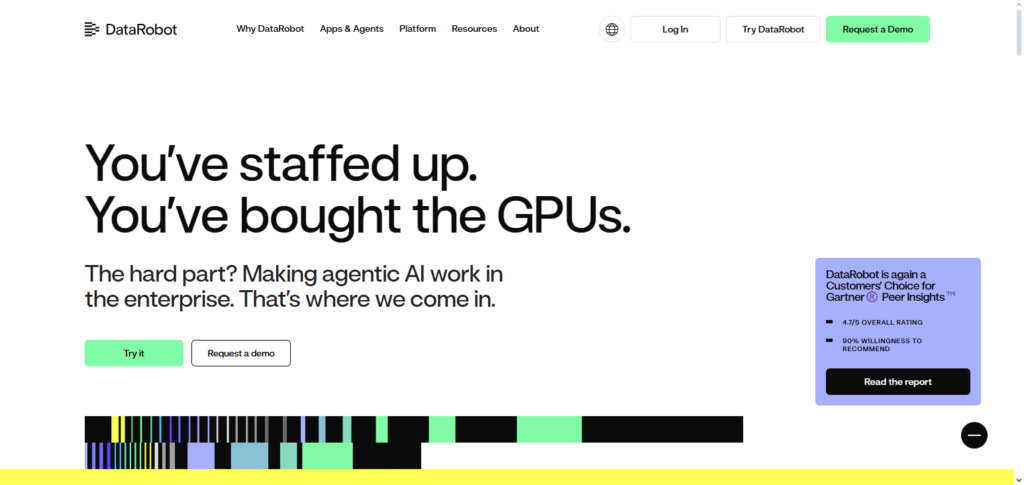
DataRobot works with structured and unstructured data and provides model explainability, fostering trust with AI-driven endorsements. The platform includes collaborative tools focused on data scientists, and business stakeholders to ensure that actionable insights are transformed into actionable plans.
The platform’s automation features lessen the manual workload of employees and enhances the speed of decision-making. DataRobot AI Cloud is recognized as one of the most efficient tools to assist businesses in decision-making as it provides fast, accurate, and explainable insights.
DataRobot AI Cloud Features, Pros & Cons
Features
- Automated ML model building
- Predictive analytics and decision automation
- Collaborative platform for teams
- Model monitoring and retraining
- Integration with cloud and enterprise data
Pros
- Streamlined workflow for teams
- Strong predictive accuracy
- Supports enterprise-scale applications
- Reduces need for coding expertise
- Accelerates AI/ML model deployment
Cons
- Expensive licensing
- Cloud dependency
- Can be complex for small teams
- Requires some data science knowledge
- Advanced features may require training
10. H2O.ai Driverless AI
H2O.ai’s Driverless AI automates almost every step of the machine learning process including Feature Engineering, Model Selection, Model Evaluation, Deployment, and Monitoring. Driverless AI can process and analyze tabular, text, and image data.
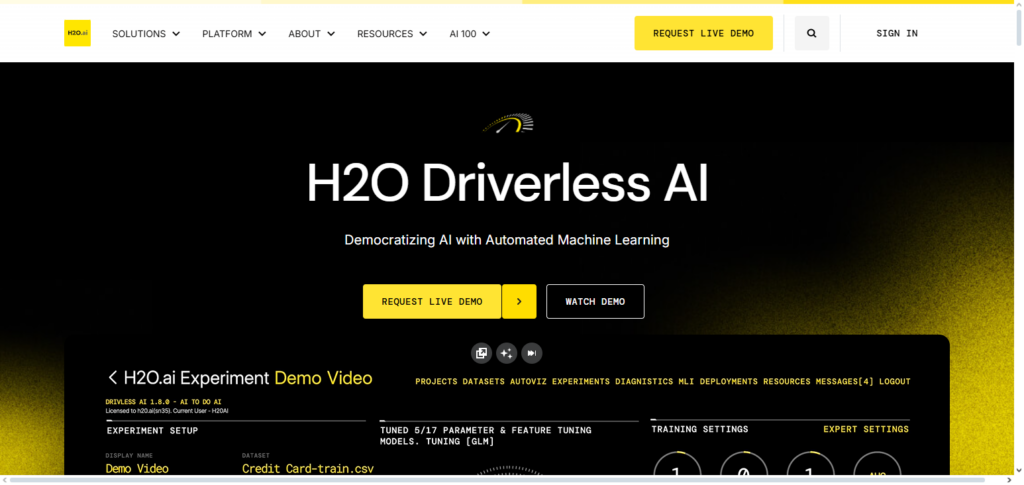
This versatility means that businesses can analyze data from a wide variety of sources. By using Driverless AI’s explainable AI models, businesses are able to understand and trust the reasons behind the AI’s predictions.
In addition to these predictive models, Driverless AI offers advanced Analytics, Anomaly Detection, and Scenario Analysis. In these ways, H2O.ai Driverless AI combines speed, transparency, and prediction to offer top-tier business decision intelligence tools.
H2O.ai Driverless AI Features, Pros & Cons
Features
- Automated machine learning and AI
- Feature engineering and model tuning
- Explainable AI outputs
- Integration with enterprise and cloud platforms
- Real-time scoring and predictions
Pros
- Enterprise-ready and scalable
- Supports multiple data sources
- Strong predictive performance
- Transparent and explainable AI outputs
- Speeds up AI/ML model development
Cons
- Requires technical expertise
- Not ideal for very small datasets
- Limited GUI customization
- Cloud setup may be complex
- Licensing costs can be high
Conclusion
In conclusion, AI-driven tools have reshaped how companies analyze data and make decisions. Microsoft Power BI + Copilot AI, TIBCO Spotfire, Qlik Sense AI, and IBM Watson Studio analyze data with lightning speed, extreme precision, and crystal clear understanding.
Business Intelligence tools with AI, such as SAS Decision Intelligence, Oracle Analytics Cloud, Google Cloud Vertex AI, and AWS QuickSight + Forecast use machine learning and decision optimization to analyze data.
DataRobot AI Cloud and H2O.ai Driverless AI make advanced AI affordable to all companies. These tools are the best in AI Business Decision Intelligence. They enable companies to make data-driven decisions faster, improve operational efficiency, and gain a competitive edge.
FAQ
What are the best AI tools for business decision intelligence?
The best AI tools include Microsoft Power BI + Copilot AI, TIBCO Spotfire, Qlik Sense AI, IBM Watson Studio, SAS Decision Intelligence, Oracle Analytics Cloud, Google Cloud Vertex AI, AWS QuickSight + Forecast, DataRobot AI Cloud, and H2O.ai Driverless AI. These platforms combine predictive analytics, automated insights, and AI-driven decision support to help organizations make faster, data-backed decisions.
How do AI tools improve business decision-making?
AI tools analyze large datasets, identify patterns, forecast trends, and provide actionable recommendations. They reduce manual effort, increase accuracy, and help businesses anticipate risks and opportunities. By using predictive analytics, natural language queries, and automated model building, organizations can make smarter strategic and operational decisions efficiently.
Which AI tool is best for predictive analytics?
DataRobot AI Cloud, H2O.ai Driverless AI, and Google Cloud Vertex AI are particularly strong for predictive analytics. They automate model building, provide explainable insights, and handle structured and unstructured data, enabling accurate forecasting and scenario simulation for business decision intelligence.
Are AI-powered BI tools suitable for non-technical users?
Yes. Tools like Microsoft Power BI + Copilot AI, Qlik Sense AI, and Oracle Analytics Cloud feature natural language queries, intuitive dashboards, and automated insights. These features allow business users without deep technical expertise to access AI-driven intelligence and make informed decisions.