




The finest AI tools for creating AI-driven knowledge bases will be covered in this article, with an emphasis on solutions that assist businesses in automating content production, effectively organizing data, and offering intelligent search capabilities.
These AI-powered technologies make it easier for enterprises to maintain a dynamic, well-organized, and highly effective knowledge base by streamlining information management, increasing accuracy, and improving user experience.
What is an AI-Driven Knowledge Base?
A centralized information repository that uses artificial intelligence to effectively manage, organize, and distribute content is known as an AI-driven knowledge base.
AI-driven systems employ cutting-edge technology like natural language processing (NLP) and machine learning to comprehend queries, produce precise answers, and continuously update data, in contrast to traditional knowledge bases that depend on human input and static material.
Based on user interactions or organizational data, these systems can automatically classify information, recommend pertinent articles, and even generate new knowledge entries. By doing this, AI-driven knowledge bases improve accessibility, speed up response times, and give users a more intelligent and customized experience.
Benefits of Using AI Tools for Knowledge Base Creation
Content Generation is Quicker
Articles, frequently asked questions, and various guides are generated in bulk and populated. AI tools are tailored to allow teams to quickly deliver updated content without exhaustively manual content creation.
Prevention of Inconsistency and Error
AI’s ability to analyze a vast amount of content increases the alignment of the knowledge base with company policies and the presentation of accurate, consistent, error-free, and reliable information.
User Experience is Enhanced
Intelligent search, content-based auto-suggestions, and personalized recommendations improve the user experience. The knowledge base allows users to independently find the answers and satisfaction they are searching for, which reduces the volume of support queries.
Knowledge Bases are Continuously Updated with Learning
Knowledge bases are dynamic and contain relevant content. User interaction is learned from and content is updated automatically based on AI feedback and modifications, which ensures the information is accurate and reflects current trends.
Organizations Gain More Insights and Analytics
AI analyzes content gaps, trending topics, and user inquiries to streamline decision-making and improve content strategy to enhance the knowledge base.
Best AI Tools for AI-Driven Knowledge Base Creation Points
- Notion AI – Enhances knowledge management by generating content, summarizing notes, and providing intelligent search within workspaces.
- Document360 + AI – Automates article creation, categorization, and content suggestions for scalable knowledge bases.
- Confluence AI (Atlassian) – Uses AI to draft pages, summarize content, and provide contextual suggestions for team collaboration.
- Zendesk AI Knowledge – Offers AI-powered search, content recommendations, and automated knowledge article creation for customer support.
- Freshdesk Freddy AI – Generates knowledge base articles, suggests solutions, and improves support efficiency with AI insights.
- Zoho Desk AI – Leverages AI to auto-create help articles, provide smart search, and deliver context-aware answers.
- Bloomfire AI – Enhances knowledge sharing with AI-driven content discovery, summarization, and personalized recommendations.
- Slab AI – Automates documentation, content suggestions, and knowledge organization for teams using AI.
- Tettra AI – Provides AI-assisted documentation creation, updates, and intelligent internal knowledge search.
- Stonly AI – Creates interactive AI-driven guides and tutorials for customer support and internal training.
10 Best AI Tools for AI-Driven Knowledge Base Creation
1. Notion AI
Because of its smooth integration of intelligent content creation, organizing, and search capabilities inside a single workspace, Notion AI stands out as one of the top AI solutions for AI-driven knowledge base construction.
In contrast to conventional technologies, Notion AI can automatically draft, summarize, and reorganize material, assisting teams in swiftly converting unstructured data into organized knowledge.
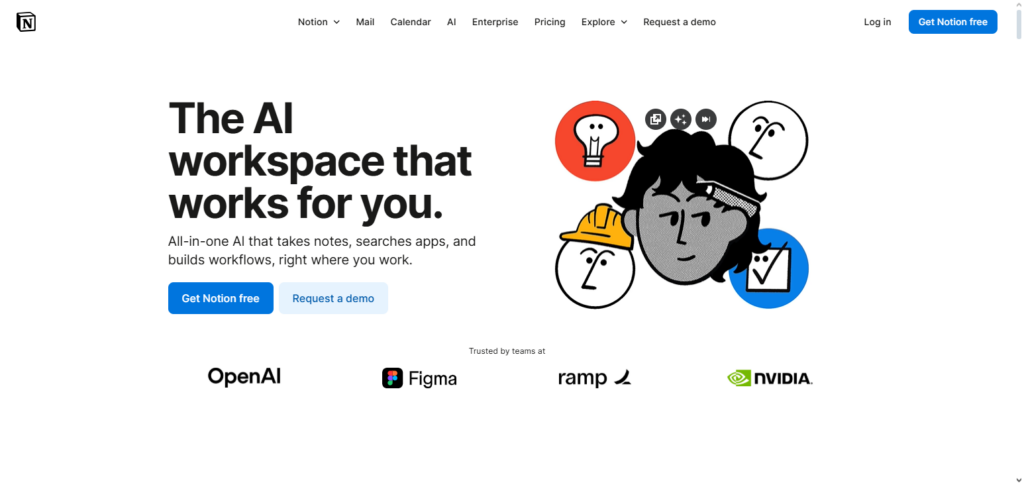
Its capacity to comprehend context enables it to offer pertinent recommendations, speeding up and improving the accuracy of content generation.
Teams may edit and maintain the knowledge base in real time with collaborative features, guaranteeing that content remains up to date. It is perfect for contemporary information management due to its adaptability, user-friendly interface, and AI-powered efficiency.
Notion AI Features
- AI Content Generation – Saves users time by drafting, summarizing, and refining articles automatically.
- Smart Search – Context specific search lets users easily discover pertinent information.
- Collaboration Tools – Team collaboration is enhanced through live editing and commenting.
- Organization and Structuring – Efficiently organizes and interlinks content so users can navigate with ease.
- Integration – Works with tools like Slack, Goggle Workspace, etc seamlessly.
Notion AI Pros & Cons
| Pros | Cons |
|---|---|
| Enhances productivity with AI-powered summarization and writing assistance | AI features may feel basic compared to specialized KB tools |
| Integrates seamlessly with Notion’s flexible workspace | Limited advanced analytics for knowledge base performance |
| Great for collaborative documentation and team notes | Requires manual structuring for large-scale KBs |
| Supports multiple content formats (text, tasks, databases) | AI suggestions can sometimes be generic |
| Easy to use with intuitive UI | Not purpose-built for customer support KBs |
2. Document360 + AI
Because it integrates cutting-edge AI capabilities with a strong knowledge management platform, Document360 + AI is a top option for AI-driven knowledge base construction.
Teams can more easily manage an organized and searchable knowledge base because to its AI features, which automate content production, intelligently classify articles, and recommend improvements.
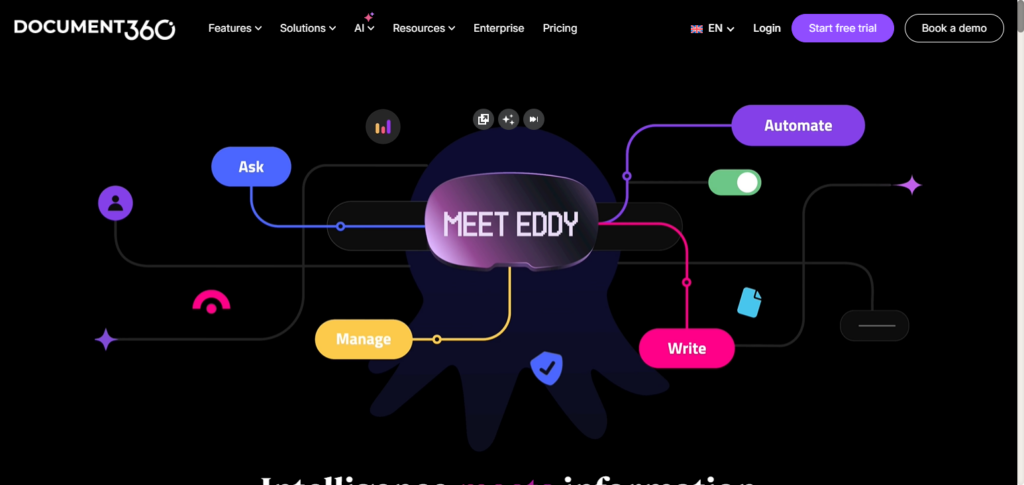
Because of the platform’s exceptional scalability, businesses can handle thousands of articles without sacrificing accessibility or clarity.
Its AI-powered analytics point out content gaps and offer useful information to improve user experience. Document360 + AI guarantees precise, well-organized, and effective knowledge management with its clear interface, teamwork features, and intelligent AI support.
Document360 + AI Features
- Automated Article Creation – With the assistance of AI, content within the knowledge base is automatically generated.
- Intelligent Categorization – Organizes articles so users can navigate through content seamlessly.
- Content Suggestion and Improvement – Enhancements are suggested to improve the content to be more concise and accurate.
- Analytics and Reporting – Monitors user activity and pinpoints areas of content that are lacking.
- Scalability – Maintains the same structural integrity while offering support for large knowledge bases that contain thousands of articles.
Document360 + AI Pros & Cons
| Pros | Cons |
|---|---|
| Purpose-built for knowledge base creation | Higher learning curve for non-technical users |
| AI assists in content search and tagging | Limited integrations compared to broader platforms |
| Strong version control and documentation workflows | Pricing can be steep for small teams |
| Supports multilingual KBs | AI features not as advanced as competitors |
| Excellent analytics for KB usage | UI less modern compared to newer tools |
3. Confluence AI (Atlassian)
An outstanding AI tool for creating AI-driven knowledge bases, Confluence AI (Atlassian) is made to improve teamwork while preserving an orderly information center.
By eliminating manual labor and guaranteeing consistency throughout the knowledge base, its AI capabilities assist in automatically drafting pages, summarizing long information, and suggesting pertinent connections between articles.

Teams may produce content that perfectly complies with project requirements and organizational norms thanks to Confluence AI’s exceptional contextual knowledge.
It facilitates intelligent search, version control, and real-time collaboration and is easily integrated with Atlassian’s suite. Confluence AI is a top option for effective knowledge management because of its automation, accuracy, and teamwork-focused capabilities.
Confluence AI (Atlassian) Features
- AI Drafting and Summarization – Pages are automatically generated and large amounts of content are summarized.
- Contextual Suggestions – Enhances navigation and knowledge discovery through connections of related articles.
- Collaboration and Version Control – Team members can edit simultaneously, and modifications can be tracked by the system automatically and shown in a timeline.
- Smart Search – Identifies content based on contextual relevance and user intentions.
- Integration with Atlassian Suite – Integrates with other Atlassian applications, including Jira and Trello.
Confluence AI (Atlassian) Pros & Cons
| Pros | Cons |
|---|---|
| Deep integration with Atlassian ecosystem (Jira, Trello) | Can feel overwhelming for small teams |
| AI helps with content discovery and summarization | Requires structured setup for effective KB |
| Strong collaboration features | Limited customization for external-facing KBs |
| Enterprise-grade scalability | AI features still evolving |
| Rich plugin marketplace | Higher cost for premium features |
4. Zendesk AI Knowledge
Specifically created to maximize customer support and internal knowledge management, Zendesk AI Knowledge is a potent AI tool for AI-driven knowledge base generation.
Its AI features automatically produce articles, recommend content enhancements, and offer context-aware responses, guaranteeing that users and support agents may promptly obtain correct information.

Users may obtain pertinent answers in a matter of seconds thanks to the platform’s sophisticated search and recommendation engine, which lowers response times and support tickets.
Furthermore, Zendesk AI updates material dynamically to be up to date by continuously learning from interactions. It is one of the greatest tools for building and managing a smart knowledge base because of its emphasis on accuracy, efficiency, and user-centric design.
Zendesk AI Knowledge Features
- Automated Article Generation – Rapidly produces support materials for clients and agents.
- Context-Aware Search – Recommends articles depending on a user’s query.
- Continuous Learning – Adapts knowledge based on evolving interactions and feedback.
- Analytics & Insights – Supplies information on frequently asked questions, requests, and omitted content.
- Seamless Support Integration – Integrates with Zendesk’s customer support solutions.
Zendesk AI Knowledge Pros & Cons
| Pros | Cons |
|---|---|
| AI-driven customer support KB | Expensive for startups and small businesses |
| Seamless integration with Zendesk ticketing | Complex setup for non-technical users |
| Automates answer suggestions for agents | AI accuracy depends on KB quality |
| Strong reporting and analytics | Limited flexibility outside Zendesk ecosystem |
| Scales well for enterprise support | Can feel rigid compared to open KB tools |
5. Freshdesk Freddy AI
One of the top AI tools for creating AI-driven knowledge bases is Freshdesk Freddy AI, which uses intelligent automation to improve customer service and internal knowledge management.
Support teams can work less manually thanks to Freddy AI’s ability to automatically create knowledge base articles, recommend pertinent content upgrades, and offer context-aware query answers.

Its AI-driven insights make sure the knowledge base is accurate and current by pointing out gaps in the current information and suggesting changes.
Freddy AI boosts productivity, improves user experience, and enables businesses to maintain a dynamic, dependable, and extremely responsive knowledge base with features like smart search, real-time content recommendations, and seamless interaction with Freshdesk’s support ecosystem.
Freshdesk Freddy AI Features
- AI-Powered Knowledge Suggestions – Provides article recommendations for both agents and end-users.
- Automated Content Creation – Automatically produces FAQs and knowledge articles.
- Smart Search – Enhance a user’s search query results on knowledge article searches.
- Gap Analysis – Recognizes underdeveloped content and opportunities within existing information.
- Integration with Freshdesk – Streamlined operations with ticketing, support, and other workflows.
Freshdesk Freddy AI Pros & Cons
| Pros | Cons |
|---|---|
| AI-powered agent assistance | AI suggestions may lack depth |
| Easy integration with Freshdesk support suite | Limited customization for KB workflows |
| Automates repetitive queries | Best suited for customer support, not internal docs |
| Provides predictive insights | Can be costly at scale |
| User-friendly interface | AI features less advanced than standalone KB tools |
6. Zoho Desk AI
Automated knowledge base construction and AI-driven automation is where Zoho desk AI is the best in the field. Intelligent automation improves the internal knowledge management systems and the customer facing ones.
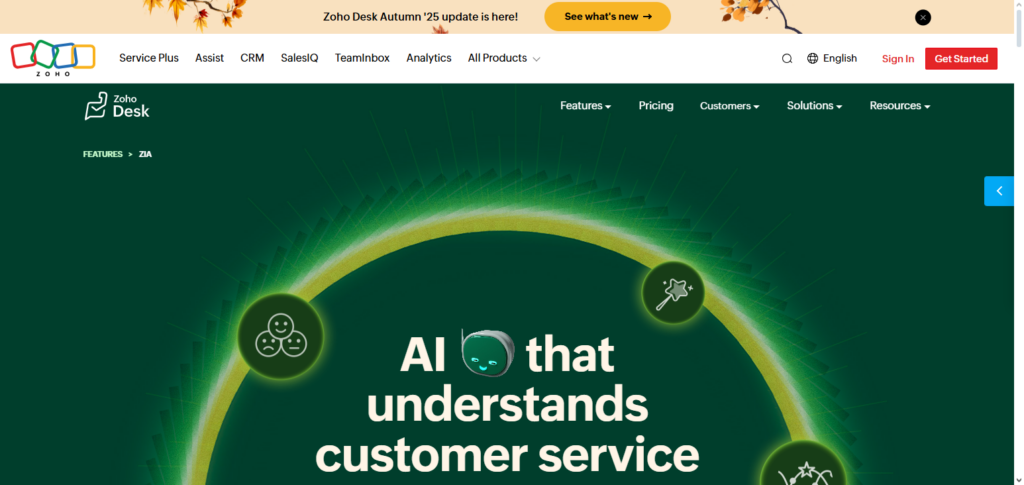
AI-generated and structured articles are created and contextualized suggestions are made. Furthermore, relevant answers are provided to support tickets and queries, alleviating work from the support team.
Interactions are learned from and knowledge base is kept current and relevant. Omnipresent knowledge base is modernized by the effective AI search and predictive analytics which inform the customer on the lacking content. Zoho desk AI is one of the best commercial knowledge management systems.
Zoho Desk AI Features
- Intelligent Article Generation – Creates knowledge articles for self-help and agent support.
- Contextual Search – Delivers the most relevant and correct information based on user intent.
- Content Update & Maintenance – Sustains knowledge articles to ensure they are correct and relevant.
- Analytics Dashboard – Tracks user behavior and recommends enhancements based on usage.
- Integration with Zoho Ecosystem – Seamless connection with Zoho CRM, Desk, and other tools.
Zoho Desk AI Pros & Cons
| Pros | Cons |
|---|---|
| AI-driven ticket routing and KB suggestions | KB features less robust than dedicated tools |
| Affordable pricing for SMBs | Limited enterprise-grade scalability |
| Integrates with Zoho ecosystem | AI accuracy depends on KB quality |
| Easy to set up and manage | UI can feel outdated |
| Supports multilingual KBs | Limited advanced analytics |
7. Bloomfire AI
Bloomfire AI is an excellent tool to help create AI-powered knowledge bases focused on improving knowledge sharing and collaboration within companies. The AI features of Bloomfire AI enable users to automatically classify and summarize documents and personalize tool recommendations so that users can find the information they need more easily.

The smart search of Bloomfire AI provides contextual answers to user queries and intelligently identifies knowledge gaps to help users find the right answers quickly and to improve the overall content.
The platform offers an integrated solution to knowledge management through the ability to upload documents, videos, and images all in one content hub. Overall, Bloomfire AI provides teams with an automated and highly efficient tool to maintain a well-structured knowledge base.
Bloomfire AI Features
- Content Summarization – Summarizes documents digitally for a reader’s condensing.
- Personalized Recommendations – Recommends content based on user’s relevance.
- AI-Powered Search – Search with specificity by understanding the context.
- Knowledge Gap Analysis – Identifies content tracker deficiencies.
- Supports Multimedia Content – Knowledge base integration of videos, images, and documents.
Bloomfire AI Pros & Cons
| Pros | Cons |
|---|---|
| Strong AI-powered search and discovery | Pricing higher than SMB-friendly tools |
| Focused on knowledge sharing culture | Less suited for structured KBs |
| Great for internal collaboration | Limited external-facing KB features |
| Supports multimedia content | AI features not as customizable |
| Analytics for engagement and usage | Smaller ecosystem compared to Atlassian/Zendesk |
8. Slab AI
Slab AI is an AI tool that is great for creating and building a knowledge base and is focused on making documentation easier and improving collaboration among teams.
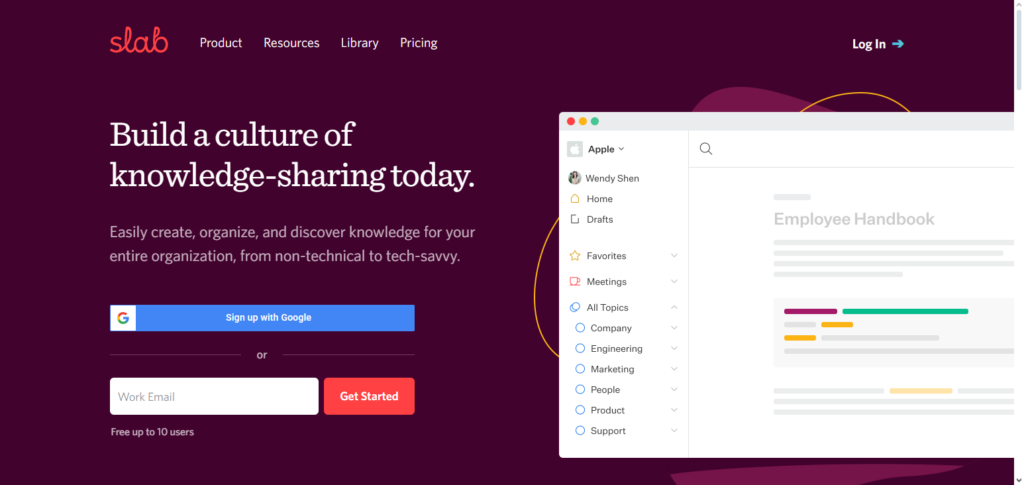
Its automated solutions generate, improve, and organize knowledge for teams, and cut the time teams spend on updating documents manually. Slab AI is great for creating associations, which connects information and allows users to access and use the relevant information on the documents quickly.
It also has a smart search and real-time collaboration features that provide people with the knowledge that is always accurate and up to date. For these reasons and more, the great, user-friendly platforms and design, and Slab AI is great for building systematized and efficient knowledge bases.
Slab AI Features
- Automated Documentation – Creates and maintains internal documents automatically.
- Content Organization – Knowledge is organized to facilitate navigation and accessibility.
- Smart Search – Efficient content and article retrieval based on user queries.
- Collaboration Features – Team support for editing, commenting, and versioning.
- Integration Capabilities – Linked with Slack, GitHub, and other productivity tools.
Slab AI Pros & Cons
| Pros | Cons |
|---|---|
| Clean, modern documentation platform | Limited advanced AI features |
| AI helps with content organization | Not ideal for customer-facing KBs |
| Strong collaboration tools | Smaller ecosystem of integrations |
| Easy onboarding for teams | Limited analytics compared to enterprise tools |
| Affordable pricing | Less scalable for very large KBs |
9. Tettra AI
Tettra AI revolutionizes AI knowledge base tools. Its cutting-edge technology streamlines internal knowledge management and team collaboration. The knowledge base management system utilizes AI to create and edit articles. It even recognizes and updates articles autonomously, organizes information, and presents suggestions to refine accuracy.
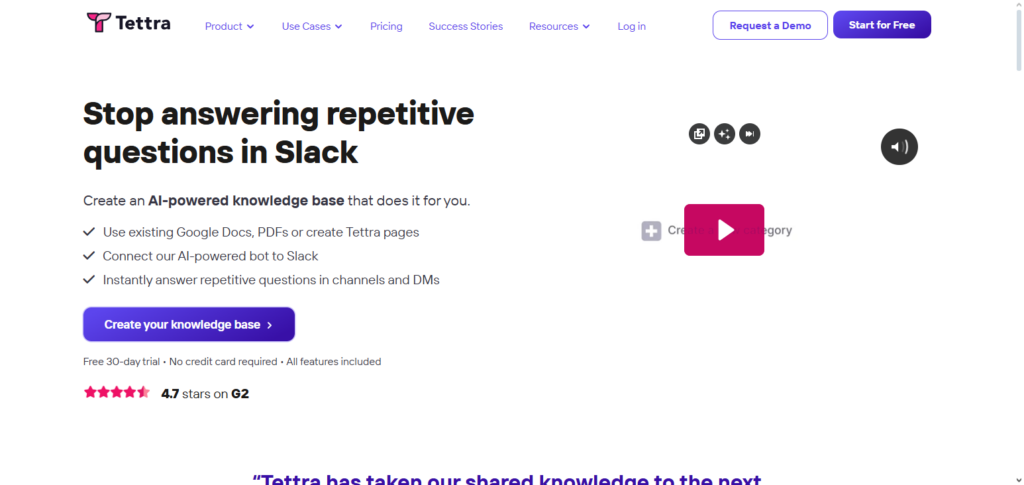
Most of the internal knowledge bases are integrated to popular communication apps such as Slack and Microsoft Teams. Teams can capture and save to their knowledge base without leaving their collaboration software. Smart search and content linking provide immediate access to relevant content. Analytics tools detect content gaps.
Certainly, with real-time document updates and reorganizing. knowledge base management becomes highly automated and efficient. Teams work and rely on their knowledge base. Triangulate autonomy, intelligence and organization to a knowledge base.
Tettra AI Features
- AI Article Creation – Creates internal knowledge content automatically.
- Real-Time Collaboration – Editing and updating content by team members occur seamlessly.
- Contextual Linking – Related articles are connected for smooth navigation.
- Smart Search – Responds to user queries by delivering focused answers.
- Integration with Communication Tools – Compatibility with Slack, Microsoft Teams, etc.
Tettra AI Pros & Cons
| Pros | Cons |
|---|---|
| Designed for internal team knowledge sharing | Not ideal for external customer KBs |
| AI assists with content recommendations | Limited advanced analytics |
| Integrates with Slack and other team tools | Smaller ecosystem compared to competitors |
| Simple and intuitive UI | AI features less robust |
| Affordable for SMBs | Limited scalability for enterprise use |
10. Stonly AI
With a focus on interactive and guided content that improves user comprehension and engagement, Stonly AI is a leading AI solution for AI-driven knowledge base building. Its AI powers automatically provide lessons, solutions, and step-by-step instructions, turning static knowledge into practical, understandable experiences.
The sophisticated architecture of Stonly AI enables tailored content distribution based on user inquiries, guaranteeing that material is pertinent and instantly helpful.
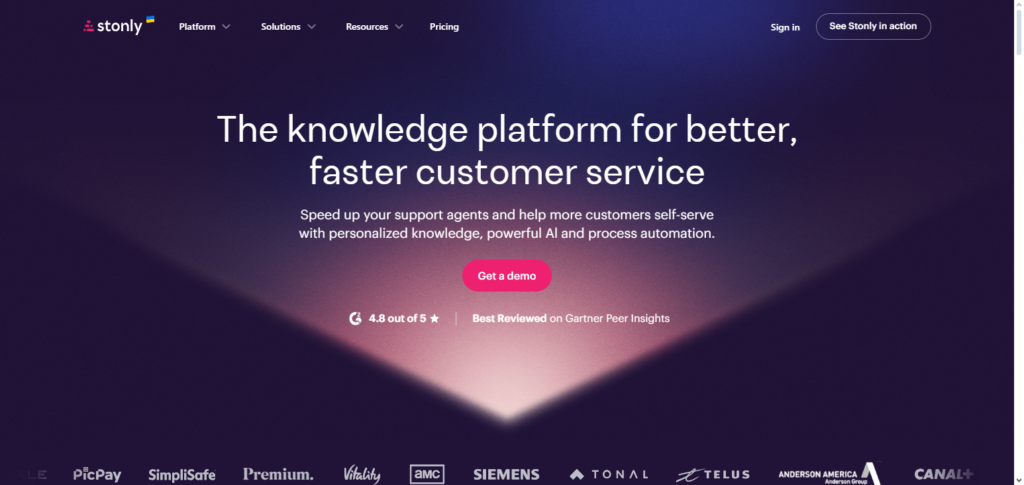
Teams can construct a dynamic, interactive, and highly effective knowledge base with Stonly AI thanks to its real-time updates, analytics to find knowledge gaps, and smooth connection with support platforms.
It is particularly effective for contemporary knowledge management because of its emphasis on clarity and involvement.
Stonly AI Features
- Interactive Guides & Tutorials – Generates simple guides that breakdown a process into smaller, digestible steps.
- AI Content Generation – Generates knowledge base articles automatically.
- Personalized Content Delivery – Modifies guides based on user’s actions and questions.
- Analytics & Gap Detection – Reveals insights on content engagement and content that is lacking.
- Integration with Support Platforms – Fully integrates with helpdesk and customer support tools.
Stonly AI Pros & Cons
| Pros | Cons |
|---|---|
| Interactive, step-by-step knowledge base creation | More complex setup than static KB tools |
| AI helps personalize guides | Pricing can be high for advanced features |
| Great for onboarding and training | Less suited for traditional KB articles |
| Strong analytics on user engagement | Limited integrations compared to larger platforms |
| Enhances customer self-service | Requires structured workflows to be effective |
Key Features to Look for in AI Knowledge Base Tools
Natural Language Processing (NLP) – Allows the tool to comprehend and answer inquiries posed by users in everyday dialogues in a conversational manner.
Automated Content Creation – The AI can draft new pieces, coalesce, and revise existing articles to lessen the burden of manual work.
Intelligent Search – Supplies users with pertinent information in a timely manner by providing thoughtful and contextual search results.
Content Organization & Categorization – Knowledge is structured and tagged with little to no human input, thus enhancing efficiency.
Analytics & Insights – Records activity, determines the absence of information, and provides suggestions to fill in gaps.
Integration Capabilities – Integrates with other tools like customer relationship management (CRM) systems, help desks, chatbots, team workspaces, etc.
Real-Time Updates & Learning – Adapts to the users and modifies the information on the tool in real-time.
Collaboration Tools – Assists in knowledge management as multiple users can participate, edit, and have different control of document versions.
Conclusion
To sum up, AI-powered knowledge base technologies have completely changed how businesses produce, handle, and distribute information. These tools—including Notion AI, Document360 + AI, Confluence AI, Zendesk AI Knowledge, Freshdesk Freddy AI, Zoho Desk AI, Bloomfire AI, Slab AI, Tettra AI, and Stonly AI—offer unmatched efficiency, accuracy, and scalability by utilizing artificial intelligence.
They guarantee that customers always have access to pertinent and trustworthy information by automating content generation, offering intelligent search, and constantly updating knowledge. Businesses may improve customer service, expedite internal communication, and sustain a dynamic, well-organized information ecosystem by implementing these AI-powered solutions.
FAQ
What is an AI-driven knowledge base?
An AI-driven knowledge base is a digital repository that uses artificial intelligence to create, organize, and manage information. It automates content generation, provides intelligent search, and continuously updates information for accuracy and relevance.
Why should businesses use AI tools for knowledge base creation?
AI tools reduce manual effort, improve accuracy, enhance user experience with smart search, and ensure the knowledge base stays current by continuously learning from interactions.
Which are the best AI tools for knowledge base creation?
Top AI tools include Notion AI, Document360 + AI, Confluence AI (Atlassian), Zendesk AI Knowledge, Freshdesk Freddy AI, Zoho Desk AI, Bloomfire AI, Slab AI, Tettra AI, and Stonly AI.
What features should I look for in an AI knowledge base tool?
Key features include natural language processing (NLP), automated content creation, intelligent search, content organization, analytics, integration capabilities, real-time updates, and collaboration tools.
How do AI knowledge base tools improve customer support?
These tools provide instant, accurate answers, suggest relevant content, reduce response times, and allow support teams to focus on complex queries, improving overall customer satisfaction.