




The Best AI Systems for Autonomous Business Operations will be covered in this post. These cutting-edge solutions decrease repetitive processes, optimize workflows, and offer predictive insights by utilizing artificial intelligence, machine learning, and intelligent automation.
By implementing these systems across finance, HR, procurement, IT, and customer service departments, businesses may increase efficiency, make better decisions, and achieve scalable operations.
What Are Autonomous Business Operations?
The use of cutting-edge technologies, especially automation and artificial intelligence, to allow business processes to function autonomously with little assistance from humans is known as autonomous business operations.
These operations have the ability to monitor performance, make choices, and carry out duties related to supply chain, customer service, finance, and human resources.
Organizations can attain increased productivity, quicker decision-making, fewer errors, and better scalability while allowing staff to concentrate on critical projects by utilizing AI-driven insights and automated workflows.
How to Choose the Right AI System
Identifying Business Needs & Objectives: What processes need automation and what do you want to achieve in terms of efficiency, cost savings, and accuracy.
Integration Capabilities: Is the AI System able to integrate into your organization’s ERP, CRM or other business applications.
Scalability: Will the platform sustain the growth of your organization and the increasing load to be processed.
Ease of Use & Adoption: Is a low-code or no-code platform available to enable business employees to easily and quickly adopt the system.
AI & Automation Features: Are features such as predictive analytics and natural language processing, and RPA available.
Security & Compliance: Does the platform enable the organization to meet industry standards for data protection and other regulatory compliance within the industry?
Cost & ROI: Are the licensing, implementation and ongoing maintenance costs reasonable relative to the anticipated outcomes?
Vendor Support & Community: Is there documentation, training, and an active user community for the system?
Key Point & Best AI Systems for Autonomous Business Operations List
| AI Automation Platform | Key Points |
|---|---|
| Automation Anywhere A360 | Cloud-native RPA platform, intelligent document processing, AI-powered bots, scalable automation, integration with enterprise apps. |
| UiPath Business Automation Platform | End-to-end automation, AI-driven workflows, low-code design, attended/unattended bots, robust analytics and insights. |
| IBM Watson Orchestrate | AI-assisted process automation, natural language interactions, cross-system task orchestration, productivity enhancement, enterprise-grade security. |
| Microsoft Power Automate + Copilot AI | AI-driven workflow creation, integration with Microsoft ecosystem, low-code/no-code automation, intelligent suggestions, analytics & reporting. |
| ServiceNow AI Workflow Orchestration | Automates IT, HR, and customer workflows, AI-powered task assignment, predictive analytics, seamless integration, service management optimization. |
| Workday AI‑Driven Finance & HR | Intelligent automation for HR and finance, predictive insights, personalized recommendations, compliance management, employee experience focus. |
| Coupa AI Spend Management | AI-driven procurement & spend analytics, supplier risk management, automated approvals, real-time insights, cost optimization. |
| Salesforce Einstein + Flow Orchestration | AI-powered CRM automation, predictive insights, guided workflows, low-code automation, enhanced customer engagement. |
| TIBCO Cloud Integration + AI | Integration platform with AI capabilities, API management, event-driven automation, real-time analytics, scalable cloud-native architecture. |
| DataRobot AI Cloud | Enterprise AI platform, automated machine learning (AutoML), model deployment & monitoring, predictive analytics, integration with business processes. |
1. Automation Anywhere A360
Automation Anywhere A360 is a cloud-based and provides an RPA platform that is aimed towards automating and streamlining repetitive business processes and tasks. The platform is able to use AI and machine learning to complete more complicated tasks such as document processing, data extraction and management, and workflow management.
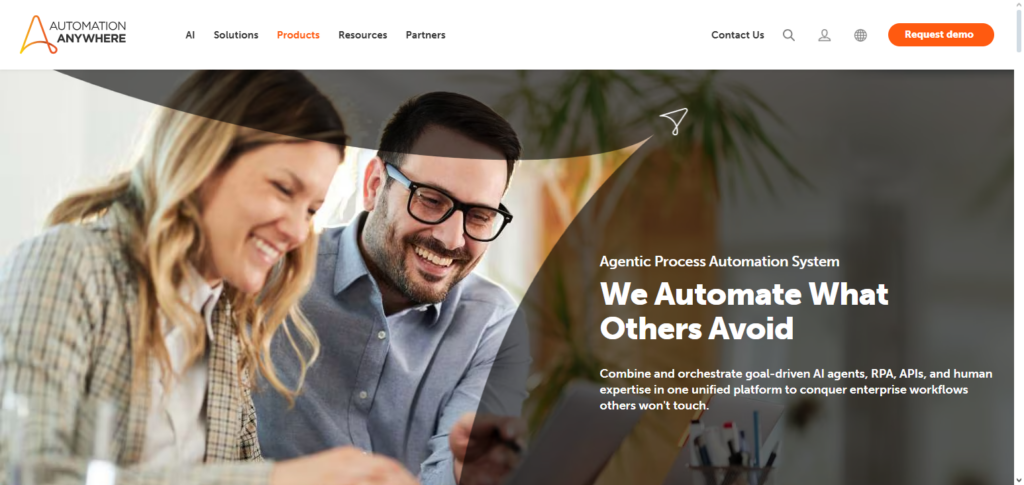
A360 features real-time monitoring and provides enterprise-level security, allowing the analytics to empower the business to improve operational efficiency by increasing numerous aspects of the process and a decrease in mistakes are made. Most are integrated into multiple applications within the enterprise for further flexibility and scalability.
Automation Anywhere A360 Features, Pros & Cons
Key Features
- Visual workflow designer available for cloud-native RPA.
- Automation insights and AI-enhanced document processing.
- Monitoring and scheduling of bot orchestration.
- Enterprise applications with prebuilt connectors.
- Automation suggestions using natural language generation.
Pros
- Enterprise scalability.
- Balanced fit with attended automation in addition to win -> unattended.
- bot performance tracking and useful analytics.
- Integration ecosystem is more advanced and broadened.
- Simplistic starter automations are easy to create.
Cons
- RPA automations can be complex for non-technical users.
- cost of licensing and scaling can be significant.
- browser-based editing can be clunky and slow.
- more advanced RPA automation tools have a steeper learning curve vs basic automation tools.
- prior training is necessary for some advanced features.
2. UiPath Business Automation Platform
UiPath Business Automation Platform is a provider of comprehensive strategy implementation through the use of AI-powered robots and intelligent workflows. With a low-code interface, users can design, execute, and oversee scaled management of automation. Document understanding, email automation, and customer service automation incorporate computer vision and NLP.
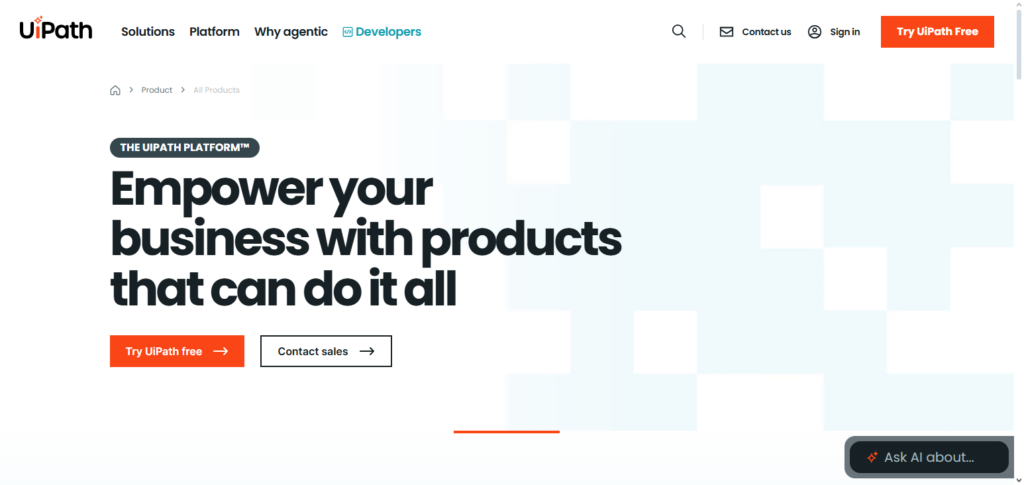
The platform services both attended and unattended bots, guaranteeing a diverse range of options for businesses. Performance and resource management can be optimized with internal analytics and reporting features. It is among the top tier companies recognized for having the Best AI Systems for Autonomous Business Operations, and for assisting businesses in the simplification of complex work models.
UiPath Business Automation Platform Features, Pros & Cons
Key Features
- One of the best drag-and-drop RPA designers.
- Vision and document AI tasks.
- Bot life cycle orchestration console.
- Embedded analytics and process mining.
- Use case support for attended and unattended automation.
Pros
- Most recognized RPA automation engine.
- Reusability and active community.
- Effective automation of complex workflows.
- Great orchestration and closure for advanced tasks.
- Enterprise workflows support is solid.
- Multiple deployments available.
Cons
- Advanced features of UiPath come with a steep learning curve.
- Can be overdoing it for simple needs.
- Licensing governance can be difficult and add more cost.* Desktop automation can be somewhat fragile.
- Requires sophisticated oversight when doing large-scale processes.
3. IBM Watson Orchestrate
IBM Watson Orchestrate is a provider of AI-infused automation and workflow orchestration for users who want to manage workflows across systems without human interference.
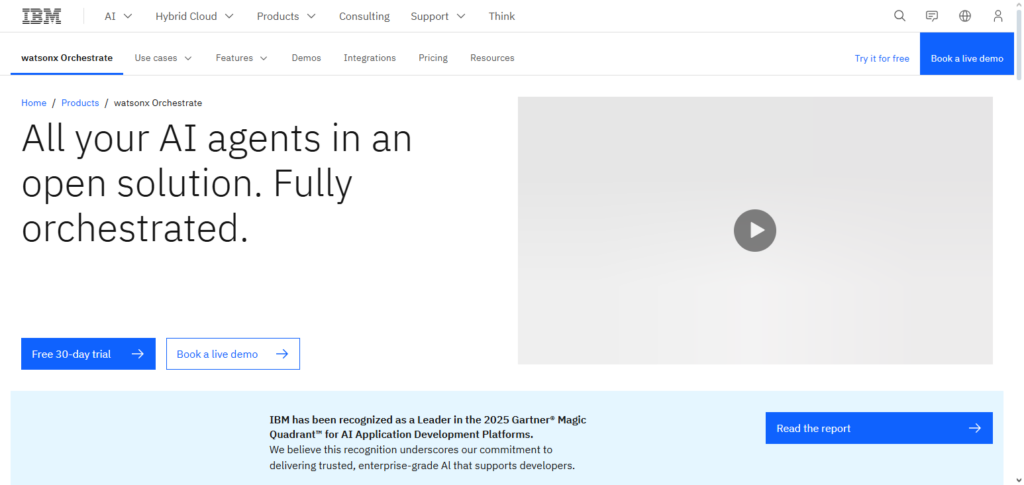
Thanks to the natural language interface, employees can execute tasks and initiate workflows with simple language commands. With the combination of AI and cognitive functions, Watson orchestrates tasks and analyzes data, processes documents, and manages tasks.
It partners with business systems such as Salesforce, ServiceNow and SAP for the automation of business operations. Recognized for having one of the Best AI Systems for Autonomous Business Operations, It is used for productivity promotion, error reduction, and speed increase in decision making across business Verticals to finance, HR, and customer service.
IBM Watson Orchestrate Features, Pros & Cons
Key Features
- Work automation driven by artificial intelligence
- Creating tasks in natural language
- Ready-made automation tools
- Governance and monitoring
- Support for hybrid cloud environments
Pros
- Deep context for AI automation
- Suitable for complicated intersystem workflows
- Compliance features
- Accommodates hybrid enterprise setups
- Active marketplace for automation tools
Cons
- Configuration can be cumbersome
- Intuitive design more helpful for larger organizations
- AI benefits can be substantial but require training
- High cost
- Competitors have more extensive catalogues of connectors
4. Microsoft Power Automate + Copilot AI
Microsoft Power Automate plus Copilot AI enables the development of intelligent workflows tailored to the needs of organizations by connecting applications, services, and information. Suggestions made by Copilot AI optimize task automations and help minimize time and resource expenditures by eliminating repetitiveness.
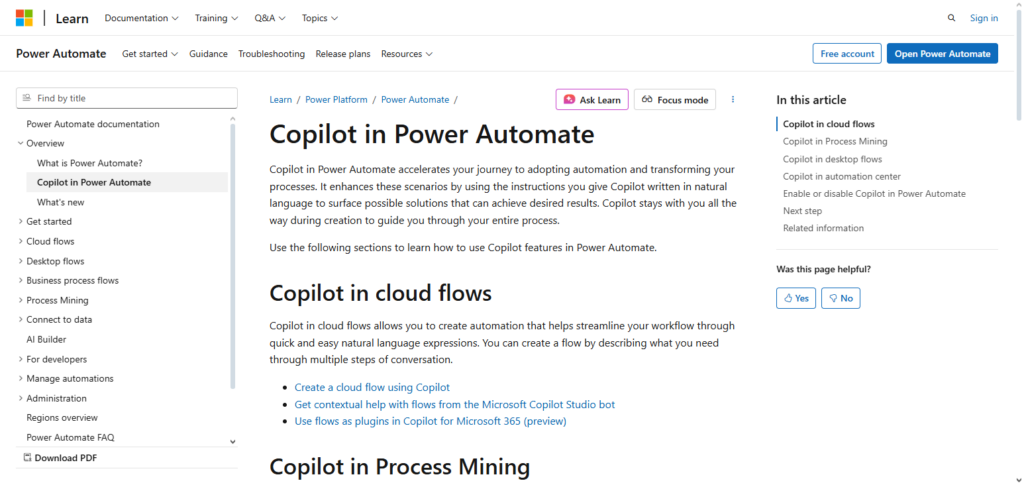
Users can automate approvals, notifications, and report generations with no-code and low-code task automation tools.
Its collaboration with the Microsoft 365 ecosystem provides cross-team collaboration. Also, because of its reputation as one of the Best AI Systems for Autonomous Business Operations, it allows improvements to be made to operations through the streamlining of processes, and the enhancement of productivity with the use of AI for faster and more consistent operational outcomes, and for smarter processes.
Microsoft Power Automate + Copilot AI Features, Pros & Cons
Key Features
- Low-code automation builder for clouds and desktops
- Copilot featuring speech automation
- Connecting multiple apps/services
- AI tools for prediction and processing forms
- Tools for analysis of workflows
Pros
- Best in class automation for Microsoft products
- Copilot enhances efficiency for non-technical users
- Extensive catalog of apps and services
- Easy to manage from cloud platform
- Lower than average cost
Cons
- Less automation for tasks than more specialized tools
- Most useful in Microsofts products
- Large complicated automations can be hard to control
- Desktop Bot features are still being built.
- Licensing can be complex.
5. ServiceNow AI Workflow Orchestration
ServiceNow AI Workflow Orchestration facilitates the automation of complicated business workflows across IT, HR, customer service, and more. An AI-powered engine predicts, task recommendations and next steps and automations of approvals.
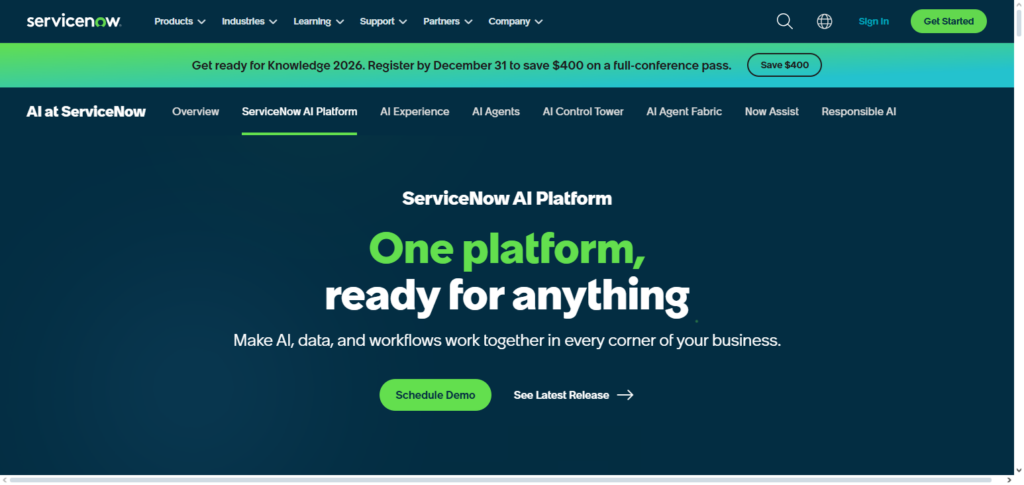
With enterprise system integration capabilities, ServiceNow provides operational seamless flow, operational bottlenecks, and employees inefficiency stream improvements. Analytics and reporting provide insights into performance and operational gaps.
It has been recognized as one of Best AI Systems for Autonomous Business Operations, assuring firms to execute workflows more rapidly, automate human error away, and to concentrate on high strategic initiatives with greater accuracy.
ServiceNow AI Workflow Orchestration Features, Pros & Cons
Key Features
- Unified central flow across IT, HR, Ops
- AI suggested recommendations
- Actions/approvals by humans
- Compliance tracking & built-in reporting
- Automation templates across domains
Pros
- Great Serviced Management Workflow
- Unified Platform Data Model
- Strong Audit & Governance
- Built for Enterprise Service Domains
- Good User Experience & Mobile support
Cons
- Pricing for Platform Licenses
- No focus on Traditional RPA
- Less Flexible around ServiceNow Ecosystem
- Advanced AI still being developed
- ServiceNow Experience Required
6. Workday AI‑Driven Finance & HR
Workday AI-Driven Finance and HR utilizes AI and ML technology for upgrading finance and human resources functionalities. Predictive insights are provided for workforce modeling, payroll, expense management, and financial forecasting.
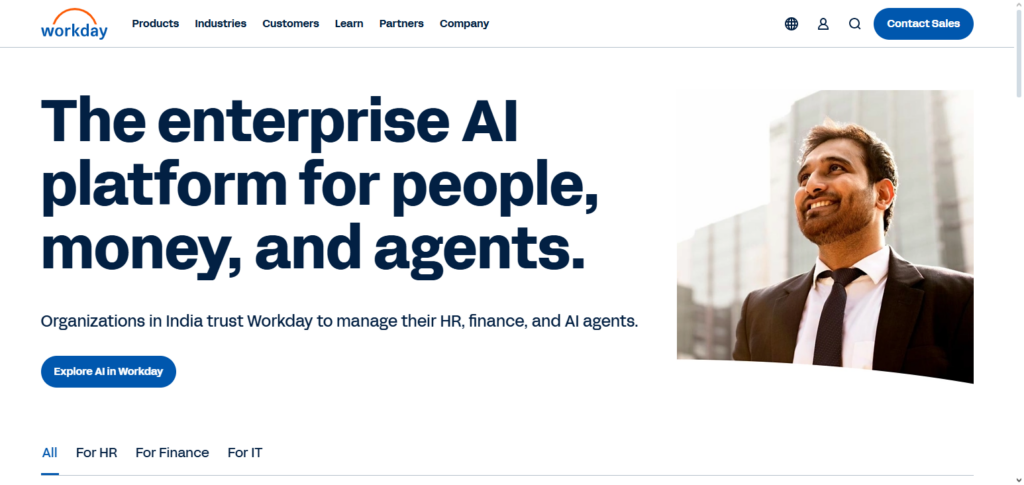
Functioning at the employee level, the technology is designed to deliver personalized, actionable recommendations for greater efficiency, while, at the managerial level, the system provides recommendations based on predictive analytics to assist more data-driven decision-making processes. Routine administrative tasks are performed by the system, and tasks are performed in consideration of relevant internal and external regulatory compliance.
As the winner of the Best AI Systems for Autonomous Business Operations, Workday helps organizations manage their complex tasks with greater accuracy and ease, while improving the employee experience. Customers are then better able to manage their financial and human capital resources seamlessly.
Workday AI Driven Fin & HR Features, Pros & Cons
Key Features
- AI supported HR processes (talent, payroll)
- Financial analysis & planning predictions
- Unified employee & financial data model
- Automation triggered by events
- Compliance & Anomaly Detection
Pros
- Deep Finance/HR focus
- Predictive analytics helps planning
- Decreases manual reconciliation
- Unified data helps reduce silos
- Built Governance for Sensitive Data
Cons
- Narrow focus (not general automation)
- Benefits of AI vary by module
- Configuring tailored workflows can be complex
- Pricey for full suite
- Workday certified expertise is needed
7. Coupa AI Spend Management
Coupa AI Spend Management utilizes machine learning and AI technology to automate the processes of procurement, expense management, and supplier risk management. With real time information and analytics in spending of the organization, the platform assists organizations in determining their cost structures and identifying cost saving opportunities.
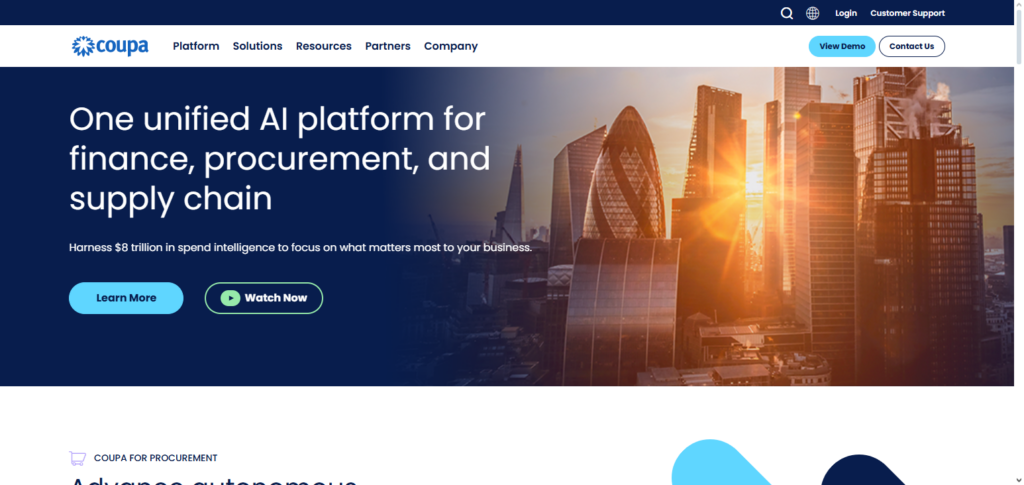
The platform automates the approval processes to enhance compliance and mitigate risks by monitoring suppliers. These Predictive analytics, gained by low effort processes, helps in gaining better managerial control in the organization.
The platform is also one of the Best AI Systems for Autonomous Business Operations as it allows organizations to enhance the procurement processes, spending control, supplier management, and financial control better.
Coupa AI Spend Management Features, Pros & Cons
Key Features
- AI pricing & spend anomaly detection
- Supplier risk and performance scoring
- Automated procurement workflows
- Real‐time budget vs spend visibility
- ERP integration for financial alignment
Pros
- Strong spend control and forecasting
- Helps enforce compliance & negotiation leverage
- Reduces manual PO/invoice tasks
- Centralized supplier data
- Good analytics dashboards
Cons
- Focused on procurement (not general automation)
- ROI tied to spend volume
- Customization complexity for diverse processes
- Data quality impacts AI accuracy
- Integration effort required
8. Salesforce Einstein + Flow Orchestration
Salesforce Einstein together with Flow Orchestration utilizes AI in the automation of the processes in the CRM (customer relationship management) systems) along with customer engagement and the automation of the business system processes. For sales, marketing, and customer service, dies Einstein AI predictively analyze the service.
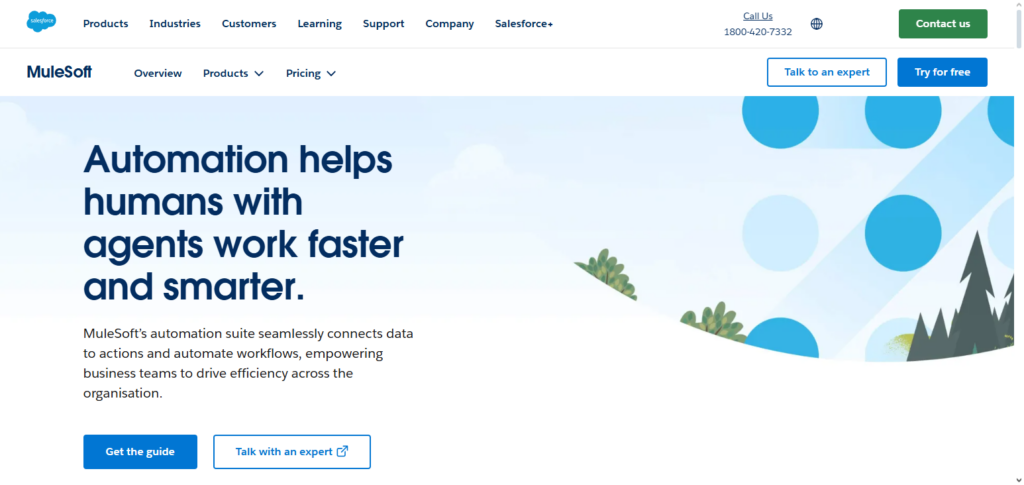
There is Flow Orchestration at the service of automated tasks per business unit. It helps in the no-code automation of customer engagement, analytics in real-time, and interaction automation Furthermore, the AI enhances the organization in the productivity of the automation of managing the workflow. It is awarded to be one of the Best AI Systems for Autonomous Business Operations.
Salesforce Einstein + Flow Orchestration Features, Pros & Cons
Key Features
- Einstein AI Predictions & recommendations
- Flow Orchestration for complex Salesforce workflows
- AI‐based scoring and routing
- Visual low‐code automation builder
- Native across Sales, Service, Marketing clouds
Pros
- Deep CRM context for automation
- Strong customer journey orchestration
- AI enhances decisions & personalization
- Low code for admins
- Broad ecosystem & AppExchange extensions
Cons
- Best value in Salesforce ecosystem
- Flow complexity can grow fast
- Additional costs for Einstein AI credits
- Learning curve for advanced flows
- Limited outside CRM scope
9. TIBCO Cloud Integration + AI
TIBCO Cloud Integration + AI is cloud-based software service. The software incorporates AI for the automation of combining applications, data, and data processes. It incorporates event-driven architecture, API management, and other forms of real-time automated analytics to enhance the optimization of workflows.

The predictive automation of processes through AI helps in making decisions and detecting anomalies. Businesses can streamline the operation, and enhance inter-system connectivity. The system, TIBCO Cloud, is considered one of the Best AI Systems for Autonomous Business Operations and helps enterprises improve their operational agility and reduce manual processes, through incorporating seamless interconnection and AI for workflow orchestration.
TIBCO Cloud Integration + AI Features, Pros & Cons
Key Features
- Integration of applications and data via iPaaS
- Management of APIs and event orchestration
- Tools for visual mapping and transformation
- AI and analytics embedded
- Management of data flow in a hybrid cloud
Pros
- Superb system and data connectivity
- Adaptable to enterprise integration demands
- Advanced event-driven automation and APIs
- Effective data transformation and manipulation
- Operates in hybrid settings
Cons
- Less RPA/Task automation
- Needs a certain level of technical skills
- Complex web interface
- Enterprise tier pricing is quite premium
- AI capabilities are more analytical and less about workflow automation
10. DataRobot AI Cloud
DataRobot AI Cloud is an enterprise-level application that encompasses automated machine learning (AutoML) and AI-enhanced process streamlining. It enables businesses to construct, implement, and supervise models that improve decision-making through model prediction in finance, human resources, marketing, and operational activities.
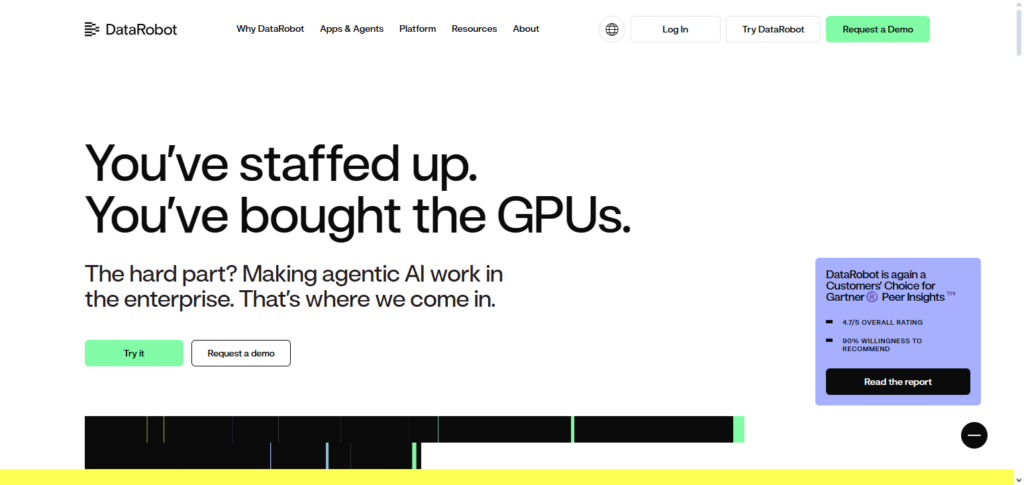
The platform streamlines the process of model prediction, feature engineering, and deployment to achieve timely and precise insights. The fusion of DataRobot with other enterprise systems enables the automation of applications workflows to be tailored to actions predicted by the automation.
DataRobot has been acknowledged for Predictive Analytics as one of the Best AI Systems for Autonomous Business Operations. DataRobot empowers businesses to enhance operational performance by reducing costs and improving efficiency through operational analytics.
DataRobot AI Cloud Features, Pros & Cons
Key Features
- Building of machine learning model automation
- AI explanation and governance of models
- AI pipeline management that is end-to-end
- APIs that predict for incorporation
- Performance monitoring and tracking
Pros
- Unmatched automation in ML life cycle
- Model eastern governance and explanation
- Solves the bottleneck in data science
- Easy deployment as cloud or on-prem
- Operationalization of the model is simplified
Cons
- Not a broad automation tool for workflows
- Good data inputs and data maturity are required
- Large data workloads incur more costs
- Orchestration of tasks is separate from AI focus
- Real time actions require integration efforts.
Comparison of AI Systems
| Platform | Best Use Case | Key Strength | Primary Limitations |
|---|---|---|---|
| Automation Anywhere A360 | Enterprise RPA + workflow automation | Scalable automation with strong bot orchestration | Steeper learning curve; complex licensing |
| UiPath Business Automation Platform | Complex RPA & enterprise automation | Market‑leading RPA with process mining | Overkill for simple tasks; governance needed |
| IBM Watson Orchestrate | AI‑driven cross‑system workflows | Strong AI orchestration & hybrid support | Setup complexity; premium pricing |
| Microsoft Power Automate + Copilot AI | Microsoft ecosystem automation | Natural‑language automation + extensive connectors | RPA depth less than specialized tools |
| ServiceNow AI Workflow Orchestration | ITSM & enterprise service workflows | Unified service workflow + AI recommendations | Limited outside ServiceNow suite; cost |
| Workday AI‑Driven Finance & HR | HR & financial process automation | Deep domain context & predictive insights | ERP‑centric; not general automation |
| Coupa AI Spend Management | Procurement & spend control | AI spend analytics & supplier risk scoring | Focused on spend domain only |
| Salesforce Einstein + Flow Orchestration | CRM workflows & customer journeys | AI predictions integrated with CRM | Best value only within Salesforce ecosystem |
| TIBCO Cloud Integration + AI | Data integration & API orchestration | Strong hybrid integration & event handling | Less focused on RPA/task automation |
| DataRobot AI Cloud | Predictive analytics & ML workflows | AutoML lifecycle with governance | Not a full workflow automation tool |
Future of Autonomous Business Operations
AI systems that are increasingly intelligent, adaptable, and networked will likely shape autonomous company processes in the future.
Businesses will be able to function with little human intervention thanks to developments in generative AI, predictive analytics, and real-time decision-making, which will enable them to react quickly to shifting internal workflows and market conditions.
In order to increase productivity, lower operational risk, and open up new strategic avenues for expansion and innovation, organizations will progressively implement self-optimizing procedures in the areas of finance, HR, supply chain, and customer service.
Conclusion
Adopting AI-driven automation has become crucial for businesses looking to boost productivity, cut expenses, and improve decision-making in today’s quickly changing corporate environment.
Automation Anywhere A360, UiPath, IBM Watson Orchestrate, Microsoft Power Automate + Copilot AI, ServiceNow AI Workflow Orchestration, Workday AI-Driven Finance & HR, Coupa AI Spend Management, Salesforce Einstein + Flow Orchestration, TIBCO Cloud Integration + AI, and DataRobot AI Cloud are some of the best AI systems for autonomous business operations.
These systems provide strong solutions to optimize workflows in the areas of finance, HR, procurement, customer service, and IT operations. By utilizing these platforms, companies may increase efficiency and gain a competitive edge in the digital age by automating repetitive procedures, gaining predictive insights, and achieving scalable, intelligent operations.
FAQ
What are Autonomous Business Operations?
Autonomous Business Operations refer to processes and workflows within an organization that run with minimal human intervention, powered by AI, machine learning, and intelligent automation. These systems can analyze data, make decisions, and execute tasks efficiently, improving productivity and reducing errors across finance, HR, IT, procurement, and customer service functions.
Why should businesses adopt AI Systems for Autonomous Operations?
Adopting AI-driven autonomous systems helps businesses reduce operational costs, eliminate repetitive tasks, enhance decision-making, improve compliance, and enable real-time insights. These systems accelerate processes, streamline workflows, and allow employees to focus on strategic and high-value activities.
How do these systems impact workforce productivity?
By automating repetitive, time-consuming tasks, these AI platforms free employees to focus on higher-value work. They provide predictive insights, task recommendations, and data-driven guidance, enhancing efficiency, decision-making, and overall productivity.
Are these AI systems suitable for all business sizes?
Yes. Most platforms are scalable and flexible, supporting small businesses to large enterprises. Cloud-based solutions like Automation Anywhere A360, Microsoft Power Automate, and TIBCO Cloud Integration allow easy adoption with minimal infrastructure requirements, while enterprise-grade solutions like IBM Watson Orchestrate and Workday are ideal for complex, large-scale operations.