

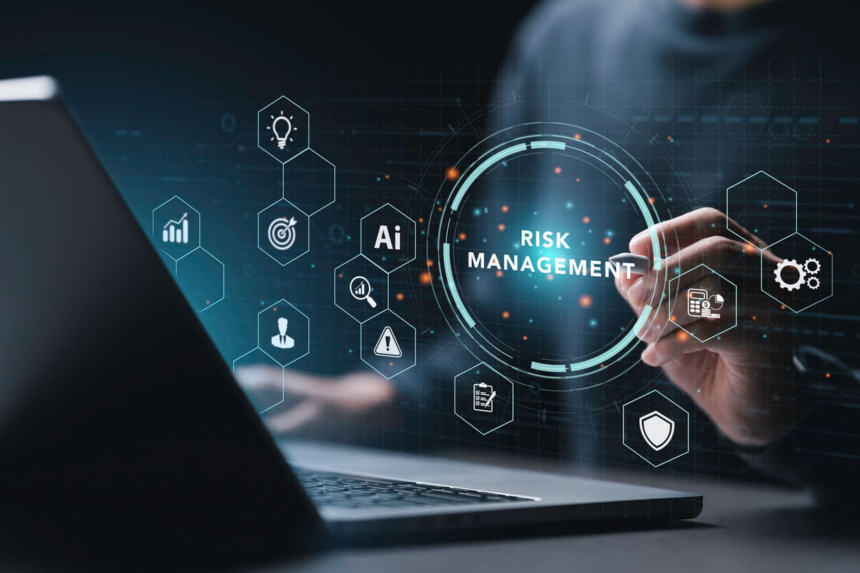
The AI Software Contract & Licensing Risks that companies have while utilizing AI solutions will be covered in this article.
These risks can have major legal and financial repercussions, ranging from intellectual property issues to license compliance, liability, and regulatory challenges. Any organization that wants to adopt AI safely, responsibly, and successfully must understand them.
Understanding AI Software Contracts
AI software contracts, which regulate the usage, distribution, and upkeep of AI-powered software solutions, are legally binding agreements between software developers, distributors, and consumers.
These agreements specify each party’s rights and obligations, including conditions of licensing, ownership of intellectual property (IP), service level agreements (SLAs), responsibility, and confidentiality.
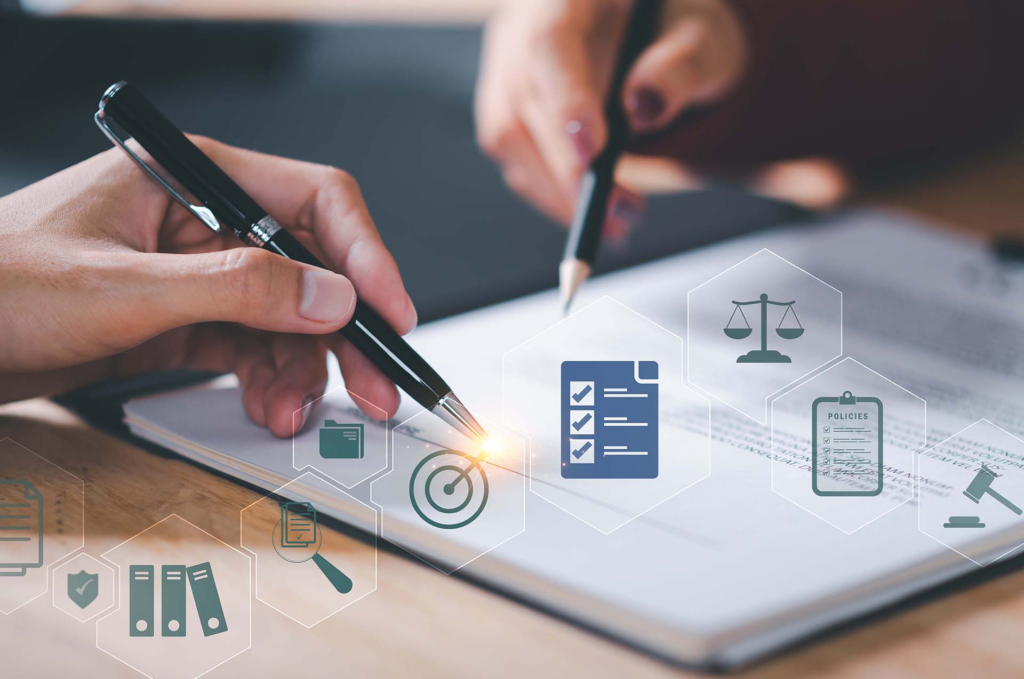
These contracts specify who owns the AI models, who can alter or redistribute them, and how AI-generated outputs are handled because AI software frequently uses proprietary techniques, models, or datasets. Regulations, data protection legislation, and ethical standards are also covered by AI contracts, particularly when AI deals with sensitive or private data.
They also specify monetary commitments like royalties, subscription fees, and fines for violations. Well-written contracts are essential to avoiding disagreements, reducing operational and legal risks, and ensuring seamless cooperation between vendors and consumers given the quick development of AI technology.
AI Software Contract & Licensing Risks
Risk of Intellectual Property
- Not receiving the proper rights to use the AI Software can result in breaking the law regarding intellectual property.
- The AI Software vendor and user may dispute the ownership of AI-generated results.
Risk of Not Being Compliant with the License
- Not following the rules of a license, whether proprietary or open-source, may result in a lawsuit.
- License rules about the limitation of modification, redistribution, or integration can be ignored.
Risk of Liability
- A contract may state that the vendor is not liable for any AI software errors, biases, or failures.
- Legal consequences can be faced by the users if the AI causes harm or violates the law.
Vendor and Operational Risks
- Vendor Lock-in is the risk of having no choices in the service provider.
- AI software integration with current frameworks may not be as flexible in use.
Regulatory, Privacy, and Data Risks
- The inaccuracy of the data can violate laws and regulatory frameworks about the use of AI.
- Failing to adhere to the laws can result in regulatory fines, damage to the reputation, or loss of the operational capability.
Financial Risks
- Opaqueness about the expenses of penalties or fine due to the violation of licensing agreements.
- The expenses for the contracts and any IP related lawsuits or the violation of the licensing agreements.
Ethical and AI Bias Risks
- AI systems can produce biased results that could damage your brand or lead to legal problems.
- There could be ambiguity in contracts in terms of who is responsible for ethical issues.
Why are licensing risks important in AI software?
Legal Compliance
- Using AI software without proper licensing can result in lawsuits, penalties, and fines.
Protection of Intellectual Property
- Licensing prescribes the use of AI models, algorithms, and datasets legally, and protects against untimely disputes in infringement of IP.
Negative Cost Impact
- License agreements can be violated, resulting in additional costs, payment of royalties, or fees for termination of the contracts.
Keeping the Operation Open
- License violations can compel an organization to cease the use of essential AI applications serious to the AI operational capacity, causing the loss of innovation and productivity.
Managing Reputation
- AI having components that are proprietary or open-source, can be using improperly. This can result in loss of trust that a business can claim, to the marketplace.
Keeping the Operation Open
- Licensing terms and conditions include various rules on the use of data, privacy, and, AI ethics. These can be ignored resulting in the loss of innovation and productivity.
Key Risks in AI Software Contracts & Licensing
Intellectual Property (IP) Risk
- Uncertainty over model ownership and the outputs generated by the AI.
- Possible infringement of use of undisclosed third-party algorithms or datasets.
License Compliance Risk
- Violation of the proprietary/open-source license of the contract.
- Modification, distribution, or commercial use restrictions ignored.
Liability Risk
- Low vendor accountability regarding AI mistakes, failures, or damages.
- Users may be responsible for the decisions of the AI or its outcomes.
Operational & Vendor Risk
- Vendor lock-in, making it hard or expensive to swap providers.
- Limited options to adapt or fuse an AI solution with current systems.
Data Privacy & Regulatory Risk
- Irregularities with the processing of sensitive and/or personal data may breach privacy laws.
- Ignoring AI-specific regulations may lead to fines or sanctions.
Financial Risk
- Unplanned expenditures stemming from licensing, penalties, or litigation.
- Contractual ambiguity and IP infringement lawsuits may lead to loss.
Ethical & Bias Risk
- AI outputs are likely to be biased or make unethical decisions.
- Contracts may not define who is responsible for the unethical use of AI.esp
Mitigation Strategies
Perform Your Diligence
- Analyze the terms of the contract prior to entering an agreement.
- Assess the potential seller’s standing, history, and prior litigations.
Define Rights to Ownership of Generated Intellectual Property
- State who owns the AI models, the code, and the outputs produced using the AI.
- Proper authorizations for third-party datasets, algorithms, and other AI components must be obtained.
Adhere to the Terms and Conditions of the License
- Understand and comply with the license condition of proprietary and open-source software.
- Document changes made, redistribution of the Software, or any other commercial exploitation of the software.
Define Liability with Accountability Clause
- State the responsibilities of the provider and the consumer of the AI. Describe the potential errors, bias, or failures of the AI and what each party’s responsibilities are.
- Use indemnity clauses to minimize/ eliminate potential exposure legal risk.
Install Measures to Compliance Data Privacy and other Regulations
- Follow the local and international standards of privacy related to the data used by the AI.
- AI Solutions must adhere to the standards of ethics and the existing regulations.
Incorporate Flexibility in Your Opertations
- Incorporate anti-vendor lock-out clauses in your contracts.
- The AI solutions should be adaptable to meet your integration and customization requirements.
Involve Professionals in the Legal and Technical Side
- Involve legal specialists in technology and intellectual property.
- Perform ongoing reviews and risk evaluation for AI systems and contracts.
Create Backup and Risk Management Strategies
- Set aside resources for possible disagreements or breaches of contracts.
- Look into liability coverage for AI-associated legal and financial challenges.
Future Trends in AI Software Contracts

The Future Trends in AI Software Contracts documents anticipated changes in the AI contract landscape. Increasingly more opaque, contractual AI agreements have put in place Ever-Expanding opaque, contractual agreements, with AI encroachments turning more contractual.
Expect opaque agreements, increasing contractual encroachments, with expansion of AI technologies. Anticipate an increase in the contractual establishment of ownership regarding AI frameworks and outputs, an increase in adherence to data privacy, and an increase in articulation of AI Liability regarding decision making. Expect an increase in hybrid proprietary licenses and the ability to licensed frameworks, and the agreements to remain proprietary.
AI contracts will include data privacy, bias, and explainability in more and more agreements. Expect an increase in the smart contracts of AI, automating compliance, usage rights, and payments. Expect increasing clarity and flexibility, and an increase in the management of risk in contracts to establish paces with evolving Technologies. Expect changes in contracts to center flexibility, risk and clarity.
Conclusion
In the quickly changing AI ecosystem, AI software contracts and licensing agreements are essential for safeguarding both companies and developers. To prevent expensive legal and financial problems, it is crucial to comprehend major risks, such as intellectual property conflicts, compliance infractions, liabilities, and operational difficulties.
Organizations can safely use AI technology while reducing risks and promoting innovation by carrying out due diligence, precisely defining rights, guaranteeing licensing compliance, and putting strong mitigation mechanisms into place.
FAQ
What is an AI software contract?
An AI software contract is a legally binding agreement between developers, vendors, and users that governs the use, licensing, maintenance, and intellectual property rights of AI-powered software. It outlines responsibilities, liabilities, and compliance obligations.
What are the common risks in AI software contracts?
Key risks include intellectual property disputes, license compliance violations, liability for AI errors, vendor lock-in, regulatory non-compliance, financial exposure, and ethical or bias-related issues.
How can businesses mitigate AI contract and licensing risks?
Mitigation strategies include thorough due diligence, clear IP ownership definitions, compliance monitoring, liability clauses, legal consultation, contingency planning, and regular audits of AI software usage.
How is AI-generated output treated under contracts?
Contracts should specify ownership and usage rights for AI-generated outputs. Without clear terms, disputes may arise over who owns or can commercialize the results produced by the AI.
What trends are shaping AI software contracts?
Future trends include hybrid licensing models, stronger accountability for AI decisions, ethical and bias considerations, automated compliance through smart contracts, and enhanced flexibility for customization and integration.