
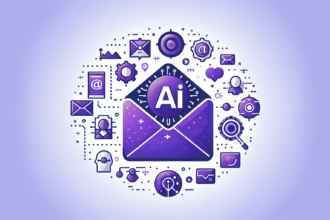


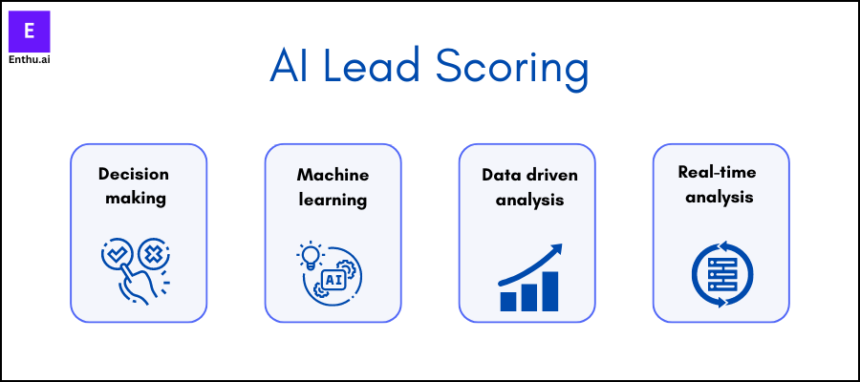
I’ll go over the AI Lead Scoring Systems Explained in this post, along with how they assist companies in giving high-potential leads priority.
Sales teams can concentrate on leads that are most likely to convert thanks to AI lead scoring, which evaluates prospect behavior, interaction, and demographics using machine learning and predictive analytics. This increases productivity, raises conversion rates, and accelerates revenue growth.
What Is AI Lead Scoring?
AI Lead Scoring is an innovative way of measuring customer leads that is driven by data using artificial intelligence and machine learning. It reviews, ranks, and prioritizes customer leads for businesses through automation based on probabilities of customers turning into clients. Traditional lead scoring measures customer leads through set rules, scoring systems, and manually set point systems. AI Lead scoring analyzes data.
It is able to analyze both structured and unstructured data. It analyzes and reveals patterns and predictive data. An example of involved data would be metrics such as demographics, evidence of firm behavior, website behavior, email and ad click engagement, social media interactions, and other purchase history or intent data.
AI systems improve based on the data obtained through predictive models created through previous data that shows outcomes that lead to revenue. AI systems pick out the data attributes that determine the buying readiness so that they can score the buying leads. When the models are created, the scores are constantly changing based on customer interactions with the brand.
Because the scores are changing and there is enough data that the customer interactions can be obtained the marketing and sales teams know exactly who to target because they will have an entire prioritized list. The system can be able to know which business will provide revenue. The system will help businesses maximize return rates, lengths of sales, and conversion rates while abiding the data security regulations.
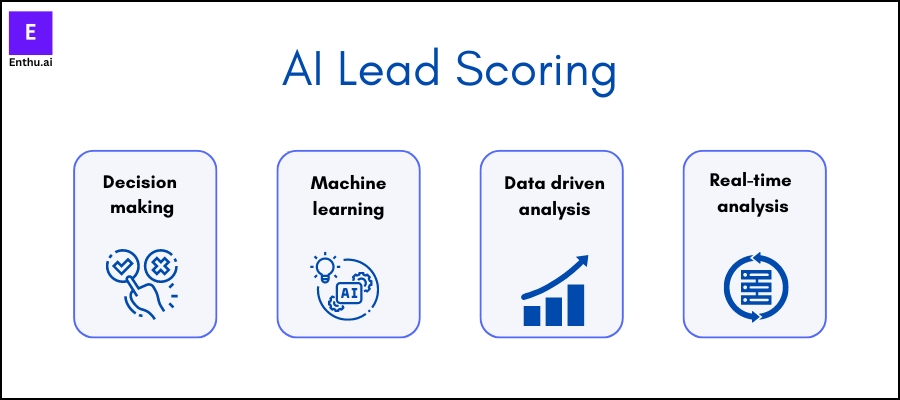
AI Lead Scoring Systems Explained
Data Consolidation
Gathers information from various data sources such as CRM systems, websites, emails, social media, advertising, and third-party intent platforms.
Data Cleaning
Duplication, errors, and standardization in data are addressed and removed in order to prepare for analysis.
Machine Learning Model
Analyzes lead and customer data to identify patterns that are linked to successful conversions by using algorithms.
Behavioral Analysis
Tracks real-time activities such as page views, downloads, email opens, form fills, and product engagement.
Predictive Scoring
Dynamic scoring models assign values to each lead based on conversion and revenue generation likelihood.
Real-Time Adjustments
Changes to lead scores are made as additional data and activities are captured.
CRM Sync
Integration with sales and marketing platforms provides seamless access and actionable scores.
Lead Categorization
Leads are classified into hot, warm, or cold categories for more strategic follow-up efforts.
Automation Workflows
Based on lead scores, emails, alerts, and sales are assigned to trigger workflows.
Always Learning
Gaps are identified through closed won/lost activities to improve future filter accuracy.
Analytics & Reporting
Tracks conversion, pipeline value, and ROI and provides performance dashboards.
Security and Compliance
Focuses on data protection, restricting access, and adhering to privacy regulations.
How AI Lead Scoring Systems Work
Data Integration: Collects information about leads from CRMs, marketing automation tools, websites, social media, and third-party integrations
Data Processing: Organizes, cleans, and structures information by eliminating duplicates and removing errors and inconsistencies from records
Feature Extraction: Finds key variables such as job title, company, size, website activity, downloads, and engagement
Model Training: Educates machine learning models to identify patterns of success from historical conversion and revenue data
Predictive Analysis: Determines how likely each lead is to convert and to provide value to the business
Dynamic Scoring: Continuously assigns and updates lead scores based on the capture of new interactions and data points
Segmentation: Places leads into different tiers of priority for outreach (high, medium, and low intent)
crm&workflow_integration: Merges lead scores into sales and marketing applications to create triggers, tasks, and scheduled automated outreach campaigns
Feedback Loop: Increases the accuracy of scoring by learning from the outcomes of sales, both wins and losses
Reporting & Insights: Supplies analytics and dashboards to assess and enhance strategies, measure performance to improve ROI
Benefits of AI Lead Scoring for Sales Teams
Better Lead Prioritization: Analyses and marks leads so sales reps can prioritize those who are more likely to convert.
Faster Response Times: Enables quicker follow-up with immediate leads, resulting in more deals being closed.
Higher Conversion Rates: Based upon predictive data, focuses on the best leads to deliver the perfect message.
Increased Revenue: Guides sales teams to value more prospects and opens bigger opportunities.
Time Savings: Eliminates the need for manual scoring, allowing reps to concentrate on selling and building relationships.
Adjusted For Improvement: Marketing and sales alignment has taken a step forward with a unified view at the data.
Personalized Outreach: AI lead scoring creates better conversations through the analizaed data and idscression of leaders.
Consistent Scoring Accuracy: Eliminates discrepancies and bias leads.
Scalability: Processes more leads in a reasonable time.
Performance Tracking: Measures team performance, conversions, and trends with reports and analytics.
Key Features to Look for in an AI Lead Scoring Tool
Predictive Advanced Modeling
Accurately assess leads via AI to predict positive lead conversion.
Integration with CRMs
Link with systems Salesforce, HubSpot, or others to lead activity and record scores.
Scoring in Real Time
Scoring updates leads with new interactions and changes timely.
Data Integration Through Multiple Sources
Merges information from social platforms, emails, websites, ads, and others.
Scoring Rules are Customizable
A business can set its own sales steps and controls scoring.
Monitoring Behavior
Keeps track of page views, bonus actions, form filling, and emails.
Segmentation of Leads
Based on ranks, leads are classified or labeled into groups (hot, warm, cold) categories.
Workflows that are Automated
Based on the score of leads, triggers, nurture campaigns, alerts, and sales tasks.
Analytics and Visual Dashboards
Clear distribution and conversion likelihood insights are provided along with performance metrics.
Recommendations and Predictive Insights
Suggests strategic changes to improve outreach and enhance chances for conversions.
Data Compliance and Security
Adhering to GDPR and CCPA, protection of sensitive data is ensured along with data security.
User-Friendly Interface
Includes simple dashboards and quick configuration for both sales and marketing users.
A/B Testing Capabilities
Allows for experimentation with various scoring models and thresholds to determine the optimal one.
Challenges and Limitations
Data Quality Issues – Data that is not accurate, complete, or is outdated can result in leading to scores and decisions that are misguided.
Bias in Models – AI might unfairly and imbalanced prioritize leads because of biased historical data, using that data to reinforce unbalanced lead scoring.
High Implementation Costs – Significant time and money are needed for the setup, training, and integration for each AI system.
Complexity of Integration – The integration of various CRMs, data, and marketing services can be extremely difficult.
Lack of Transparency – Some AI tech operates as black-box models and can lead to bias and discrimination.
Over Relaince on Automation – Automation might be over relied on leading to the lost of value of not using human judgment.
Privacy and Compliance Risks – Personal data is under heavy regulations of the GDPR, CCPA, and other data security regulations.
Continuous Maintenance – Models need to be retrained and updated to be accurate as market behaviors shift.
Scalability Challenges – The rapid growth of lead volume and data complexity will stress poorly designed systems.
Change Management – Employees might need to retrain and acclimate their AI new processes.
Best Practices for Implementing AI Lead Scoring
Clean and Prepare Data: Verify the accuracy, completeness, and standardization of your CRM and marketing data before importing it into the AI system.
Define Clear Goals: Ensure scoring goals are in sync with sales and marketing goals, like conversion, deal size, or pipeline velocity.
Choose the Right Tool: Make sure the AI lead scoring solution you want works for your current CRM, marketing stack, and processes.
Start with a Pilot: Before full deployment, run the system against a sample of leads or a particular sales segment.
Use Both Behavioral and Demographic Data: Score leads based on their activity (click, download, visit) and their profile (industry, role, size) data.
Set Score Thresholds: Specify actionable outcomes based on the scoring range (hot, warm, cold) to direct sales activities and marketing to assist them.
Integrate with Workflows: score based lead assignment, alerts, and nurture campaigns automate drip tasks.
Monitor and Adjust: Measure conversion outcomes and analyze model performance on the score criteria to do adjustments continuously.
Educate Sales Teams: Train sales on the AI scores and the value of their judgment for optimal outcomes.
Stay Compliant: While protecting the privacy and security of data handled, keeping in line with the regulations and frameworks such as GDPR, or CCPA is a must.
Utilize Adaptive Learning: Provide the AI with the ability to learn from finished deals, both successful and unsuccessful, to enhance its ability to score accurately over time.
Future Trends in AI Lead Scoring
The coming years will see AI lead scoring systems become even more integrated, intelligent, and personal within the overarching sales and marketing ecosystem. More robust prescriptive and predictive analytics will allow businesses not just to score leads, but also to prescribe the most effective means of engaging each individual.
AI systems will combine real-time behavioral, social, and intent data with account-based real-time behaviors, social data, intent data, and integrated account-based analytics, to enable marketing and sales to go with tailored outreach at an individual level. Escalating automation will allow AI to independently initiate multi-channel campaigns, workflows, and follow-up supports, as well as optimize workflows.
Furthermore, the explainability and transparency of AI systems will become more important as the FTC’s data privacy and compliance tools become more robust. The combination of these elements will result in customers being able to modify the way scoring works while simultaneously improving the revenue, conversions, and the overall sales strategies.
Conclusion
The way sales and marketing teams find, rank, and interact with prospects has been completely transformed by AI lead scoring systems. These solutions assist companies in concentrating on high-value leads, increasing conversion rates, and maximizing revenue growth by utilizing machine learning, predictive analytics, and real-time data.
Adhering to best practices guarantees successful deployment and ongoing improvement, despite obstacles like data quality, model bias, and compliance. As AI continues to evolve, lead scoring will become more precise, tailored, and integrated, making it a crucial tool for creating smarter sales strategies and faster corporate success.
FAQ
What is AI lead scoring?
AI lead scoring is a method that uses artificial intelligence and machine learning to evaluate and rank leads based on their likelihood to convert, using behavioral, demographic, and engagement data.
How does AI lead scoring work?
It collects data from multiple sources, cleans and processes it, applies predictive models, assigns dynamic scores, segments leads, and integrates with CRM workflows for real-time prioritization.
What are the benefits of AI lead scoring?
Key benefits include better lead prioritization, faster response times, higher conversion rates, personalized outreach, improved sales-marketing alignment, and increased revenue.
What features should I look for in an AI lead scoring tool?
Important features include predictive modeling, CRM integration, real-time scoring, multi-source data integration, behavior tracking, lead segmentation, automation, dashboards, and data security.