


I’ll talk about AI in B2B sales forecasting in this post and how it’s changing how companies forecast revenue and sales trends.
AI helps businesses increase forecast accuracy, select high-value leads, optimize resources, and make data-driven decisions that spur growth and efficiency in challenging B2B situations by utilizing cutting-edge technologies like machine learning and predictive analytics.
What is B2B Sales Forecasting?
B2B sales forecasting involves predicting future sales to other businesses (not individual consumers). This process involves past sales data, market changes, customer sales behavior, and other sales-related factors to predict future revenue, demand, and growth for a given time period.

Effective B2B sales forecasting improves a company’s ability to allocate resources, plan for demand, price products profitably, and establish operational sales goals. Compared to B2C forecasting, B2B sales forecasting involves larger, complex transactions, longer sales cycles, and more people which makes soft forecasting equally important as hard forecasting.
Old forecasting methods, like gut feeling, spreadsheets, and averaging past sales, have been replaced with modern methods that utilize advanced technologies like AI and analytic forecasting to increase precision, recognize patterns, and predict changes in the market. This gives businesses a leg up in fast-changing markets.
AI in B2B Sales Forecasting
Predictable
Sales Forecasting – Using Artificial Intelligence in sales forecasting increases accuracy in prediction and forecasting.
AI Predictive Sales Forecasting
Using sales prediction tools forecasts customer demand and recognizes patterns and shifts in the market.
AI In Data
Artificial Intelligence reduces the time taken in data analysis as compared to human data analysis. For example, in data from sales analysis, customer databases (CRMs), and market analytics, AI can identify trends in data.
AI In Resource
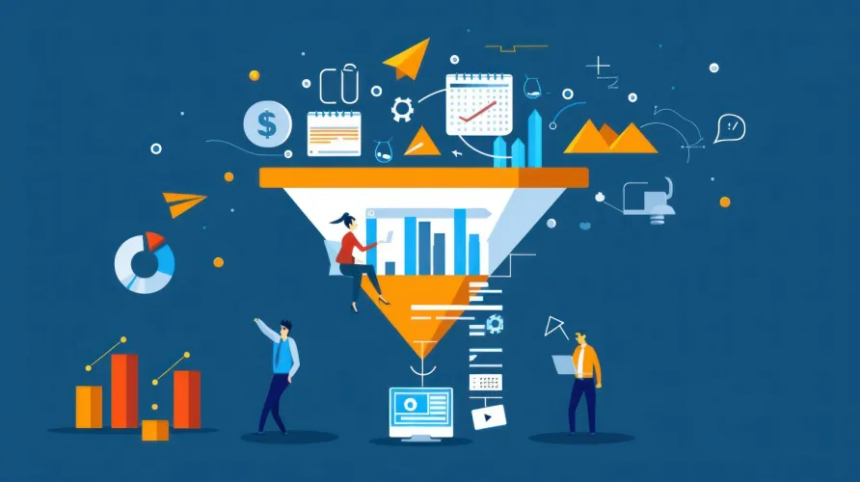
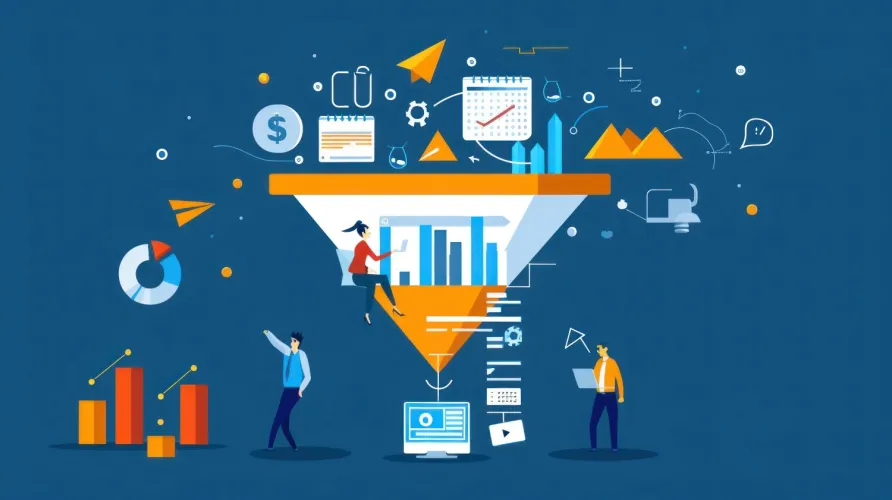
Artificial Intelligence is used to make data-based recommendations to the sales team suggest which customers (leads) to focus on for better sales in the sales funnel (pipeline).
AI In Revenue
Artificial Intelligence forecasts patterns and trends for customers in the market, which permits a company’s administrators to make decisions that will positively influence the company’s sales.
AI In Scalability
Artificial Intelligence can efficiently handle data in sales forecasting and B2B operations.
AI In Continuous Learning
Artificial Intelligence can modify itself with the addition of new data forecasting better sales.
Benefits of AI in B2B Sales Forecasting
Improved Forecasting Accuracy: AI examines and uses both historic and current data. This enables it to make accurate and sales predictions and reduce any errors.
Predictive Insights: AI also has the ability to identify before they emerge trends and opportunities in the market, along with customer buying behavior.
Time and Cost Savings: AI can automate the manual data processes and in turn save sales team time and reduce costs to the company.
Better Lead Prioritization: Because of AI sales teams focusing can be done on those prospects that are most valuable and most likely to convert.
Revenue Growth: makes better and smarter decision that results in the increasing of sales and profitability.
Scalability: Working with data sets of high volume and complexity across numerous business units and regions can be done.
Data Driven Decisions: AI can make suggestive processes that are actionable and strategic that come from multiple sources of data, which improves the business as a whole.
Continuous Improvement: Data that AI has collected and stored from previous occurrences can be used to better and optimize current and future sales predictions.
How AI Works in B2B Sales Forecasting
Data Collection
AI gathers Sales history , Market trends, Customer interaction, ERP systems, and CRM systems.
Data Cleaning & Preparation
Removing errors and duplicates and making sure the data is structured and ready for analysis.
Pattern Recognition
Using one of the many machine-learning models to recognize patterns in the data.
Predictive Modeling
AI calculates projections using machine learning and other statistical models.
Scenario Analysis
AI predicts various sales scenarios and assists businesses in knowing the outcome.
Insight Generation
Converts data into actionable insights like a forecast of demand, sales strategies, and leads.
Continuous Learning
The models AI learn to make even better predictions as they receive and analyze more data.
Real-World Applications
Sales Pipeline Optimization
AI assists sales teams in concentrating on deals that are more likely to close, and optimally assigning sales resources.
Demand and Inventory Management
AI sales forecasting assists B2B companies in optimizing their supply chain by forecasting demand and preventing stock-out and overstock situations.
Pricing Strategy and Revenue Optimization
AI assists in optimizing pricing strategies by analyzing consumer behavior, market trends, as well as competition.
Customer Retention and Churn Prediction
AI deals with customer segmentation by identifying those that are likely to churn and providing customer retention strategies.
Risk Mitigation
AI helps in identifying potential sales risks by forecasting delaying deals or insufficient revenue, so adequate measures can be taken postpone deal closure.
Market Expansion Insights
AI analyzes potential selling opportunities by assessing new markets and segments through historical and extrinsic data.
Best Practices for Implementing AI in B2B Sales Forecasting
Start with Clean High-Quality Data: Your records for historical sales, CRM, and market data should be available, and structured well to be analyzed.
Integrate AI with Existing Solutions: Implement AI tools designed for integration with your CRM, ERP, and sales tools to create a smooth workflow.
Establish Clear Objectives: Identify forecasting goals like enhancing lead conversion, predicting revenue, or optimizing your pipeline.
Train Teams to Understand the Insights: It is important to empower the sales and management teams to act on the AI-driven reports and utilize the data.
Monitor and Fine-tune Models: Set a schedule to assess AI capabilities and make changes to the models based on the data and changes in the market.
Integrate AI with Human Intelligence: Use the insights provided by AI, but also take into account the experience and gut feeling of the sales team to form a more holistic approach.
Ensure Data Security & Compliance: Safeguard sensitive client and company data and adhere to the regulations in place.
Start with a Narrow Focus and Expand Gradually: Test AI on a particular product line or a specific geographic area before implementing it throughout the organization.
Challenges and Considerations
Data Quality Issues
AI predictions and bias are influenced by data that is inaccurate, incomplete, or inconsistent.
Integration Complexity
Merging AI with other CRM, ERP, and sales systems that the company uses can be difficult.
High Implementation Costs
Businesses incur high costs for software, training, and other systems for AI to be implemented.
Model Interpretability
Teams get predictions from the AI, but unless there is an explanation, they may trust the system.
Dependence on Historical Data
When markets are new or there is an innovative product, AI has a more difficult time.
Change Management
If sales teams are not trained and AI processes are not in place, roadblocks will be hit.
Regulatory & Compliance Concerns
Customer data is unique and has more data privacy and industry regulations to follow.
Continuous Maintenance Needed
AI systems become much less reliable if they are not regularly observed and updated.
Future of AI in B2B Sales Forecasting
The future of AI in B2B sales forecasting promises transformational advancements as more companies implement data-driven decision-making. Sophisticated AI such as machine learning, predictive analytics, and natural language processing will examine data from various sources to create more accurate and immediate forecasts.
AI will be able to analyze data to predict sales trends and provide instructions on how to manage leads, set prices, allocate resources, and more.
AI, combined with developing technologies such as the internet of things (IoT), cloud computing, and customer relationship management (CRM) automation, will give companies the ability to respond to changes in the market, discover new revenue streams, and improve customer satisfaction.
As AI becomes more advanced, companies will be able to make spinoff sales decisions, improving efficiency while minimizing risk, and driving continuous revenue growth.
Conclusion
In conclusion, AI is transforming B2B sales forecasting by offering unmatched efficiency, accuracy, and actionable insights. Businesses can forecast trends, rank high-value leads, maximize resources, and make data-driven decisions that increase revenue by utilizing AI.
Adopting best practices guarantees successful implementation even in the face of obstacles like data quality and integration. AI will become a crucial tool for B2B businesses looking to maintain their competitiveness and achieve long-term growth as it develops.
FAQ
What is AI in B2B sales forecasting?
AI in B2B sales forecasting uses machine learning, predictive analytics, and data-driven algorithms to predict future sales, trends, and customer behavior more accurately than traditional methods.
How does AI improve sales forecasting accuracy?
AI analyzes large datasets, identifies patterns, and accounts for market fluctuations, reducing human errors and providing more precise predictions.
What types of data does AI use for forecasting?
AI uses historical sales data, CRM records, market trends, customer interactions, economic indicators, and external datasets to generate forecasts.
What are the main benefits of using AI in B2B sales forecasting?
Benefits include improved accuracy, predictive insights, automated data analysis, better lead prioritization, revenue growth, scalability, and continuous learning from new data.
What challenges should businesses consider when implementing AI?
Challenges include data quality issues, integration complexity, high costs, model interpretability, dependence on historical data, and ensuring regulatory compliance.