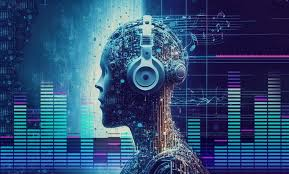


In this article, I will focus on some of the AI Innovations Revolutionizing the Music Industry. Some of the areas include AI composition, voice cloning, emotion detection, adaptive soundtracks, and smart metrics.
AI is changing the way we create, perform and consume music. AI is changing the way we think about and do creative work, about how we produce and how we engage audiences, creating new avenues for artists, producers, and consumers of music.
Key Point & AI Innovations Revolutionizing the Music Industry
| AI Innovation | Keypoint Description |
|---|---|
| AI‑Generated Composition Tools | AI systems that compose original melodies, harmonies, and arrangements, helping artists create music faster and explore new styles. |
| Voice Synthesis & Cloning | AI generates realistic singing voices or clones existing ones for recordings, demos, or creative experimentation. |
| Real‑Time AI Mixing & Mastering | AI tools automatically balance tracks, adjust EQ, and master songs in real-time, saving time in production. |
| Generative Lyrics Engines | AI creates song lyrics in various genres, moods, or languages, assisting songwriters with inspiration. |
| AI‑Powered Music Recommendation | Personalized playlists and song suggestions using AI algorithms to match listener tastes and habits. |
| Adaptive Soundtracks in Gaming | AI dynamically changes game music based on player actions, moods, or story progression for immersive experiences. |
| AI‑Driven Royalty Tracking | AI tracks song usage across platforms, ensuring accurate royalty calculations and payments for artists. |
| Emotion‑Aware Music Creation | AI analyzes emotional context to compose or modify music to fit moods and atmospheres. |
| Virtual AI Musicians | Digital AI-generated performers that can simulate bands, orchestras, or solo artists. |
| AI‑Enhanced Live Performances | Real-time AI effects and sound adjustments during concerts, enhancing live music experiences. |
| Smart Music Tutoring Apps | AI-powered apps provide interactive lessons, feedback, and practice routines for learning instruments or vocals. |
| AI‑Powered Sampling & Remixing | AI helps artists sample, remix, and reimagine existing tracks with innovative sound manipulation. |
| Music Therapy AI Systems | AI creates therapeutic music tailored to stress relief, mental health, or cognitive development. |
| AI‑Driven Audience Analytics | Analyzes listener behavior and engagement to inform marketing, tour planning, and content creation. |
| Generative Album Art & Visuals | AI designs unique album covers, animations, and visuals that match music themes and branding. |
1. AI‑Generated Composition Tools
AI innovations changing the music industry help music creators with composing music. Tools created with the use of AI help the creators of the music determine themselves the melodies, harmonies, and arrangements in an original way and with little to no effort.

These tools created with AI innovations changing the music industry understand the patterns, help understand the chord progressions, and the structures of different genres.
AI Innovations changing the music industry help producers to gain the ability to work with different genres. These tools help artists who are emerging gain help with using a creative partner with suggestions, and help in the music production to be accelerated.
AI-Generated Composition Tools Features
- Composes melodies, harmonies, and entire arrangements automatically.
- Composes utilizing a variety of music styles and genres.
- Instantly recommends chord progressions and gives guidance on the structure of songs.
- Provides the ability to co-compose with a human artist.
- Accelerates the process of writing a song by providing AI-supported creative facilitation.
AI‑Generated Composition Tools
| Pros | Cons |
|---|---|
| Speeds up music creation | Can lack emotional depth |
| Sparks creative ideas | May produce generic-sounding music |
| Helps beginners compose easily | Requires human oversight for quality |
| Supports multiple genres | Overreliance may limit originality |
| Reduces time for song arrangement | Might feel formulaic for professional composers |
2. Voice Synthesis & Cloning
Voice cloning and synthesis tools help mimic other styles of singing and vocal expression with the use of AI. These tools help the music producers gain the ability to work and create the music with tools that are digital.
AI innovations changing the music industry help give the producers the tools they need to work without using the live instrumentation in a recording studio to gain the ability to create as many songs and as many versions as they would choose.
In addition, AI changing the music industry help with creativity by working with voices that are older to help enhance the vocal expression to gain all the voices that would be needed to create songs to add to the music around the world.
Voice Synthesis & Cloning Features
- Realistic and expressive virtual “singers” can be created from either text or MIDI inputs.
- Imitates the singing voice and presence of specified actual singers.
- Performs in numerous languages and can be modified to change accents.
- Supports expressive and performance-like rendering by adjusting the pitch and emotion.
- Virtual collaborations can be facilitated without the need to record the actual voice.
Voice Synthesis & Cloning
| Pros | Cons |
|---|---|
| Enables demo creation without singers | Ethical concerns about voice misuse |
| Expands creative possibilities | May sound unnatural if overused |
| Supports multiple languages | Can replace human vocalists in some scenarios |
| Allows virtual collaboration | Risk of copyright issues |
| Adjustable pitch and emotion | Can feel robotic in certain contexts |
3. Real‑Time AI Mixing & Mastering
AI mixing & mastering tools have automated mixing & mastering of tracks. Balancing levels, EQ adjustments, and the addition of effects will be done automatically & in real time. These systems analyze audio as it comes, making production quicker, especially for indie artists and smaller studios.

AI Innovations Revolutionizing the Music Industry has also allowed audio engineers to shift their focus from techy to creative, as polished tracks can be done without an extensive understanding of the audio. These tools also have the ability to analyze multiple genres to have the same output for pop, country, rap, and more, making professional production available to anyone with a computer and the internet.
Real‑Time AI Mixing & Mastering Features
- Balances the volume of the audio tracks automatically.
- Real-time mixing (adjusting levels of) and mastering (applying effects) including compression and equalization).
- Mixing and mastering customized to a specific genre.
- Minimizes the amount of manual audio engineering involved.
- Professional and consistent audio results for released music.
Real‑Time AI Mixing & Mastering
| Pros | Cons |
|---|---|
| Saves time in production | Reduces creative control |
| Produces consistent professional sound | May over-standardize audio |
| Reduces need for audio engineers | Limited customization options |
| Adapts to multiple genres | Cannot replicate nuanced human touch |
| Streamlines workflow | Dependent on quality of AI algorithm |
4. Generative Lyrics Engines
AI in Lyrics Writing can analyze a given style, mood, or genre and write the lyrics. Given the enormous corpus of text, AI will be able to write verses and choruses that are creative, coherent, and contextually apt.

AI Innovations Revolutionizing the Music Industry include helping songwriters who are stuck and giving them dozens of options, as well as creating lyrics in multiple languages for the global audience.
These engines can analyze a specific theme, emotion, or trending topic to offer inspiration or complete songwriting solutions. This tech for the new artists will enable the use of more complex prose, increasing efficiency in their writing, while also shortening the time for highly innovative processes.
Generative Lyrics Engines Features
- Composes lyrics for songs based on a given mood, genre, or theme.
- Provides numerous alternatives and suggestions for lyrical inspiration.
- Composes lyrics in various languages.
- Automatically maintains balance in the rhyme, syllable count, and rhythm.
- Aids in resolving writers block in song writers.
Generative Lyrics Engines
| Pros | Cons |
|---|---|
| Helps overcome writer’s block | Can produce irrelevant or cliché lines |
| Generates lyrics quickly | Lacks deep storytelling nuance |
| Supports multiple languages | May require human editing |
| Provides multiple creative options | May not always fit melody |
| Inspires new song directions | Limited emotional authenticity |
5. AI‑Powered Music Recommendation
Using AI for music recommendations takes into account user activities, favorites, and other music listening trends and creates personalized playlists for each user.

These AI systems utilize machine learning to build on music recommendations increasing user engagement and music discovery while offering new artists exposure. With the ability to analyze listening patterns and jumps in audience appreciation, AI ensures that each listener’s experience is unique.
AI allows listeners to discover music in new categories. Artists are given the tools to determine audience behavior on a track which allows them to plan their marketing strategy and helps them to understand audience appreciation on a higher level.
AI‑Powered Music Recommendation Features
- Assesses the behavior of listeners and analyzes preferences and listening history.
- Creates customized playlists and tracks.
- Determines and recommends trending songs and artists.
- Recommendations are given based on the mood or task which is being performed.
- Engages and retains users on streaming platforms.
AI‑Powered Music Recommendation
| Pros | Cons |
|---|---|
| Personalized playlists for users | Can create echo chambers |
| Helps discover new artists | Over-reliance on algorithms |
| Increases listener engagement | May favor popular tracks over niche music |
| Optimizes streaming platform retention | Privacy concerns with user data |
| Analyzes preferences accurately | May reduce human curation impact |
6. Adaptive Soundtracks in Gaming
Changing game soundtracks includes music that is recorded to change during game play depending on what the game player does. The recording can change by game narration, game player actions or event in the game. AI observes the situation while monitoring the emotional reactions and level of gaming activity.
AI Innovations Revolutionizing the Music Industry in gaming provides more emotional experiences by increasing the tempo of the music, changing the types of music of instruments used, and changing the mood of the music.
The AI Innovations Revolutionizing the Music Industry makes the soundtrack of a game more of unique experience than just a single recorded track. AI also helps to adapt the music by tailoring sound tracks to the preferences of each player. AI helps to change the entire conversation about music by using sound to create a new responsive and unscripted world of music.
Adaptive Soundtracks in Gaming Features
- Music responds to player actions dynamically.
- Changes occur in real time to tempo, instrumentation, and intensity.
- Player choices and game surroundings impact music.
- Music has layers, allowing for smooth changes.
Adaptive Soundtracks in Gaming
| Pros | Cons |
|---|---|
| Enhances immersion in gameplay | Complex to implement |
| Responds to player actions in real time | May not suit all game genres |
| Changes tempo, instrumentation dynamically | Requires high-quality music layers |
| Creates unique gaming experiences | Can be expensive to develop |
| Adds emotional depth to storytelling | Risk of repetitive patterns if not designed well |
7. AI‑Driven Royalty Tracking
Automated AI tracking of royalties manages the tracking of song usage via streaming, radio, and live performances. AI Innovations Revolutionizing the Music Industry will continue to manage the calculation and distribution of royalties, thereby minimizing delays and errors.

They manage endpoint tracking for revenue streams, help identify copyright violators, and document and manage play tracking to identify revenue streams for artists and copyright holders. This allows for a greater degree of transparency, makes revenue collection easier for artists, and gives small artists greater ability to compete by collapsing the complexity of royalty distribution and revenue management and tracking.
AI‑Driven Royalty Tracking Features
- Tracks plays of songs across streaming, radio, and live performances.
- Automatically calculates changes in royalties and usage rights.
- Tracks copyright issues and usage without permission.
- Provides reports to artists and labels.
- Tracks payment distribution across channels.
AI‑Driven Royalty Tracking
| Pros | Cons |
|---|---|
| Ensures accurate payments | Dependent on data accuracy |
| Reduces disputes between artists and labels | May not track all platforms fully |
| Automates royalty management | Limited flexibility for custom contracts |
| Increases transparency | Requires robust software infrastructure |
| Saves time and effort | Can be expensive for small labels |
8. Emotion‑Aware Music Creation
Emotion-aware music creation involves the AI-based composition or alteration of a song in response to detected emotions.
AI-generated music is created based on detected emotions (mood, lyrics, response, etc.) to creation music response to the emotions of the audience. AI Innovations Revolutionizing the Music Industry allows artists and producers to create music in response to a given set of emotions as a result of the change composition.
This is particularly important in media, marketing, and gaming, where music must fit the narrative. Combining human touch and creativity and algorithmic composition, the music will touch the audience in the most desired manner and will create the most relaxed atmosphere.
Emotion‑Aware Music Creation Features
- Composes music to evoke specific emotions.
- Emotional context instrumentation, keys, and tempo changes.
- Emotion analysis is AI. Guides composition using lyrics or user input to.
- Composes music for films, advertisements, video games, or therapy.
- Provides drive audio experiences to match the mood.
Emotion‑Aware Music Creation
| Pros | Cons |
|---|---|
| Creates mood-specific music | Limited emotional nuance |
| Ideal for media, ads, and games | May feel artificial if overused |
| Adapts tempo, key, and instrumentation | Relies on accurate emotional input |
| Supports immersive experiences | Can lack human intuition |
| Enhances listener engagement | Limited cultural context in emotions |
9. Virtual AI Musicians
AI virtual musicians can create and play music as a human would. They can imitate solo artists, bands, and even orchestras. AI can even create “live” compositions, in the sense that the compositions can change as they’re played. AI Musicians are Revolutionizing the Music Industry. By using virtual musicians, composers can design works that are more harmonically complex.

They can create parts for more instruments without the restrictions of arranging for human musicians. Virtual Musicians can also stimulate composers and create music and play in any genre and style anywhere and at any time. By using AI virtual musicians, composers are setting new standards for how music is created and who a musician is.
Virtual AI Musicians Features
- Replicates a solo act, band, or orchestra.
- Composes original music without human creative input.
- Music of any genre and style can be created.
- Allows for creative collaboration and virtual performances.
- Provides high quality music for digital projects.
Virtual AI Musicians
| Pros | Cons |
|---|---|
| Reduces production costs | Lacks human spontaneity |
| Performs multiple genres | Can feel robotic |
| Available anytime for projects | Limited creativity compared to humans |
| Enables virtual concerts | Risk of audience disengagement |
| Supports experimental music | Cannot replace live musician presence |
10. AI‑Enhanced Live Performances
During concerts, AI performance technology alters sounds, visuals, and effects as a concert is occurring. Algorithms analyze audience engagement, musical improvisation, and on-stage developments. AI Innovations Revolutionizing the Music Industry in live concerts provides an immersive experience, allowing full participation.

Audio effects, visuals, and lighting can be modified in real time during the show. Every performance is distinct. Artists are given a greater range of control in how they express themselves and how they sculpt sounds. Because of this technology, larger productions have the ability to do so at a lower cost, and smaller artists are given the ability to create live performances that are visually and sonically impressive.
AI‑Enhanced Live Performances AI Features
- Impact live music experience by using real time audio effects.
- Control music, lights, and visuals.
- Music and visuals based on audience participation.
- Use in hybrid and remote performances.
AI‑Enhanced Live Performances
| Pros | Cons |
|---|---|
| Creates immersive, interactive shows | Technical issues may disrupt performance |
| Synchronizes visuals and audio | Can be expensive to implement |
| Enhances audience engagement | Requires skilled operators |
| Supports remote and hybrid performances | Dependence on technology reliability |
| Adds dynamic sound effects | Limited to programmed responses |
11. Smart Music Tutoring Apps
Smart music tutoring applications use artificial intelligence to teach people how to play instruments, sing, and understand music theory in an interactive way, and allow them to learn at their own pace by giving feedback on their pitch, rhythm, and technique, and then customizing their lessons accordingly.

These advancements in AI are making music education in general more accessible and more engaging. Instant feedback, custom practice schedules, progress monitoring, and corrections are features that students benefit from. AI tutors also provide an accompaniment and simulate an ensemble in order to broaden the learning experience.
The combination of traditional teaching methods and innovative technology has empowered and provided the world with easy access to music education, and a skilled workforce of musicians. These apps provide immediate feedback that is based on complex algorithms and guides the user to practice in a more efficient way.
Smart Music Tutoring Apps Features
- Offers lessons for instruments, voice, and theory.
- Provides feedback in real-time regarding pitch, rhythm, and technique.
- Changes lessons according to the learner’s pace and skill level.
- Mimics practices with accompaniment and ensembles.
- Monitors development and creates individualized practice schedules.
Smart Music Tutoring Apps
| Pros | Cons |
|---|---|
| Provides personalized lessons | Limited human interaction |
| Real-time feedback improves learning | Cannot fully replace teachers |
| Adapts to skill levels | AI may misinterpret nuances |
| Simulates ensemble practice | Lacks emotional teaching elements |
| Tracks progress and practice routines | Some features require subscriptions |
12. AI‑Powered Sampling & Remixing
AI-powered sampling and remixing tools reimagine existing tracks. They can be used to isolate stems and alter tempos, amongst other things, and suggest creative alternatives. AI Innovations Revolutionizing the Music Industry in remixing gives flexibility to producers so they can use their time to focus on the creative aspects instead of the tedious elements.

The tools also allow remixing to be done quickly and blend genres. It also allows the legal and efficient reimagining of remixes of old songs. The tools allow collaboration between the human artist and the AI so that the best parts of the human intuition and the algorithm can be used to create great songs. The musical spectrum broadens.
AI-Powered Sampling & Remixing Features
- Splits track and samples and stems.
- Changes remixes and new arrangements.
- Changes tempo and key setting
- Supports genre blending and creative experimentation.
- Allows quicker remixing and derivative works.
AI‑Powered Sampling & Remixing
| Pros | Cons |
|---|---|
| Speeds up remix production | Licensing and copyright issues |
| Sparks creative experimentation | Can feel formulaic |
| Isolates stems and tracks easily | May reduce originality in some cases |
| Supports genre-blending | Requires human oversight for coherence |
| Generates multiple remix variations | Limited by source material quality |
13. Music Therapy AI Systems
AI systems in music therapy create personalized therapeutic music for stress relief, mental health, and cognitive functioning. These systems create individualized songs based on the listener’s emotional and/or physiological state.
AI Innovations Revolutionizing the Music Industry in therapy support healthcare practitioners, caregivers, and wellness programs provide evidenced based music interventions. AI helps sad patients gain control of their emotions, and helps focus and relax patients by altering the rhythm, tune, and type of instruments used in the music.
Furthermore, these systems improve therapy accessibility by performing the sessions digitally. Music therapy AI systems technology are a great example of a successful collaboration of the arts and sciences for social good.
Music Therapy AI Systems Features
- Creates therapeutic personalized music for stress and mental health.
- Changes composition based on emotional or physiological data.
- Changes tempo, key, and instrumentation for defined effect.
- Allows app or remote based therapy.
- Changes cognitive stimulation and emotional wellbeing.
Music Therapy AI Systems
| Pros | Cons |
|---|---|
| Personalizes therapeutic music | Cannot replace professional therapy entirely |
| Supports mental health and stress relief | Lacks human empathy |
| Adjusts tempo, key, and instrumentation | Limited cultural adaptation |
| Provides remote therapy options | Relies on accurate emotional input |
| Enhances focus and cognitive stimulation | May not suit all patient needs |
14. AI‑Driven Audience Analytics
Artists, labels, and promoters can utilize AI-informed audience analytics to monitor customer interaction, continuous behavior, and preferences across different channels. AI Innovations Revolutionizing the Music Industry offers marketing and content creation decision support, as well as data-based precise targeting, trend and demand forecasting, and analytics from social media, streaming services, and demographics.

the data streams to offer a well-rounded comprehension of fan interactions. With the aid of this information, artists can develop and refine their performance strategies, customize setlists, and tailor promotion campaigns. This approach provides artists and creators a data-driven pathway to commercial success.
AI-Driven Audience Analytics Features
- Monitors demographics, listener engagement, and behavior.
- Determines expectations and demand for new releases.
- Gives marketing, touring, and promo insights.
- Determines fan preference and geo hotstpots.
- Allows for data driven decisions for labels and artists.
AI‑Driven Audience Analytics
| Pros | Cons |
|---|---|
| Tracks listener engagement accurately | Privacy concerns |
| Identifies trends and fan preferences | Over-reliance on data may reduce creativity |
| Informs marketing and touring strategies | Requires large datasets |
| Optimizes content release planning | Can be costly for small artists |
| Helps maximize revenue opportunities | May misinterpret incomplete data |
15. Generative Album Art & Visuals
Creative AI provides album cover design, art, and animation on a track-by-track basis by analyzing each track’s unique characteristics to produce cover art that fits the genre and identifies the theme.

AI uses the artists’ descriptions in guiding its ML-based design processes. Innovations in AI in the Music Industry primarily focused during the initial phases on Visual Art, help musicians to rapidly produce brand and marketing collateral and other visual art that can easily be integrated with music. Visual art aids the development of a visual identity across multiple music releases.
The combination of AI and Visual Art allows a musician to maintain his or her aural identity while using flexible and automated processes to illustrate and narrate description that accompany the music.
Generative Album Art & Visuals Features
- Generates one of a kind animations, album covers, and visuals.
- Produces artwork based on music genre for design ideas.
- Supports artists vision to work thematically.
- Provides fast and affordable visual content services.
- Works with marketing, digital, and branded video campaigns.
Generative Album Art & Visuals
| Pros | Cons |
|---|---|
| Produces fast, cost-effective designs | Risk of generic visuals |
| Generates multiple creative options | Requires human curation for quality |
| Aligns visuals with music style | Limited artistic intuition |
| Enhances branding and marketing | Overreliance may reduce originality |
| Supports multimedia content creation | AI may misinterpret artistic intent |
Conclusion
In summary, AI Innovations Revolutionizing the Music Industry are transforming the entire ecosystem of music, from how it is made, how it is performed, and how it is experienced. AI helps composers, producers, and consumers in many ways.
For example, the composing of music, voice synthesis, mixing of tracks, adaptive soundtracks, and audience behavior analytics. These technologies not only streamline the production and boost the creativity of the composers, but they create new ways for personalized experiences, education, and even therapy.
The music industry, like all creative industries, will continue to change as AI technologies develop. Moving forward, AI will break the industry’s normative creative barriers and allow a new era of balanced human and creative AI collaboration. It will revolutionize the way music is made and how it is distributed and how it is experienced.
FAQ
What are AI innovations in the music industry?
AI innovations in music use artificial intelligence to create, produce, and enhance music. This includes composition tools, voice synthesis, mixing, lyric generation, audience analytics, and more, transforming how music is made and consumed.
How does AI help in music composition?
AI-generated composition tools analyze patterns, melodies, and harmonies to create original music. They assist artists in generating ideas, experimenting with genres, and accelerating the production process.
Can AI replace human musicians?
AI complements rather than replaces human creativity. Virtual AI musicians and synthesis tools assist in music creation, but human expression and emotional nuance remain essential.
How is AI used in live performances?
AI-enhanced live performances adjust sound, visuals, and effects in real time, creating immersive and dynamic concert experiences tailored to audience interaction.