

I will be discussing AI Myths Busted. Most misconceptions surrounding the technology focus on the fear and exaggeration and the panic caused by the technology. It is feared that AI will replace every single job and that the technology is infallible, and that it is all-knowing.
Here, I will be telling you about the realities that lie behind the misconceptions and the understanding of the able and unable of AI. I will also be discussing the rapidly evolving world of artificial intellect.
Key Point & AI Myths Busted
| AI Myth | Reality / Key Point |
|---|---|
| AI will replace all jobs | AI augments human work; many jobs evolve rather than disappear. |
| AI is always unbiased | AI reflects the data and design of humans; bias can exist. |
| AI understands like humans | AI processes patterns, not human-like comprehension or emotions. |
| AI is infallible | AI can make mistakes, especially with poor or biased data. |
| AI equals robots | AI is software; robots are hardware using AI for tasks. |
| AI learns on its own without limits | AI learning is constrained by algorithms, data, and human supervision. |
| AI is too complex for non‑experts | Tools and platforms are increasingly user-friendly for non-experts. |
| AI is dangerous by default | AI is neutral; risk depends on application and oversight. |
| AI knows everything | AI knowledge is limited to its training data and updates. |
| AI decisions are unexplainable | Many AI models offer interpretable outputs; explainable AI is a growing field. |
1. AI will replace all jobs
AI’s ability to automate repetitive tasks may remove some human jobs, but it also creates new human jobs. Most new jobs AI creates are roles that rely on human oversight, creativity, and emotional intelligence. AI Myths Busted – jobs that are repetitive will be replaced by AI.
However, jobs that require human judgment such as those in the healthcare, education, and creative fields are safe. AI actually helps human workers by allowing them to accomplish more in the same period. Rather than replace human jobs, AI is intended to strengthen them. This means that rather than trigger mass unemployment, the collaboration of human workers and AI enabled technology is going to increase productivity. Upskilling and working with the AI will be essential in the improved workflows.
AI will replace all jobs Features
- Can automate a number of repetitive and mundane tasks
- Can improve productivity for a particular business area
- Can help in making decisions by analyzing a large data set
- Can optimize the use of resources
- Can Work in Combination with Various Other Tools and Workflows
AI will replace all jobs
| Pros | Cons |
|---|---|
| Automates repetitive and mundane tasks | Cannot replace complex human judgment or creativity |
| Increases productivity and efficiency | May create fear of job insecurity |
| Frees humans for higher-level, creative work | Requires reskilling for affected employees |
| Improves speed and accuracy in data handling | Over-reliance can reduce human skill development |
| Optimizes workflows and resource allocation | Not suitable for all job types |
2. AI is always unbiased
Artificial intelligence technology relies on historical records which include data that shows human error and social injustice. Many people consider this technology to be very objective but this is somewhat inaccurate.
AI Myths Busted – AI is always unbiased assumes that the AI is unbiased, which is the case when the data used is also biased and/or unrepresentative. In order to develop AI systems ethically, the designers must be aware of the data and the fairness of the AI, how the AI is used, and how the AI will be monitored.
This potentially makes the decisions of the AI more fair and equitable. It is essential that the designers of the AI systems include people in the process to analyze the AI’s outputs and explain that AI systems do not act solely autonomously, they take instruction from people and act in accordance with those people.
AI is always unbiased Features
- Receives and Processes data in a logical and consistent
- AI in some instances eliminates the presence of human emotions
- In Subset of Situations, AI Can Operate on the Basis of Invariant
- AI Can Identify a Large Quantity of Data and draw a Conclusion
- AI Helps to Achieve and Complete a Work Task
AI is always unbiased
| Pros | Cons |
|---|---|
| Provides consistent, rule-based decisions | Can inherit bias from training data |
| Reduces influence of human emotions | Cannot interpret nuanced context |
| Standardizes repetitive processes | May reinforce societal inequalities |
| Quickly analyzes large datasets | Misinterpretation possible without oversight |
| Supports compliance and objective logic | Fairness is not automatically guaranteed |
3. AI understands like humans
AI is not genuinely intelligent because it has no comprehension, no consciousness, and no emotional or intuitive reasoning—AI has no understanding like humans do. AI Myths Busted – reasoning is not understanding.
While machine learning, natural language processing, and image recognition might give the illusion of human understanding, AI is not capable of contextual comprehension. AI’s understanding is purely computational. AI technologies do offer value in support of human decision making, predictions, and automating tasks, but human reasoning is vital when it comes to ambiguity, ethics, emotions, creativity, and abstraction.
AI understands like humans Features
- AI Can Determine and Identify Different Patterns
- AI Can Understand and Interact with Human Language
- AI Can Identify and Work with Different Types of Human Expressions
- AI Can Help and Provide Suggestions for Various Operational Choices
- AI Can Determine/draw a Conclusion about the Future on the Basis of Previous Data
AI understands like humans
| Pros | Cons |
|---|---|
| Detects patterns in data efficiently | Does not truly comprehend meaning or emotions |
| Processes language for communication tasks | Cannot fully understand context |
| Recognizes images, text, and speech | Misinterpretation of subtle cues is possible |
| Supports human decision-making | Lacks ethical or moral reasoning |
| Provides predictive insights | Limited to training data and cannot generalize like humans |
4. AI is infallible
Some people think that AI systems are flawless, but that is far from the truth. AI is only as good as the data it is trained on and the design behind it. AI Myths Busted – AI is infallible, and the truth is that with undercomplete, incomplete, or biased datasets, errors, misclassifications, or outputs can occur. Even the most advanced systems may break or fail when encountering edge cases or when faced with new challenges.
For the AI to be trusted, it must be kept under continuous human review, validation, and control. Understanding the limitations of the AI leads to greater safe applications of the AI. AI is here to support human decision-making, not take it away. It is important to know that AI can make mistakes, so it is important not to to trust or depend solely on the AI generated outputs.
AI is infallible Features
- AI Can Provide Accurate Data Calculations
- AI Can Complete a Task with a High Degree of Repetition
- AI Can Work a Lot of Hours Without Becoming Tired
- AI Can Run Large Data Sets in a Certain Amount of Time
- AI Can Provide Accurate Data Calculations
AI is infallible
| Pros | Cons |
|---|---|
| Performs precise calculations | Mistakes occur if data is flawed |
| Automates repetitive tasks reliably | Cannot adapt like humans to novel situations |
| Operates 24/7 without fatigue | Overconfidence in AI can lead to errors |
| Provides data-driven insights | Lacks common sense reasoning |
| Scales efficiently for large systems | Mistakes can propagate widely |
5. AI equals robots
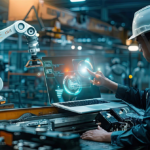
Although commonly used together, AI and robotics are very different. AI makes decisions through data processing, while robots are devices that can use AI to do certain things. AI Myths Busted – AI = robots is false. The reason is that AI can exist without being applied to physical devices.
If you have a robot that doesn’t have AI, you just have a mechanical device, and if you have AI that isn’t applied to robotics, it could be existing in software in the cloud, and in analytics, and in a virtual assistant. While robotics and AI together make it possible to automate processes in manufacturing and logistics, knowing the distinction helps to manage expectations. AI is not about humanoid robots, or physical automation.
AI equals robots Features
- AI Can Provide Data to Create a Physical Automation Device
- AI Can Perform Various Repetitive Tasks
- AI Can Work with the Manufacturing and Transport Sectors
- AI Can Provide a More Safe Working Environment
- AI Can Flexibly Work with a Lot of Different Task and Processes
AI equals robots
| Pros | Cons |
|---|---|
| Performs physical automation tasks | AI software exists independently of robots |
| Executes repetitive manual tasks | Conflates software intelligence with hardware |
| Integrates with manufacturing and logistics | Not all AI applications need robotics |
| Improves workplace safety | High cost and complexity of robotic deployment |
| Adapts to various operational tasks | Misleads public perception of AI capabilities |
6. AI learns on its own without limits
Artificial intellegence does not learn and acquire unlimited amounts of information spontaneously. Artificial Intelligence Myths: AI learns on its own and does not stop. Incorrect, since AI algorithms depend on selected data, an objective, and human control. Machine learning models carry out a function efficiently but are not designed to formulate understanding outside of those parameters.
Developers create learning limits and control rates, preventing AI from forming erroneous or harmful responses. The improper understanding of unconstrained learning fosters anxiety or unrealistic expectations. AI can be sophisticated and correct, but also limited, and it is imperative to consistently update or retrain AI to ensure it is accurate and reliable.
AI learns on its own without limits Features
- AI Can Improve Continuously and Evolve over a Long Period of Time
- AI Systems Can Identify and Understand Certain Patterns and Relationships
- Anticipates future developments.
- Adjusts to additional situations of a similar type.
- Handles a high volume of data rapidly.
AI learns on its own without limits
| Pros | Cons |
|---|---|
| Improves performance through training | Cannot learn beyond provided data |
| Detects hidden patterns | Limited by algorithm design |
| Forecasts future trends | Requires human supervision for accuracy |
| Adapts to new situations within scope | Cannot innovate independently |
| Processes large datasets efficiently | Risk of overfitting or errors without oversight |
7. AI is too complex for non‑experts
Mathematics and programming underpin AI, but contemporary instruments and services make employing AI much simpler. AI Myths Busted – AI is too complex for non-experts, is inaccurate due to the fact that non-experts can readily access AI due to user-friendly designs, pre-fabricated models, and cloud computing.
These technologies can be used by companies, instructors, and enthusiasts without the necessity for an extensive AI background. For the most part, an understanding of the principles is sufficient, but no-code options are available to empower the educated elite to exploit AI for analytics, automation, and forecasting.
To clarify and reveal the complexity that AI possesses, the focus is on easing the user experience, and the elimination of challenges ensures that the advantages of AI are available to people who are not knowledgeable about the ROI.
AI is too complicated for the layperson Features
- Applies sophisticated techniques to foster solutions.
- Streamlines processes by eliminating repetitive work.
- Offers a simplified model for plug-and-play functionality.
- Connects with enterprise software.
- Aids in making choices for people with limited technical expertise.
AI is too complex for non-experts
| Pros | Cons |
|---|---|
| Solves complex problems with advanced algorithms | Steep learning curve for beginners |
| Automates repetitive tasks | Misuse possible without guidance |
| Offers prebuilt models for easy deployment | Users need some technical understanding |
| Integrates with business applications | Over-reliance can lead to mistakes |
| Provides decision support for non-technical users | Misinterpretation of outputs is possible |
8. AI is dangerous by default
AI itself is not dangerous; It is all about how the AI is used and the way the technology is designed. AI is dangerous by default is a common misconception; AI is considered dangerous after the misuse, the danger is a byproduct of bias, oversight, or the lack of governance. With proper oversight, ethical and regulative frameworks, the potential risks of danger can be minimized. Systems that operate without human intervention, or systems that make predictions or recommendations are not dangerous.
The proper use of AI systems can make innovation and technology safe. The education of all actors and the right preemptive design can ensure that AI systems are used in a safe manner. AI is a tool, and it is important to understand that the danger is not within the AI itself; it is about the use of the AI and how responsible that use is.
AI is inherently unsafe Features
- Grants independent power of choice.
- Assists in planning what may happen in the future.
- Can perform actions swiftly.
- Can do a great deal at once.
- Can create an alternate universe to determine a course of action.
AI is dangerous by default
| Pros | Cons |
|---|---|
| Optimizes autonomous decision-making | Risk of misuse causing harm |
| Improves planning through predictive modeling | Errors in critical scenarios can be serious |
| Executes high-speed operations | Mistakes can escalate quickly |
| Scales efficiently across systems | Amplifies errors if unchecked |
| Simulates complex strategies | Ethical concerns if poorly managed |
9. AI knows everything
AI’s limitations are the result of its training data and the algorithms that govern its operation. AI cannot obtain knowledge outside of its defined boundaries. AI Myths Busted – AI Knows Everything is incorrect because AI cannot be all-knowing.

AI’s predictions and recommendations are based on data that is missing, outdated, or out of context. As such, AI will be erroneous because of the data gaps and the unseen or unrecorded situational data.
AI users should be diligent and verify the output of the AI as AI is intended to support human knowledge and research and the user will always have to be the final expert. Understanding these limitations prevents the overuse and abuse of AI and will maintain AI as a data-informed assistant and not a false omniscient being.
AI is omniscient Features
- Has the capacity to review virtually everything.
- Can analyze data in a sophisticated manner.
- Can forecast what is to come.
- Detects irregularities.
- Can conduct a less complex study.
AI knows everything
| Pros | Cons |
|---|---|
| Quickly accesses and processes large datasets | Knowledge limited to training data |
| Provides predictive insights for planning | Cannot account for unknown or unseen scenarios |
| Identifies hidden patterns | Overconfidence may occur in decision-making |
| Automates research and information retrieval | Outputs may be incomplete or inaccurate |
| Supports faster decision-making | Cannot replicate human intuition or reasoning |
10. AI decisions are unexplainable
A number of AI models aren’t completely black boxes. With the help of explainable AI (XAI), AI models provide a limited opportunity to see where and how the model makes predictions. Transparency and interpretability are not a hot topic in the AI community and to be considered a trustworthy and reliable AI application XAI should be a must.
And although it is true that interpretability is not a simple task to accomplish in all models, we must not forget that it is possible to establish the “why” of the AI model using classical and established auditing techniques from the financial community where AI is to be trusted, explainable, and auditable. AI is not a black box. AI is not a black box. AI models are already humanly explainable at a number of different levels.
AI decisions are opaque Features
- Employs models that no one understands to perform complicated actions.
- Uses a method similar to the human brain to identify patterns deep in data.
- Provides quick answers to what may happen based on previous occurrences.
- Assists in the completion of activities.
- Can do a great deal at once in the area of data to perform calculations.
AI decisions are unexplainable
| Pros | Cons |
|---|---|
| Handles complex computations | Black-box nature reduces transparency |
| Learns intricate patterns efficiently | Hard to audit or justify in regulated industries |
| Produces accurate predictive outputs | Misunderstood logic can cause errors |
| Supports task automation | Lack of explainability hinders accountability |
| Scales efficiently for large datasets | Limits trust in decision-making |
Conclusion
Innovation and progress for the Artificial Intelligence (AI) field is met with fear, concern, hype, and unrealistic expectations. Misconceptions include the belief AI is able replace all human jobs; be free of bias or danger; and be all knowing and able to operate without human intervention.
BUT AI is a powerful tool that is only a threat when misthumbed. AI Myths Busted clarifies that humans are still at the center of the guidance, interpretation, and improvement of AI systems. AI has limitations, applications, and ethical considerations that must be understood before it can be used to harness it’s full potential.
Wrongfully managed AI is still a critical means of improvement and evolution to human working systems that is going. When used correctly AI is a means of improvement and evolution to human working systems that is going to augments human ability in fostering innovation.
FAQ
Will AI replace all jobs?
No. AI automates repetitive tasks but creates new roles requiring human creativity, oversight, and emotional intelligence. Most jobs evolve rather than disappear.
Is AI always unbiased?
No. AI reflects the data it’s trained on. Biased or unrepresentative datasets can lead to biased outputs, so human oversight is essential.
Does AI understand like humans?
AI processes patterns, not meaning or emotions. It simulates reasoning but lacks true comprehension or consciousness.
Is AI infallible?
No. AI can make mistakes, especially with poor data or unforeseen situations. Human supervision ensures reliability.
Is AI the same as robots?
No. AI is software that makes decisions; robots are physical machines that may use AI to operate.